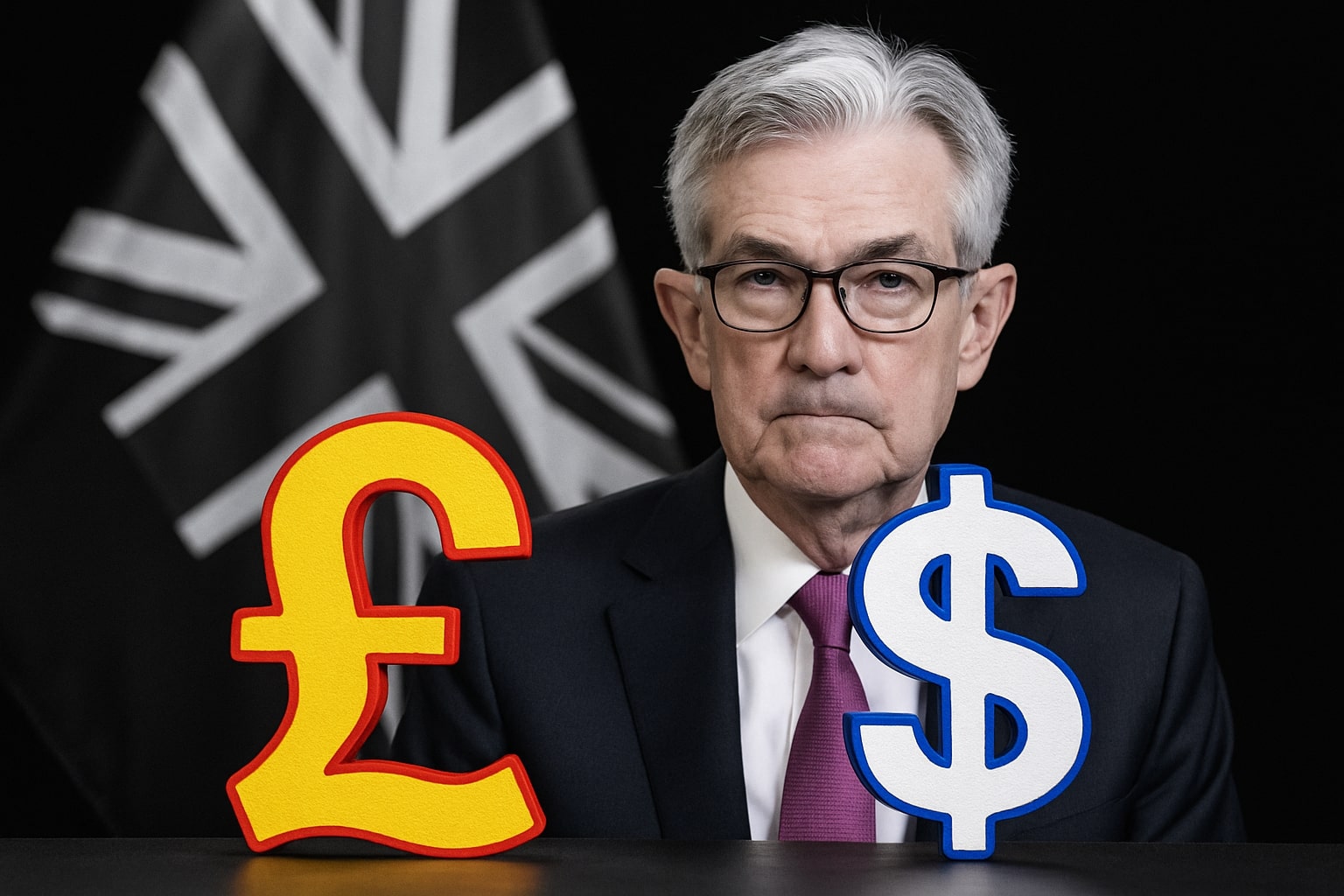
GBP/USD Price Forecast - Pound Extends Advance as Dovish Fed Expectations Lift Sterling to 1.3350
Dollar Weakens as Rate Cut Bets Surge
The GBP/USD (British Pound–US Dollar) pair is strengthening, climbing toward 1.3349, marking a 0.19% daily gain. The move follows consistent dollar weakness tied to firm expectations of a Federal Reserve rate cut next week. Traders now assign an 84–90% probability of a 25 basis-point reduction, a sharp shift from last month when odds were near 60%.
The U.S. Core PCE Price Index rose 0.2% MoM in November, steady from October and aligning with an annualized 2.8% rate. This soft reading confirms disinflation, reinforcing the case for easing. The University of Michigan Consumer Sentiment Index jumped to 53.3, the highest since July, while inflation expectations cooled from 4.5% to 4.1% (1-year) and from 3.4% to 3.2% (5-year). Together, these indicators weakened the U.S. Dollar Index (DXY), which remains anchored around 98.9–99.3, its lowest range since May.
Sterling Finds Momentum as Traders Position for Fed Shift
The Pound Sterling (GBP) trades firmly near 1.3360, reflecting relative outperformance against the dollar ahead of the Federal Reserve’s announcement. Since early November, GBP/USD has rallied from 1.3150 lows, breaking key resistance levels that capped price action throughout Q3.
Derivatives traders have increased exposure to upside bets — call volume on the pound rose 26% week-over-week, indicating growing conviction in extended dollar softness. The breakout above 1.3300, once a ceiling through 2024, now acts as a structural support base.
Still, market participants warn of a “buy-the-rumor, sell-the-fact” dynamic. Once the Fed confirms its first rate cut, the greenback could stage a short-term recovery if profit-taking accelerates. Historical context supports this — during the 2019 easing cycle, the dollar rallied 1.8% within two sessions post-cut.
U.K. Outlook and BoE Policy Outlook
Across the Atlantic, the Bank of England (BoE) faces its own inflection point. The central bank is expected to trim rates by 25 bps to 3.75% on December 18, responding to soft growth and moderating inflation. The U.K.’s Q3 GDP grew only 0.1% QoQ, while wage pressures are easing from 7.7% to 6.9% annually.
While the BoE’s anticipated move should weigh on GBP longer-term, the relative policy divergence still favors the pound near-term: the Fed’s policy pivot appears deeper, with cumulative 75–100 bps of cuts projected by mid-2026. This divergence explains why GBP/USD continues to attract capital inflows even amid fragile U.K. fundamentals.
Technical Structure: Breakout Still Developing
From a technical standpoint, GBP/USD is consolidating above 1.3330, with intraday resistance at 1.3365 — the 100-day Simple Moving Average (SMA). A sustained close above that level opens the door to 1.3471, the October swing high, followed by 1.3500, where the pair last encountered multi-month resistance.
Key support levels remain at 1.3300, 1.3250, and 1.3186. A failure to defend 1.3186 could invalidate the bullish bias and signal a corrective pullback toward 1.3040. Indicators favor the bulls for now — the RSI holds at 61, while the MACD histogram prints a widening bullish divergence.
Market Volatility and Strategy Considerations
Volatility expectations are climbing ahead of back-to-back Fed and BoE meetings. The implied volatility (1-week tenor) for GBP/USD rose to 8.6%, up from 6.1% last week. This reflects a market bracing for policy-driven swings similar to those seen in the 2024 pivot, when volatility briefly exceeded 10.4%.
Traders positioned for upside are favoring call spreads targeting 1.3450–1.3500, while option writers are collecting premium through short puts at 1.3200, betting that support holds. Futures positioning data shows leveraged funds now net long GBP by 28,000 contracts, up from 18,000 a month ago — the highest since early 2023.
Intermarket Correlations: GBP Tracks Broader Dollar Slide
The dollar’s weakness extends beyond cable. The EUR/USD pair holds near 1.1640, up 0.39% weekly, reinforcing the broader dollar sell-off theme. Meanwhile, USD/JPY stabilizes near 155.00, with traders hedging exposure amid upcoming BoJ policy tightening.
Correlations remain tight: the GBP/USD–DXY correlation coefficient stands at –0.91, near perfect inverse alignment. This confirms that cable’s movement is still primarily driven by dollar flows rather than domestic macro surprises.
Outlook and Bias for GBP/USD (December 2025 – Q1 2026)
The pair’s trajectory remains tethered to Fed communication. Should the FOMC confirm its easing cycle with language hinting at additional 2026 cuts, GBP/USD could extend gains toward 1.3470–1.3550 in Q1 2026. However, if U.S. data surprises to the upside — especially Core PCE or jobs — the dollar could rebound, dragging GBP/USD back toward 1.3150.
The medium-term path still favors Sterling strength: the U.S. is entering a deliberate easing cycle while the U.K. maintains gradual, limited accommodation. The yield differential is now just 23 bps, the narrowest since 2021, giving GBP/USD more structural support than in prior cycles.
Verdict: Buy Bias — Accumulate near 1.3250–1.3300, targeting 1.3470–1.3550 into Q1 2026, with downside stops below 1.3180. Momentum, yield compression, and dovish Fed sentiment continue to anchor a bullish structure for GBP/USD.
That's TradingNEWS