
Intel Stock (INTC) Price at $36: Policy-Fueled Rally Facing Foundry Reality
With INTC around $36 versus a $17.67–$44.02 range and billions from Washington, Nvidia and SoftBank funding Fab 52 and 18A | That's TradingNEWS
NASDAQ:INTC – Price, Setup and Where the Stock Stands Now
Trading Range, Recent Move and Basic Positioning for NASDAQ:INTC
NASDAQ:INTC trades around $36–$37, roughly flat on the latest session, after opening near $36.25 and moving in an intraday band of about $36.04–$36.80. That leaves the stock in the middle of a very wide 52-week range of $17.67–$44.02, after an ~80%+ run over the last year that flipped sentiment from “broken story” to “policy-backed turnaround with execution risk.” The market has already repriced a lot of bad news out of NASDAQ:INTC, but it has not moved to a full bull thesis: Street targets cluster just above spot and rating consensus is still Hold, not Strong Buy.
Street View on NASDAQ:INTC – Neutral Label, Asymmetric Opinions
Across the research snapshot you provided, NASDAQ:INTC sits in a clear “neutral with upside skew” pocket. One data set shows 5 Buy, 20 Hold and 6 Sell calls over the last three months, with an average target around $38.09–$38.14, roughly 5% above the current ~$36 handle. Another framework pushes fair value higher – one DCF around $36.47 and another pushing toward ~$48 per share based on margin recovery and normalized capex – but the common thread is wide dispersion: low targets near $20 and high cases above $50. That spread reflects exactly what this stock is today: not a clean AI momentum trade like NVDA, but a binary execution story in manufacturing and foundry.
Government Money and Industrial Policy – The Core of the New Bull Case for NASDAQ:INTC
The biggest shift in the NASDAQ:INTC story in 2025 is that the main anchor for the bull case is no longer just CPUs or PC cycles; it is U.S. industrial policy. The U.S. government has effectively turned Intel into a national strategic asset. In Q3 alone, Intel reported ~$5.7 billion in fresh U.S. government funding, on top of an earlier roughly $11.1 billion equity injection that left Washington with around a 9–10% non-voting stake. That capital sits inside a larger CHIPS-Act framework and is explicitly tied to leading-edge U.S. manufacturing. In parallel, Intel repaid about $4.3 billion of debt in Q3 and ended the quarter with roughly $30.9 billion in cash, giving it more room to absorb the heavy losses coming from the foundry build-out. The result: the balance sheet is being stabilized not by operating excellence, but by policy. That materially lowers solvency risk during the most capital-intensive phase of the turnaround.
SoftBank, Nvidia and Washington – Who Is Actually Funding the $89.6 Billion Fab Program
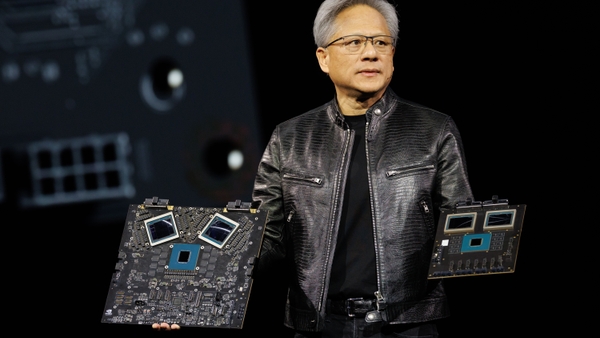
On top of direct U.S. government capital, NASDAQ:INTC has pulled in marquee private money. SoftBank, Nvidia and the U.S. government together are putting roughly $15.9 billion into the equity stack against an estimated $89.6 billion of U.S. fab and packaging expansion (out of a global plan of about $152.2 billion including suspended projects). SoftBank arrived first as part of its broader semiconductor and AI ecosystem bet: it controls Arm, bought Ampere Computing, and is heavily exposed to AI data-center infrastructure. Its Intel stake is both a vote of confidence and a way to anchor a U.S. manufacturing partner for Arm-based and AI workloads. Nvidia’s piece is even more strategic. It’s committing about $5 billion for roughly 4.5% of NASDAQ:INTC and pairing that with co-development: custom data-center platforms where Intel CPUs are tightly coupled to Nvidia GPUs over NVLink, and joint work on PC/AI-PC SoCs. That stake required antitrust clearance and is now formally unblocked. The U.S. government’s roughly $8.9–$11+ billion equity plus soft financing under the CHIPS framework mirrors what Taiwan did with TSMC and what Korea did with Samsung: direct ownership, infrastructure support, tax credits and policy tailwind. For Intel, this cocktail means around 18% of the core fab program is funded by strategic and state partners instead of being pushed entirely through the debt and cash-flow line.
Fab 52, 18A and the Manufacturing Roadmap Behind NASDAQ:INTC
Fab 52 is the physical symbol of what NASDAQ:INTC is trying to become again: an at-scale, leading-edge manufacturer in the U.S. Fabricating on the 18A node, Fab 52 is designed for roughly 40,000 wafer starts per month – the threshold typically considered a “very large” fab – and is loaded with advanced tech: gate-all-around RibbonFET transistors, PowerVia backside power delivery, and multiple ASML Twinscan NXE low-NA EUV scanners. On U.S. soil, Fab 52 is positioned to out-muscle TSMC’s Arizona Fab 21 (phase one and the planned phase two) on both footprint and toolset. In pure physical capacity terms, the target is to match or exceed the combined output of TSMC’s two Arizona phases. If Intel hits those technical and volume targets on time, NASDAQ:INTC regains something it has lacked for a decade: a credible claim to matching TSMC on process leadership at the cutting edge, at least for selected nodes.
Intel Foundry – $4.2 Billion Revenue, $2.3 Billion Operating Loss and a Slow March to Profitability
The problem is the economics. The foundry segment booked roughly $4.2 billion of revenue in Q3 but generated an operating loss of about $2.3 billion. Management itself guides that profitability is unlikely before 2026 at the earliest. External foundry revenue is tiny so far – on the order of ~$85 million year-to-date at one point, or roughly 0.2% of total revenue – which means the segment is still dominated by internal transfers and early customer pilots. Yield on Intel 18A and 14A trails TSMC’s comparable technologies, and the CFO acknowledged that early 18A shipments carry higher unit costs that press gross margin. That shows up in group-level margins: Q3 gross margin improved to about 38–39%, but guidance for Q4 pegs it around 36.5%, with early Core Ultra 3 and new-node ramps explicitly cited as headwinds. The core reality: every wafer on the newest nodes is still dilutive, while capacity constraints on older Intel 10 and Intel 7 processes limit how much high-margin legacy demand can offset that drag.
Client Computing and Data Center – Where NASDAQ:INTC Still Actually Earns Money
Strip away the policy story and the foundry dream, and NASDAQ:INTC is still funded by two engines: Client Computing and Data Center/AI. Client revenue in Q3 came in around $8.5 billion, up roughly 5.5% year-on-year, benefiting from PC market stabilization and early demand for Lunar Lake and Arrow Lake. Intel itself is signaling that PC total addressable market could hit ~290 million units in 2025 – the fastest TAM expansion since 2021 – and the company claims demand for its new mobile CPUs already exceeds wafer availability. Panther Lake, scheduled to debut at CES with 18A-based CPUs, is supposed to push Intel back toward performance leadership in client devices and link directly into the foundry story by proving 18A to the world at high volume. On the server side, the picture is more nuanced. Intel still dominates x86 data-center CPU shipments, but share erosion to AMD is obvious in the time series, and Nvidia’s GPU-centric architectures have redefined where the profit pool sits. Here, the Nvidia partnership matters: NVLink-based CPU-GPU systems could give Intel a more compelling attach rate into AI clusters, but no large commercial program is ramped yet. For now, the traditional Intel Products segment still produced about $3.7 billion of operating profit in Q3, effectively subsidizing the foundry burn.
Balance Sheet, Cash and Capex – Can NASDAQ:INTC Finance the Turnaround It Wants
Capital intensity is extreme. Over the last decade, capex grew at roughly 15% per year while revenue barely grew at all (around 0.1%), pushing capex as a share of revenue from about 13% in 2015 to nearly 32% on a trailing basis. Free-cash-flow margin peaked above 26% in 2018 and is now negative (around -7%) as Intel has plowed cash into fabs. Gross margin dropped from over 62% to roughly the low-30s at the trough, though management now targets a gradual climb back toward the long-term historical average of roughly 49–50% by 2029 as 18A ramps, restructuring charges roll off, and scale improves. Current guidance is for about $18 billion of gross capex in 2025 and a similar figure in 2026, versus total fab and packaging commitments near $89.6 billion excluding suspended European projects. Without the ~$15.9 billion from SoftBank, Nvidia and Washington, that profile would be dangerous. With it, NASDAQ:INTC still has no room for serious execution mistakes, but the risk shifts from “can we survive” to “are returns on this capex acceptable.”
Read More
-
SCHD ETF at $31.62: Dividend Rotation Turns a 2025 Laggard into a 2026 Leader
11.02.2026 · TradingNEWS ArchiveStocks
-
XRP ETFs XRPI and XRPR Lag Price While Fresh XRPZ Inflows and $152M Bank Bets Test the Dip
11.02.2026 · TradingNEWS ArchiveCrypto
-
Natural Gas Futures Defend the $3.00 Floor After Collapse From Above $7.50
11.02.2026 · TradingNEWS ArchiveCommodities
-
USD/JPY Price Forecast - USDJPY=X Drops Below Key Averages as Yen Rally Targets 152–150 Zone
11.02.2026 · TradingNEWS ArchiveForex
Competition: NASDAQ:INTC vs AMD and NVDA in the 2026 AI Cycle
On the tape, NASDAQ:INTC has actually outperformed NVDA over the last 12 months in percentage terms, with Intel up around 80% and AMD roughly 78%, while Nvidia – off a much higher base – has lagged that relative move. That doesn’t mean Intel suddenly dominates AI. Analyst consensus for 2026 still leans more bullish on AMD than on Intel: many AMD targets sit comfortably above the current price with strong Buy recommendations, whereas Intel’s target stack is clustered just above today’s quote with a Hold consensus and several high-profile firms sitting in the mid-$20s to mid-$30s range. Nvidia remains the clear AI profit engine with >90% share in data-center GPUs; AMD is the pure-play challenger with MI300X and Infinity Fabric-based architectures; Intel is trying to carve out a hybrid space: x86 CPUs, GPUs, accelerators, networking and foundry all combined with government backing. Short term, the cleaner upside trade for 2026 AI demand – based on the numbers you provided – still looks like AMD and NVDA. For NASDAQ:INTC, the question is not whether AI demand grows; it’s whether Intel captures enough of that hardware, system and foundry spend to justify the capex already committed.
Foundry Trust Gap – The Structural Headwind Behind NASDAQ:INTC
A central theme in the material you shared is an old problem that has not gone away: trust. For Intel Foundry to justify a multi-decade, ~$100 billion-plus buildout, it needs clients like Nvidia, AMD, Qualcomm and potentially Apple placing high-volume, high-margin designs on 18A and successor nodes. But the same companies see Intel as a direct competitor through its Products division. Former insiders argue openly that top designers may be reluctant to hand Intel their “crown jewel” designs while Intel is both supplier and rival, and several voices are pushing for deeper structural separation – not just accounting separation – between Foundry and Products. Intel is talking about stronger internal walls, separate governance, and more “optionality” in corporate structure, but nothing equivalent yet to a full spin-off or independent public listing. Nvidia’s 4.5% stake and co-development MOU help optics, and rumors about future Apple volume would be game-changing if they materialize, but today external foundry revenue near 0.2% of group sales tells you exactly where the flywheel is: barely turning. Until Intel proves repeatable, multi-billion-dollar external wins at advanced nodes, the trust gap is not solved.
Macro, Policy and Geopolitics – Why Washington Needs NASDAQ:INTC to Work
Macro and politics cut both ways for NASDAQ:INTC. On the drag side, the macro backdrop is still fragile: inflation sits above the 2% target, U.S. household leverage is high, and affordability pressure can easily dent PC upgrades and corporate capex if growth slows. That is the main risk to client and data-center volumes in 2026–2027. On the tailwind side, Intel is now welded into U.S. national-security and industrial strategy. The U.S. wants less dependence on TSMC’s Taiwan-centric footprint, is worried about China-Taiwan risk, and is willing to put direct equity into Intel to create an on-shore, leading-edge alternative. Programs like the Secure Enclave, RAMP-C defense contracts and the Genesis Mission with the Department of Energy position Intel at the center of sensitive compute and packaging for government and defense. At the same time, that position attracts scrutiny: the episode around ACM Research tools and China-linked units shows how quickly political noise can hit the story. Net impact: Washington is extremely unlikely to allow NASDAQ:INTC to structurally fail, but it will also constrain Intel’s freedom to ignore export controls or play loosely with sanctioned ecosystems. That combination – floor under solvency, ceiling on some markets – is exactly what you would expect from a “national champion” equity.
Valuation, DCF Outputs and What the Numbers Imply for Upside
Two detailed valuation frames in your material are important to reconcile with the market price. One DCF, built on revenue stabilizing at low single-digit growth, gross margin marching gradually from the mid-30s toward ~49–50% by 2029, and capex moderating to around $18 billion per year, lands on a fair value of roughly $36.47 per share – essentially where NASDAQ:INTC trades now – and calls the stock a Hold. Another, using more optimistic revenue and EBIT margin assumptions and lower normalized capex, produces a fair value closer to $48.12 per share, implying ~30% upside from ~$36 if Intel hits those numbers. Both models agree on one point: the upside is highly sensitive to margin recovery and foundry success. If foundry losses remain at ~$2.3 billion per quarter, yields do not converge toward TSMC’s, and external volume doesn’t ramp, then the 49–50% gross-margin target is fantasy and the lower $36–$38 fair-value band dominates. If, on the other hand, Intel actually executes the 18A roadmap, converts Nvidia/SoftBank/government validation into real third-party tapeouts, and scales Fab 52 and peers toward capacity, then the higher fair-value region above $45 becomes realistic. The market’s current stance – price in the mid-30s, consensus target near $38, rating at Hold – tells you investors are not ready to pay in advance for that upside.
Insider, Ownership and What the Tape Is Telling You on NASDAQ:INTC
Given the scale of strategic investors now on the register, monitoring who buys or sells from here is crucial. Government, SoftBank and Nvidia are sizable minority holders; how they behave around future capital raises, secondary offerings or governance changes will be a key signal for the equity story. For a clean view of ongoing insider equity activity – management grants, open-market buys, 10b5-1 sales – use the dedicated stock profile and insider transactions feed linked to NASDAQ:INTC. If you start to see large-scale selling from senior leadership or strategic partners while guidance and policy rhetoric remain bullish, that would undercut the long-term thesis quickly. So far, the story in your data set is more about external capital coming in than insiders cashing out, but the next 12–24 months will be the real test.
Buy, Sell or Hold on NASDAQ:INTC – My Verdict
Taking all of this together – price near $36, average targets around $38, DCF upside toward ~$48 only if margins and foundry execution actually improve, $2.3 billion quarterly foundry losses, ~$30.9 billion cash, roughly $18 billion annual capex, massive policy and strategic backing, real but unproven foundry and AI optionality – NASDAQ:INTC is, right now, a data-driven Hold with a bias to accumulate on material pullbacks, not a name to chase at mid-$30s. The bull case is powerful: Fab 52 and 18A could turn Intel into the only large-scale U.S. alternative to TSMC, Nvidia’s $5 billion and SoftBank’s capital plus ~10% U.S. government ownership de-risk the balance sheet, and new client CPUs (Lunar/Arrow/Panther Lake) plus AI-PC demand can lift revenue and margins into 2026–2029. The bear case is equally clear: foundry is burning billions with external revenue still negligible, Ohio and other fabs are delayed into 2030–2031, AMD and NVDA still own the clean AI upside, and every valuation model you’ve shown is extremely sensitive to assumptions that Intel has not yet proved in real volume. At this price, the market is paying for a credible turnaround path but not a full renaissance