Microsoft Stock Price Forecast - MSFT at $417: AI CAPEX Panic vs. $625B Backlog Opportunity
After a 20% slide from its $555 peak and a 12% post-earnings drop, Microsoft stock sits near $417 with cloud revenue surging, AI CAPEX near 46% of sales and a $625B commercial RPO stack reshaping the risk-reward | That's TradingNEWS
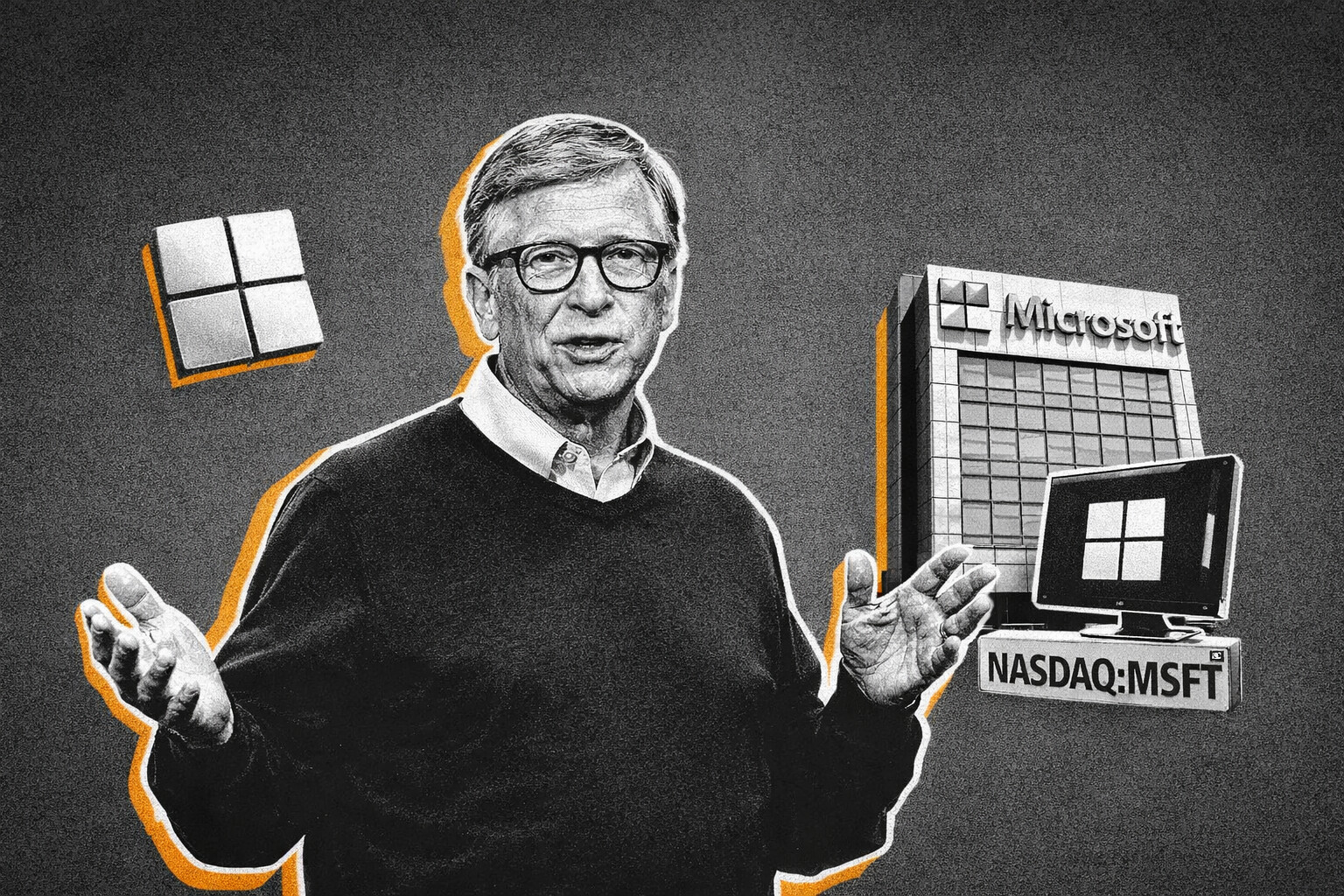
Microsoft Stock (NASDAQ:MSFT): AI CAPEX Pain, Cash Engine Still Dominant
Current Price, Trading Range And Basic Metrics
At around $417.73, Microsoft (NASDAQ:MSFT) trades well below its $555.45 52-week high and still comfortably above the $344.79 low. Market cap is about $3.1 trillion, with a trailing P/E near 26.2 and a forward P/E around 24–25. Dividend yield is roughly 0.87%, backed by a payout that barely touches the company’s cash generation. The stock has already absorbed a drawdown of more than 20% from the peak, including a single-day drop close to 12% after the latest earnings, the sharpest hit since the Covid shock, which reset expectations around AI and CAPEX.
Earnings Momentum And Profitability Profile
Revenue for the December 2025 quarter reached $81.27 billion, up 16.72% year over year. Operating expenses were $17.02 billion, rising only 5.19%, which expanded operating leverage aggressively. Net income jumped to $38.46 billion, up 59.52% year over year, pushing the net profit margin to about 47.32%, more than a third higher than a year earlier. Earnings per share came in at $4.14, growing 28.17%. EBITDA reached roughly $47.38 billion, up 23.52%. This is not a company fighting to keep margins alive; it is a business printing close to fifty cents of net income on every revenue dollar at scale.
Balance Sheet Strength, Returns And Capital Structure
On the balance sheet, total assets stand at $665.30 billion, up 24.61% year over year, while total liabilities sit at $274.43 billion, up 18.70%. Total equity is approximately $390.88 billion. Cash and short-term investments sit at $89.46 billion, growing 25.03%. Return on assets is about 14.70%, and return on capital near 19.18%, numbers that most industrial and even tech peers cannot touch at this size. With a price-to-book ratio around 7.82 and net debt to EBITDA close to zero, MSFT justifies its AAA status as one of the very few corporates in the world that can finance a multi-year AI build-out without stressing the balance sheet. For governance and capital allocation tracking, investors should watch behavior on the Microsoft stock profile and follow actual management alignment through the Microsoft insider transactions stream.
Cash Flow, AI CAPEX Wall And Free Cash Flow Compression
Cash from operations in the quarter reached $35.76 billion, up 60.41% year over year, very close to the $38.46 billion net income figure and confirming the earnings quality. Cash used in investing was -$22.71 billion, a 60.89% deeper outflow, while cash from financing activities was -$17.62 billion, down 56.69%, reflecting dividends and buybacks. Net change in cash was -$4.55 billion, a 35.59% larger decrease than the prior year. Free cash flow printed slightly negative at around -$208 million, a 71.15% deterioration. The driver is not an operational collapse but an aggressive CAPEX cycle: including capital leases, CAPEX is running in the mid-40s as a percentage of revenue, with quarter-level figures around 46%. Management has indicated that roughly two-thirds to three-quarters of that spend is going into short-lived assets such as GPUs and CPUs, not just long-duration real estate. That creates a temporary squeeze on free cash flow and optics but plants a capacity base that should support AI workloads for years.
Cloud, Azure And The $625 Billion Commercial Backlog
The engine behind the equity story is the cloud and AI franchise. Microsoft Cloud revenue is running around $51.5 billion per quarter, growing roughly 26%. Commercial bookings exploded more than 200% year over year, with one of the published figures at about 228% growth, pushing commercial remaining performance obligations to roughly $625 billion, up 110%. The average duration of that RPO stack is around two and a half years, and management expects about one quarter of it to convert into revenue within twelve months, implying near 39% growth from that portion alone. Azure continues to grow in the high-30% band, with recent prints around 38–39% and guidance slightly softer near 37.5%, not because demand has vanished but because capacity is tight. The controversial element is that around 45% of that RPO is linked to a single multi-year commitment related to OpenAI, creating both concentration risk and leverage: if those workloads scale, the revenue curve steepens; if execution or governance around OpenAI falters, the backlog conversion rate will be under pressure.
AI, Copilot And Monetization Of The Installed Base
On the software side, Microsoft (NASDAQ:MSFT) has moved beyond AI marketing and into paid deployments. Copilot paying seats are around 15 million, which is about a 4% conversion against an Office base north of 400 million users. Paid Copilot seats are growing at roughly 160% year over year, and usage intensity metrics are climbing, signaling actual adoption in workflows. From July 1, 2026, Microsoft plans to raise pricing across the M365 suite and expand Copilot bundling, effectively lifting ARPU on a mature, sticky enterprise footprint. If Copilot attach rates move from low-single-digit percentages into double digits over time, you get a high-margin AI add-on that scales on top of an already dominant productivity stack. The risk is clear: competition from Google’s Gemini, Anthropic models, and open-source agents is accelerating, and some enterprises may choose to build their own assistants on generic cloud instead of paying for Copilot. Azure can still capture infrastructure revenue, but the premium pricing power at the app layer is not guaranteed.
Read More
-
AMLP ETF Price Forecast: Can An 8% Yield Around $50 Hold In 2026?
04.02.2026 · TradingNEWS ArchiveStocks
-
XRP ETFs Attract $19.46M Inflows as XRPI Falls to $8.81 and XRPR Slips to $12.63
04.02.2026 · TradingNEWS ArchiveCrypto
-
Natural Gas Price Forecast: From $7.50 Fern Shock To A Delicate $3–$3.50 Range
04.02.2026 · TradingNEWS ArchiveCommodities
-
USD/JPY Price Forecast: 155–156 Range Caught Between 160 Intervention Threat And 145 Reversal Zone
04.02.2026 · TradingNEWS ArchiveForex
Positioning Versus Meta And The Rest Of The Magnificent 7
Inside the so-called Magnificent 7, MSFT has shifted from premium multiple to relative value. Forward EV/EBITDA sits around 16–17x, below the roughly 20x three-year average. When you flip that into an EBITDA yield, you get a figure a bit above 6%, which compares favorably to the risk-free rate. In one Greenblatt-style ranking that combines EV/EBITDA yield with return on total capital, Nvidia scores highest with ROTC near the high-60s and an EBITDA yield under 3%, Apple follows with more than 4% yield and over 50% ROTC, while Microsoft lands in the middle of the pack with roughly 6% EBITDA yield and about 19% ROTC, ahead of Alphabet and Amazon and just behind Meta on this composite measure. Meta currently offers a cleaner short-term AI monetization story: ad impressions up mid-teens, price per ad up mid-single digits, FoA revenue growing in the mid-20s, and operating margin expanding as AI targeting improves ROI for advertisers. Both MSFT and Meta trade on forward P/E ranges around 23–24, but the market is giving Meta more credit in the near term and has punished Microsoft for backlog concentration and CAPEX opacity. That is why MSFT now trades at roughly a 20–25% discount to its five-year average P/E and, according to some work, is the cheapest name in the Mag 7 on a straight P/E basis after the post-earnings correction.
Valuation Range For Microsoft (NASDAQ:MSFT) Based On EBITDA And Growth
Using the company’s trailing twelve-month EBITDA near $175.3 billion, a 20x EV/EBITDA multiple gives an implied enterprise value of about $3.5 trillion. With roughly 7.43 billion shares outstanding, that translates into a fair value near $472 per share. That is comfortably above the current $417–$418 zone but below the most aggressive targets that push toward $600 when assuming higher multiples on AI upside. On P/E, the stock trades at about 24–26x against a revenue and EPS growth profile in the mid-teens, which yields a PEG ratio around 1.5 and is materially below the multiple paid when AI enthusiasm peaked. After the recent selloff, MSFT has seen forward P/E compress by more than 10–15%, and technical indicators such as RSI have drifted into the low-30s area, signaling near-term oversold conditions rather than structural deterioration in the business. The setup is classic: price down around 20%, earnings, EBITDA and backlog up sharply, and the multiple reset to a more rational band.
Key Structural Risks Around OpenAI, AI Competition And Overspending
The main fundamental risks are concentrated in a few pressure points. The first is execution on the $625 billion commercial RPO stack, especially the roughly 45% linked to OpenAI-related commitments. A serious governance issue, regulatory strike, security failure or strategic fracture around OpenAI could affect how much of that backlog converts, at what margins, and on what timetable. The second is application-layer competitive pressure. LLM advances from Google, Anthropic and open-source communities are shrinking the moat around proprietary enterprise software; it is increasingly feasible for internal teams to orchestrate AI-driven tools that replace part of what Copilot tries to monetize, especially in coding, document generation and analysis tasks. The third is CAPEX discipline. With AI CAPEX and capital leases running around the mid-40s percent of revenue, any misalignment between capacity and demand would weigh on returns; even though a large portion is short-lived compute, poor utilization or rapid hardware obsolescence can compress margins and extend the free cash flow drought. Azure also faces constant share battles with AWS and Google Cloud. Finally, the regulatory environment remains hostile to hyperscale platforms, and any forced change in bundling, licensing or data usage across Windows, Office, LinkedIn, GitHub, gaming and Azure would impact the long-term earnings profile.
Investment View On Microsoft Stock (NASDAQ:MSFT)
Taking the full set of numbers together, Microsoft stock (NASDAQ:MSFT) looks like a high-quality compounder temporarily repriced by a combination of AI fatigue, CAPEX shock and OpenAI concentration fears, not by a deterioration in its core economics. Revenue is growing around 16–17%, net income above 50%, margins are near 47%, and the balance sheet holds nearly $90 billion of cash with minimal net leverage. Commercial RPO at $625 billion and cloud revenue growing mid-20s support multi-year visibility. The market now pays a mid-20s earnings multiple and a mid-teens EV/EBITDA multiple for that profile, which is below the company’s recent history and cheap relative to its return on capital and backlog. Short term, Meta may deliver faster share-price performance as its AI monetization is more visible. For a medium-term investor willing to look beyond the current free cash flow compression and OpenAI noise, the risk-reward on Microsoft (NASDAQ:MSFT) at around $417–$418 is favorable, and the data supports a clear buy stance rather than a hold or bearish view.