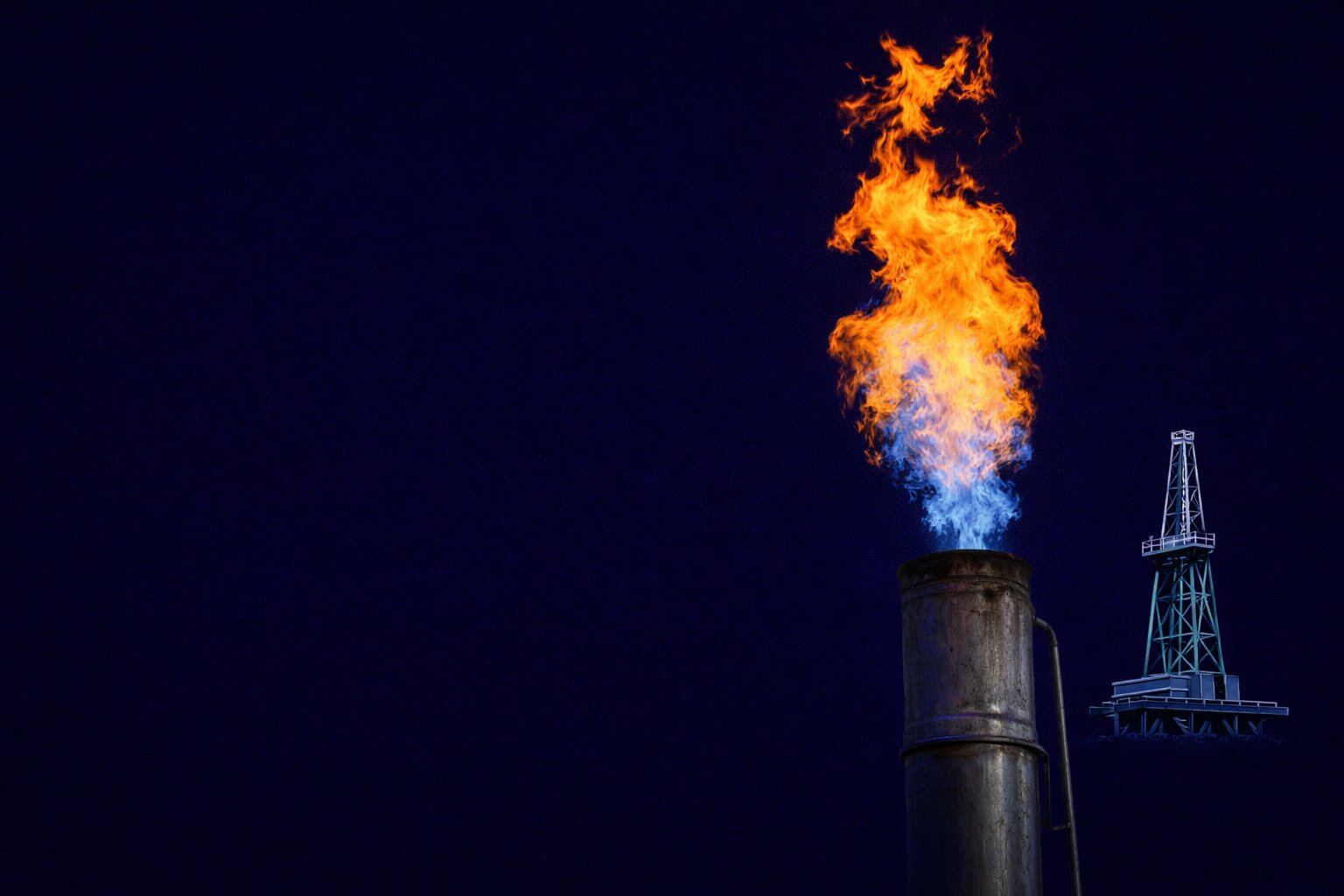
Natural Gas (NG=F) Breaks $5.04 as U.S. LNG Dominance Redraws Global Energy Balance
Natural gas (NG=F) climbed to $5.04 per MMBtu this week, marking a three-year high and signaling a major structural shift across the global gas market. Despite heavy winter demand and a sharp temperature drop in North America and Europe, the price rally is being driven by a combination of LNG export strength, data-center-driven power consumption, and a tightening storage outlook that now points toward higher baseline prices through 2026.
U.S. LNG Exports Redefine Global Pricing Power
The U.S. has become the anchor of global gas supply, accounting for 56% of all European LNG imports this year according to Kpler data. This shift has narrowed the TTF-Henry Hub spread from $12/MMBtu in early 2025 to just $4.8/MMBtu, the smallest since 2021. With Henry Hub gas averaging $5.045 and TTF trading below €28/MWh ($9.8/MMBtu), U.S. LNG is now the marginal price setter for Europe.
The impact is structural: in 2022, TTF surged to €350/MWh ($100/MMBtu), a 20-fold premium to Henry Hub. Today, U.S. LNG flows — reaching 14.9 billion cubic feet per day (Bcf/d) in 2025 and projected to hit 16.3 Bcf/d in 2026 — have erased the crisis premium and stabilized global pricing. The narrowing arbitrage is making Europe increasingly dependent on steady American output, while U.S. producers leverage global demand to sustain a $5 floor unseen since 2021.
Cold Weather and Storage Dynamics Tighten U.S. Market
The early onset of a colder-than-expected winter has sharply boosted heating demand. The EIA’s November Short-Term Energy Outlook projects that inventories will tighten faster than expected heading into 2026. Though U.S. stocks began the winter above the five-year average, draws have accelerated, suggesting storage could fall below normal by February. Analysts at Morgan Stanley highlight that this tightening dynamic, coupled with record LNG feedgas flows, offsets a modest uptick in production. The bank reiterated its $5.00 price forecast for 2026, projecting sustained strength through the first quarter before spring weakness emerges.
European Prices Collapse as U.S. Flows Flood the Market
In Europe, the situation is the inverse. Despite a cold winter and storage levels just 75% full, gas prices at the Dutch TTF hub have fallen over 45% year-to-date. Germany’s inventories stand at 67% capacity, but the flood of American LNG cargoes has kept prices under control. The decline is reshaping Europe’s energy security calculus — LNG terminals in Germany, the Netherlands, and France now operate near capacity, leaving European buyers tied to U.S. price cycles rather than Russian supply volatility.
Goldman Sachs forecasts TTF to average €29/MWh in 2026 and €20/MWh in 2027, with potential for a temporary glut by 2028 that could push prices down to €12/MWh as new liquefaction projects come online. By the early 2030s, however, tightening Asian demand — led by China’s decarbonization push — may drive TTF back above €30/MWh, restoring a sustainable transatlantic spread.
Technical Outlook and Market Structure
Technically, natural gas has confirmed a decisive breakout. The $4.90 resistance level — the key trend high since the October bottom at $2.89 — has now converted to support, with buyers defending it for three consecutive sessions. Wednesday’s higher low at $4.82 maintains the ascending channel that began two months ago. A weekly close above $4.90 secures the first sustained breakout since November 2022, setting up an advance toward the 61.8% Fibonacci retracement at $5.28, followed by channel resistance near $5.40–$5.50.
The structure remains bullish while the price holds above the 10-day average at $4.68. A break below that zone would open short-term support at $4.50, but momentum indicators continue to show accumulation rather than exhaustion. With backwardation in the futures curve — where spot exceeds forward prices — traders are signaling tight short-term supply and elevated winter demand.
Macro Demand Drivers: Data Centers and AI Power Load
Beyond weather, the next structural pillar for demand is the rise of power-intensive data centers. The U.S. power grid’s gas usage is being reshaped by AI infrastructure, with electricity consumption from hyperscale facilities expected to grow over 160% by 2030. Gas-fired generation remains the backbone of that expansion, providing base-load stability that renewables cannot yet match. The result: a rising floor for gas demand even in mild seasons, with analysts noting a permanent 1–1.5 Bcf/d uplift from tech sector consumption alone.
Seasonality and Short-Term Trading Outlook
Natural gas follows a classic seasonal pattern — strength from late fall through February, followed by weakness into spring as heating demand fades. The January contract remains the most liquid, and the current rally aligns with its historical seasonal peak. Analysts note that pullbacks of $0.30–$0.50 are common within broader winter uptrends. Traders watching the $5.00 level view it as both psychological resistance and a potential entry zone on dips, as long as weather forecasts remain colder than average.
Morgan Stanley expects volatility but maintains a bullish bias, projecting prices could reach $5.50–$6.00 by mid-winter before retreating slightly into Q2 2026. The bank cautions that excessive storage draws could fuel an overshoot above $6.50, though such moves would likely attract profit-taking before the spring contracts.
Europe’s Dependence and Long-Term Forecasts
Europe’s reliance on LNG will deepen as legacy Russian contracts expire. By 2027, the continent could import over 150 million metric tons per year, roughly 40% from the U.S. Analysts warn that the narrowing arbitrage could lead to “LNG congestion” in Northwest Europe by 2028–2029, potentially forcing temporary cargo cancellations and driving Henry Hub prices back toward $2.70/MMBtu.
However, structural under-investment in upstream gas production — particularly in the U.S. Haynesville and Permian basins — suggests any price crash would be temporary. Beyond 2030, tightening supply and Asian infrastructure growth are expected to lift Henry Hub above $4.00/MMBtu and TTF above €30/MWh, restoring the export incentive.
TradingNews.com Verdict
Natural gas (NG=F) remains in a confirmed bullish phase, with technicals, storage dynamics, and macro demand converging in support of higher prices. The breakout above $4.90 validates the multi-month reversal, while sustained LNG flows and tightening inventories provide a solid floor. Traders should monitor support at $4.68–$4.70, resistance at $5.28, and upside targets at $5.40–$5.70 in the near term. The winter cycle remains the dominant driver, with upside risk tied to temperature anomalies and export demand.
Verdict: STRONG BUY (Short-Term) — momentum favors continuation toward $5.50–$6.00
Medium-Term View: BUY / Bullish Bias, supported by data-center demand, LNG strength, and tightening storage heading into 2026
That's TradingNEWS