Oil Price Forecast: Brent at $72 and WTI at $66 Trade on Trump–Iran War Risk
WTI (CL=F) and Brent (BZ=F) hold a $10 war premium as Hormuz tensions, a 9M-barrel US crude draw, softer Saudi exports and delayed OPEC+ hikes drive the next move in crude prices | That's TradingNEWS
Oil Price Snapshot: WTI (CL=F) and Brent (BZ=F) Trade With a War Premium
Brent (BZ=F) is trading around the $71–72 zone after closing near $71.26–$71.47 and briefly breaking above $72, the highest level in roughly six months. WTI (CL=F) holds in the mid-$66 area, around $66.29–$66.35, up about $10 over the last month and roughly 5.3% on the week. Pricing embeds about a $10 per barrel geopolitical premium and implies an estimated ~25% probability of a major Middle East escalation. Crude has transitioned from a simple macro/inventory trade to an event-risk asset with the Strait of Hormuz and Iran at the center of the curve.
Short-Term US Supply, Rigs and Inventory Dynamics
US commercial crude inventories dropped 9.0 million barrels in the latest week to 419.8 million barrels, roughly 5% below the five-year seasonal average. Gasoline stocks fell 3.2 million barrels and distillates declined 4.6 million barrels, while refineries operated at a high 91% utilization rate. Over the last four weeks, total products supplied averaged 21.2 million barrels per day, up 4.1% from a year earlier, confirming firm end-user demand. At the same time, US output is hovering near record highs around 13.7–13.8 million barrels per day, yet the active US oil rig count is only 409, unchanged week-on-week and 79 rigs lower than a year ago. High production with a lean rig fleet underscores dependence on productivity gains and previously drilled inventory, leaving less slack if fresh disruptions appear.
Global Production, Surplus Capacity and the Shift From Oversupply
Global liquids production reached roughly 108 million barrels per day by late 2025, almost 3 million barrels per day above consumption at that time. Forecasts built on those numbers expected clear oversupply and Oil, WTI (CL=F) and Brent (BZ=F) pinned closer to the low-60s. Instead, supply setbacks in the US and Kazakhstan, combined with avoidance of sanctioned barrels, have narrowed that surplus faster than anticipated. Kazakhstan’s CPC Blend exports fell to their lowest in a decade during January disruptions before recovering. The result is a market that remains well supplied on paper but feels tight in the prompt months, which is exactly where war risk and inventory draws are currently priced.
OPEC+ Strategy and Saudi Export Discipline
Eight major OPEC+ producers have indicated they will delay planned output increases in March, effectively holding back up to 1.65 million barrels per day that could return to the market later in 2026 if conditions warrant. Saudi Arabia’s crude exports slipped to 6.988 million barrels per day, the lowest since September, signaling a deliberate choice to sacrifice volume to keep Brent (BZ=F) trading above $70 rather than sliding back into the low-60s. This combination of deferred OPEC+ supply and reduced Saudi exports functions as an upper-mid-$60s to low-$70s support zone for benchmarks while maintaining a substantial volume of spare capacity in reserve as a shadow ceiling.
Read More
-
XSMO ETF Price Around $80 as Small-Cap Momentum Starts to Lead in 2026
21.02.2026 · TradingNEWS ArchiveStocks
-
XRP ETF inflows stay positive while price struggles below the $1.50 ceiling
21.02.2026 · TradingNEWS ArchiveCrypto
-
Natural Gas Futures Price Rebound Toward $3.14 on Cold Snap and LNG Export Strength
21.02.2026 · TradingNEWS ArchiveCommodities
-
GBP/USD Price Forecast - Pound Clings to 1.34–1.35 Zone After Supreme Court Tariff Shock
21.02.2026 · TradingNEWS ArchiveForex
Iran, Trump and the Strait of Hormuz as the Core Oil Risk
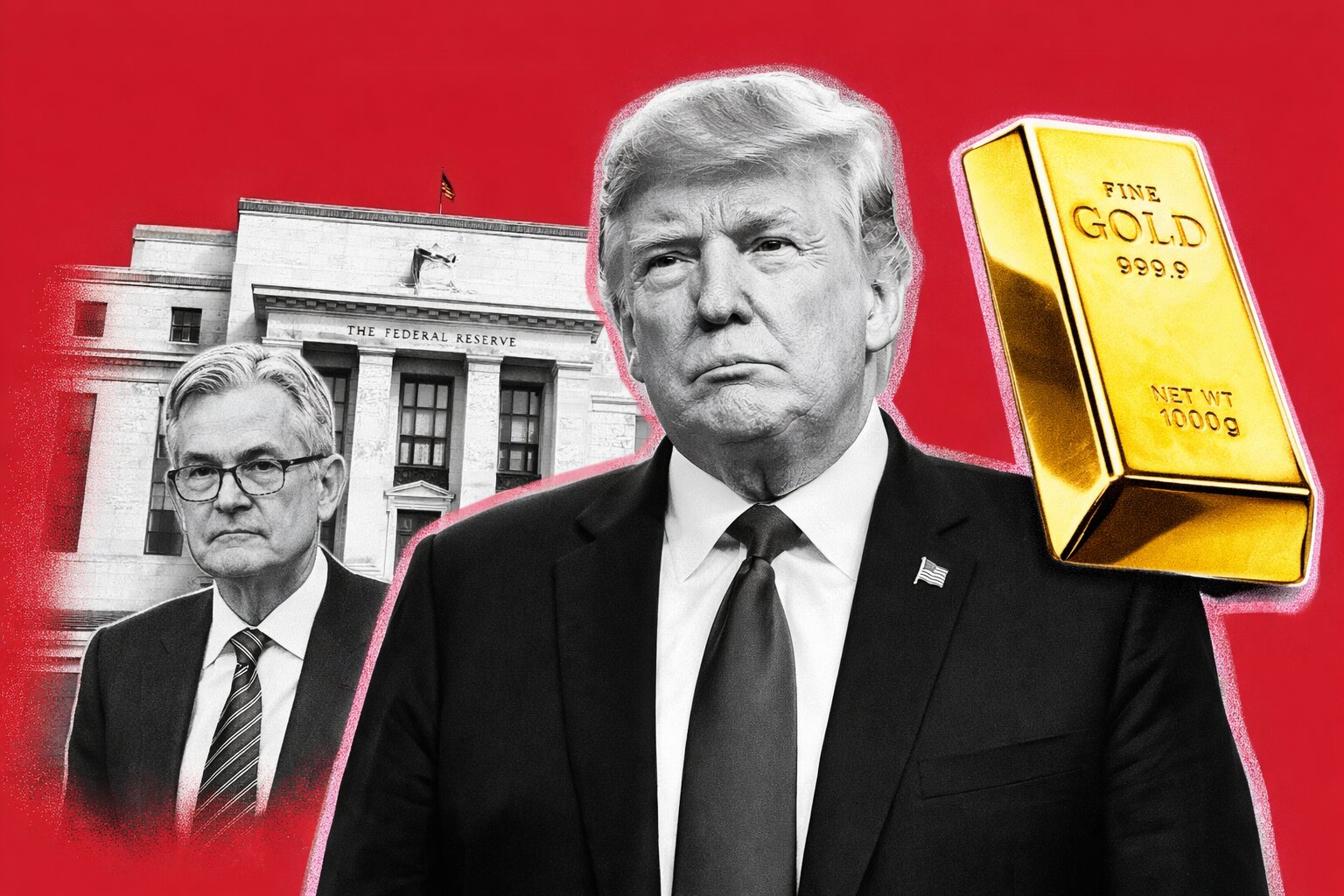
The US has assembled its largest Middle East military build-up since 2003, explicitly aimed at Iran. Trump has spoken openly about a potential strike and referenced a 10–15 day window for Iran to accept new nuclear terms or face consequences. Iran has already conducted naval drills and temporarily restricted traffic in segments of the Strait of Hormuz, triggering roughly a $5 jump in Brent (BZ=F) when that partial closure hit headlines. The strait handles around 20 million barrels per day, about one-fifth of global oil flows, and is the only maritime outlet for crude from Saudi Arabia, Iraq, Iran, Kuwait and the UAE. A limited, contained strike that avoids shipping lanes is estimated to add another $15–$20 per barrel, pushing Brent above $80 and WTI (CL=F) into the low- to mid-$70s. A serious, sustained disruption in the Strait would likely send benchmarks above $100, pushing US gasoline toward $5 per gallon, compared with roughly $2.92 now and $2.80 a month ago. Iran has strong financial incentives not to choke its own exports, which provide roughly half of government revenues, but mounting domestic and external pressure raises the probability that Tehran at least leverages the threat more aggressively.
Futures, Options and Tankers: How Professional Money Is Hedging Oil (CL=F, BZ=F)
Positioning in derivatives and freight confirms that large players are paying for upside protection rather than betting on a collapse. Open interest in Brent futures sits near record levels, with heavy buying of out-of-the-money call options. Implied volatility on crude is at its highest since the previous US–Iran confrontation, and option skew is clearly tilted toward upside strikes, reflecting demand for insurance against a gap higher. In shipping, spot earnings for VLCCs and other supertankers have surged above $150,000 per day, the strongest since the pandemic storage trade. Asian refiners are already diversifying away from Persian Gulf cargoes where possible, increasing tonne-mile demand and tightening effective tanker capacity. Together, these signals show a market that is actively hedging escalation risk rather than dismissing it.
US Macro, Gasoline Prices and Political Limits on Oil Upside
The domestic US backdrop sets a political ceiling on how long Oil, WTI (CL=F) and Brent (BZ=F) can sustain extreme levels. Average US gasoline prices have risen from about $2.80 to around $2.92 per gallon in a few weeks, complicating efforts to present energy costs as a policy success. The preferred zone from Washington has historically been WTI near $50 per barrel, which typically holds pump prices closer to $2.50. Current levels around $66 for WTI (CL=F) and $71–72 for Brent (BZ=F) are uncomfortable but not yet crisis territory. A spike into the $80+ range on WTI or a sustained $90+ on Brent would intensify pressure to deploy strategic reserves, lean harder on OPEC+ partners and pursue any workable diplomatic off-ramp with Iran. Conversely, a credible de-escalation and partial normalization of Iranian exports would likely erase most of the current risk premium, driving Brent below $60, WTI into the low-$50s and US gasoline back toward $2.50.
Tight Prompt Market vs. Medium-Term Spare Capacity
Short-term balances remain tight while medium-term spare capacity is still substantial. On the tight side, US crude stocks are 9 million barrels lower on the week, domestic products are drawing, Saudi exports are below 7 million barrels per day, and early-year disruptions in Kazakhstan and US weather have squeezed inventories that were supposed to be rebuilding. On the capacity side, global production around 108 million barrels per day, the deferred 1.65 million barrels per day of OPEC+ supply and the latent responsiveness of US shale provide a meaningful buffer if prices stay elevated and capital loosens. That push-pull is why benchmarks are holding near $71–72 for Brent (BZ=F) and $66 for WTI (CL=F) instead of already trading three digits; the market is paying for war insurance without fully abandoning the surplus capacity story.
Oil / WTI (CL=F) / Brent (BZ=F) Stance: Buy With Clear Risk Triggers
With WTI (CL=F) in the mid-$60s, Brent (BZ=F) above $70, visible war premium, aggressive US inventory draws, firm product demand, strong tanker earnings and active upside hedging, the short-term bias for Oil is bullish, not neutral or short. As long as WTI holds above the low-60s and Brent stays roughly $68–70 or higher, the structure favours a Buy stance that respects event risk. A clean diplomatic breakthrough with Iran, confirmation of additional OPEC+ barrels returning or a sharp rebuilding of inventories would be the signals to move back to Hold and reassess. Until those conditions materialize, the greater risk is being positioned aggressively short CL=F / BZ=F into a potential shock rather than holding a controlled long with defined exit levels if the geopolitical premium collapses.