Oil Price Forecast: WTI Crude Hits $90.90 After Biggest Weekly Surge Since 1983
With Hormuz traffic at zero, Iraq cutting 1.5 million barrels per day, gasoline at $3.41 and climbing, and Trump demanding unconditional surrender from Iran | That's TradingNEWS
WTI Crude (CL=F) at $90.90: The Biggest Weekly Oil Surge Since 1983 and the Supply Shock That Could Rewrite the Global Economy
West Texas Intermediate crude (CL=F) closed Friday at $90.90 per barrel, up 12.21% on the session alone. For the week, WTI surged approximately 35% — the single largest weekly gain in the entire history of the WTI futures contract, which dates back to March 1983. Since January 1st, the price of U.S. crude has risen nearly 60%. Brent crude (BZ=F), the international benchmark, broke $94 per barrel on Friday, gaining more than 9% intraday to reach its highest level since late 2023. These are not incremental moves. These are price dislocations of a magnitude that historically precede either a rapid geopolitical resolution or a global recession.
The cause is singular, structural, and not yet resolved: the Strait of Hormuz — the narrow passage off Iran's southern coast through which more than 20% of the world's daily crude oil and natural gas supply typically flows — has been reduced to zero commercial tanker traffic since Wednesday. Iran's Revolutionary Guard announced it would target U.S. and Israeli vessels transiting the strait, and the market responded the only way it can when a fifth of global energy supply faces an existential blockade: it repriced everything upward simultaneously.
The Hormuz Shutdown Is No Longer a Risk — It Is an Active Operational Disruption
The distinction JPMorgan Chase's commodities analysts drew on Friday is critical: the market has moved from pricing pure geopolitical risk to grappling with tangible operational disruption. That is not semantic — it is the difference between a war premium that fades when headlines calm and a supply shock that compounds until physical barrels stop arriving at refineries. JPMorgan confirmed that Iraq has already cut production by 1.5 million barrels per day, and warned that another 4 million barrels per day of regional supply could be disrupted by the end of next week if the conflict continues at its current pace. That 4 million barrel figure represents approximately 4% of total global daily production — a supply withdrawal that would dwarf the 2022 Russian invasion of Ukraine's energy impact in speed if not yet in duration.
Kuwait accelerated the supply crisis on Friday when reports emerged that the country had begun cutting production at some oil fields after running out of storage capacity. With Hormuz closed to outbound tanker traffic, Gulf producers have nowhere to send their crude — storage fills, production must halt, and the supply that was once flowing to global markets simply stops. Qatar's state-run energy firm has already cut production of liquefied natural gas and other energy products. The force majeure declarations that Qatar's energy minister Saad al-Kaabi warned about — a scenario where all Gulf exporters shut down within days — are not a distant theoretical anymore. Kuwait's storage situation suggests the cascade has already started.
Hundreds of ships containing oil and LNG are currently idled off Iran's coast, unable to pass through Hormuz in either direction. The Joint Maritime Information Center described the situation as a near-total pause in commercial traffic driven by security threats, insurance constraints, and operational uncertainty. The $20 billion reinsurance facility announced by the U.S. Development Finance Corporation has not moved a single tanker. The U.S. Navy escort proposal faces the logistical impossibility of protecting the volume of traffic that historically transits the strait — over 14 million barrels per day of crude alone, roughly a third of all globally seaborne oil.
$3.41 Gasoline and the Direct Consumer Pain That Is Already Arriving
The pump price transmission from $90 crude is happening faster than at any point since the 2022 Russian invasion of Ukraine. The national average gasoline price hit $3.41 per gallon on Saturday, according to AAA — a 14% weekly jump that AAA itself said matches the pace of the March 2022 post-invasion spike. One week ago, the national average was under $3.00 per gallon. The $0.41 per gallon increase in seven days represents one of the fastest consumer fuel price spikes in decades.
The forward math is alarming. AAA's historical data shows that when crude was last trading above $90 per barrel, the national gasoline average was approximately $3.80 per gallon — implying another $0.39 per gallon of upside from current Saturday levels if crude simply stays where it closed Friday. GasBuddy's head of petroleum analysis Patrick De Haan said prices will keep rising through the weekend. If crude pushes toward the $100 per barrel level that Goldman Sachs and Wharton's Jeremy Siegel have identified as the next threshold — and JPMorgan's researchers have warned of $120 per barrel in more extreme scenarios — the national gasoline average could approach or exceed $4.50 to $5.00 per gallon within weeks. Some analysts are already discussing the possibility of $5 gasoline becoming a national reality, a level not seen since the 2022 peak.
U.S. natural gas prices also jumped more than 6% on Friday. RBOB wholesale gasoline futures (RB=F) moved higher by 2.5% on the session. European natural gas prices have risen even more sharply than U.S. equivalents, reflecting the continent's particular vulnerability to LNG supply disruption given Qatar's force majeure and the broader Gulf export constraints. European diesel futures were on track for a weekly gain of more than 50% by Friday's close.
The $100 Barrier: Goldman, JPMorgan, and Qatar's $150 Warning
The institutional forecasting community has moved rapidly in the past week from theoretical scenarios to active price targets that would have seemed implausible seven days ago. Goldman Sachs flagged the scenario in which oil tops $100 per barrel if Hormuz disruption persists, explicitly warning that this level approaches a threshold at which the global economy could not absorb the shock without significant damage to growth. JPMorgan researchers went further, warning of $120 per barrel in their more adverse scenario modeling.
Qatar's energy minister Saad al-Kaabi delivered the most extreme institutional projection: $150 per barrel if Gulf exporters are forced to call force majeure and halt production entirely. He told the Financial Times that even if the war ended immediately, Qatar would need weeks to months to return to normal LNG delivery cycles following the Iranian drone strike on its Ras Laffan facility. Al-Kaabi's $150 figure is not fringe analysis — it comes from the energy minister of the world's second-largest LNG producer, speaking with direct knowledge of his nation's production and storage constraints. When a major energy exporter's minister publicly warns of $150 oil, the market is obligated to take it seriously as a tail risk.
Macquarie's global energy strategist Vikas Dwivedi stated that without a rapid cessation of hostilities, the crude market will break in days, not weeks or months. The "break" he references is not a price spike — it is the physical market seizing up as refineries run out of feedstock, storage reaches capacity, and the supply chain loses its coherence. That scenario, if it materializes, creates the kind of energy shock that triggers a global recession regardless of what central banks do in response.
Trump's Posture: "Unconditional Surrender" Removes the Diplomatic Off-Ramp
President Trump's Friday Truth Social post demanding "UNCONDITIONAL SURRENDER" from Iran was the single most market-moving communication of the week. The statement arrived shortly after the Kuwait storage reports and immediately drove crude prices to their Friday session highs. The market understood what the statement meant: there is no diplomatic channel being pursued, no back-channel negotiation in progress, and no timeline for de-escalation that any market participant can rely upon.
Trump told Reuters earlier in the week that gas prices will "drop very rapidly when this is over" — a statement that is mathematically true but strategically useless for markets when the definition of "over" has just been redefined to require unconditional surrender from a nation of 90 million people with significant military capability. His dismissal of affordability concerns — "I don't have any concern about it" — removes the political pressure that might otherwise accelerate a resolution. The market is not pricing a quick end. It is pricing a war that could last weeks or months, with supply disruptions that compound with each passing day.
Read More
-
QQQ ETF Price at $599: The Nasdaq-100 Just Absorbed Its Biggest Outflow Reversal in History
07.03.2026 · TradingNEWS ArchiveStocks
-
XRP ETF (NASDAQ: XRPI) at $7.73 Drops 4% — While 44 Million XRP Leaves Binance, $1.2 Billion in ETF AUM Holds
07.03.2026 · TradingNEWS ArchiveCrypto
-
Natural Gas Futures Price Forecast: Futures at $3.186 After Qatar Force Majeure Wipes 20% of Global LNG Supply
07.03.2026 · TradingNEWS ArchiveCommodities
-
USD/JPY Price Forecast: Dollar-Yen at 158 as $90 Oil and a Closed Strait of Hormuz Rewrite the Rules of This Currency Pair
07.03.2026 · TradingNEWS ArchiveForex
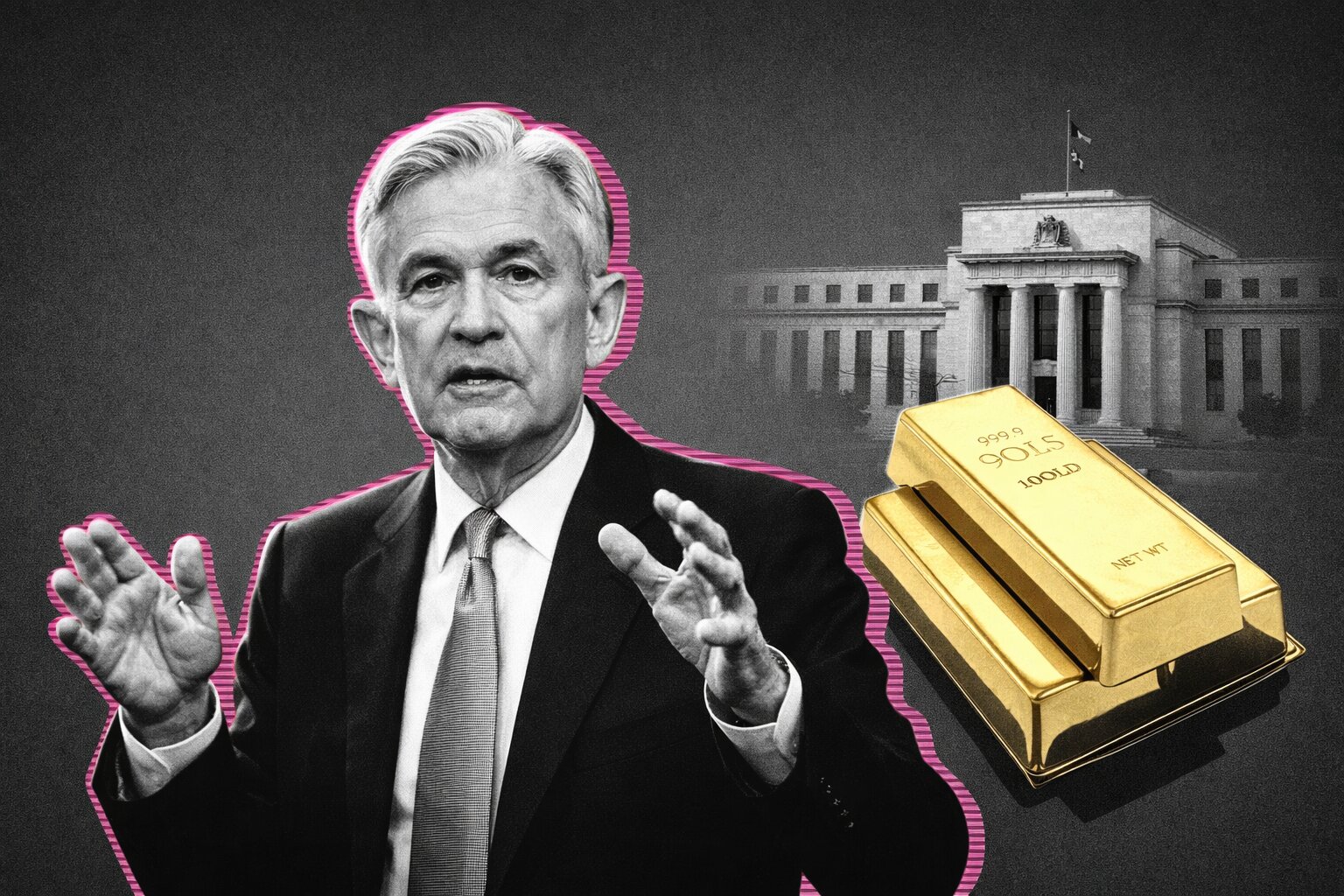
The Fed's Impossible Position: 92,000 Jobs Lost, Oil at $90, and No Good Options
The Federal Reserve's dilemma captures the full horror of what $90 crude combined with a collapsing labor market actually means for policy. The Bureau of Labor Statistics reported 92,000 jobs lost in February — the mirror image of January's 126,000 jobs added. Combined with downward revisions to December and January totaling 69,000 positions, the two-month average is essentially zero net job creation — below the break-even rate of approximately 30,000 now needed to keep unemployment stable given declining birthrates and restricted immigration.
San Francisco Fed President Mary Daly acknowledged the "two-sided risks" directly: the oil price shock, depending on duration, is a real inflationary force, while the labor market may be weaker than previously assessed. Cleveland Fed President Beth Hammack cited "broad-based inflationary pressures" as the reason to maintain current policy despite softening employment. JPMorgan Wealth Management's Elyse Ausenbaugh framed the impossible calculus perfectly: higher oil prices, renewed tariff uncertainty, and a deteriorating jobs market create a "tricky, stagflationary mix of risks" that strips the Fed of its standard policy toolkit. Rate cuts would add fuel to an oil-driven inflation fire. Rate holds extend the pain for a labor market that shed 92,000 jobs. The Fed is frozen.
Fed Fund Futures are pricing a near-50% probability of a June rate cut — a timeline that has shifted dramatically from earlier expectations and could shift again depending on the February CPI report arriving next Wednesday. If CPI comes in hot — which $90 crude virtually guarantees on a forward basis — the June cut probability could fade toward 30%, extending the period of policy paralysis that is simultaneously bearish for equities and supportive of continued dollar strength.
Iraq's 1.5 Million Barrel Cut and the Regional Production Cascade
The JPMorgan note that circulated Friday contained a figure that has not received sufficient attention: Iraq has cut production by 1.5 million barrels per day — a reduction equivalent to roughly 1.5% of total global daily production from a single country. Iraq produces approximately 4.5 million barrels per day in normal operations, making this a 33% production cut for the country. The reason is logistical: with Hormuz closed to outbound tanker traffic, Iraqi crude has nowhere to go. Storage fills, production must be throttled, and the barrels that were flowing to Asian refineries, European ports, and U.S. terminals simply stop.
The cascade risk JPMorgan identified — an additional 4 million barrels per day of regional supply disruption by end of next week — would represent a total of 5.5 million barrels per day of Gulf production removed from the global market simultaneously. For context, the 2022 Russian sanctions and supply disruption removed approximately 2 to 3 million barrels per day from global supply at peak disruption, and that move sent Brent to $139 per barrel. A 5.5 million barrel disruption of longer duration would create supply withdrawal roughly double the Russian shock in magnitude. The $150 scenario is not implausible arithmetic — it is the outcome if the current trajectory continues for two to three more weeks.
U.S. Energy Sector Response: XOM, CVX, OXY Gain as the Permian Basin Becomes Strategically Critical
The energy sector has been the market's only sustained outperformer since the Iran strikes began. Energy (XLE) is the relative leader in an otherwise deeply negative week, with crude's historic surge translating directly into equity gains for domestic producers. Exxon Mobil (XOM) and Chevron (CVX) each gained more than 1% in premarket Friday, and Occidental Petroleum (OXY) climbed 3.3% before the open. These gains are fundamental, not speculative: at $90 crude, U.S. shale producers operating in the Permian Basin are generating free cash flow at levels not seen since 2022.
The strategic calculation has also shifted: with Gulf production disrupted and the Strait of Hormuz closed, U.S. domestic production becomes geopolitically indispensable rather than merely economically competitive. Every barrel produced in the Permian Basin, the Bakken, or the Eagle Ford replaces a barrel that cannot leave the Persian Gulf. The Trump administration's energy posture — maximum production, reduced regulation — aligns directly with the current supply emergency. U.S. production capacity is being tested in real-time as a strategic asset.
The fertilizer sector has also surged, with CF Industries (CF) gaining 5% Friday and up 17% on the week as traders priced the disruption to raw material flows through Hormuz. More than a third of fertilizer feedstocks transit the strait, and a sustained closure creates the same supply scarcity dynamics for agricultural inputs that are now visible in crude.
The Verdict: Crude Oil Is a Hold With Upside Bias — $100 Is the Near-Term Target, $120 Is Not Impossible
WTI (CL=F) at $90.90 and Brent (BZ=F) above $92 are not the top of this move if the geopolitical situation remains unresolved. The physical supply disruption is real, documented, and compounding. Kuwait is already cutting production due to storage constraints. Iraq has already reduced output by 1.5 million barrels per day. Qatar has declared force majeure on LNG. The tanker count through Hormuz is zero. Trump has demanded unconditional surrender and closed the diplomatic window. Goldman Sachs targets $100. JPMorgan warns of $120. Qatar's energy minister has put $150 on the table if force majeure declarations cascade across Gulf exporters.
The near-term target is $100 per barrel for WTI — a level that represents approximately 10% upside from Friday's close and would be reached within days if Kuwait's production cuts deepen, another Gulf producer declares force majeure, or Trump's unconditional surrender posture produces military escalation rather than Iranian capitulation. Positions in XOM, CVX, OXY and sector ETF XLE are buys on any pullback toward the $85 to $87 range. The only scenario that reverses this trade is a credible ceasefire announcement — not a social media post, not a diplomatic signal, but an actual cessation of hostilities — which would collapse the geopolitical premium and send crude back toward $65 to $70 rapidly. Until that ceasefire materializes, crude oil's path of least resistance is higher, and every day of Hormuz closure adds incremental supply withdrawal that keeps the floor beneath prices elevated.