Wall Street Closes Week at the Edge of Record Highs as Rate-Cut Bets Ignite Rally Across Indices
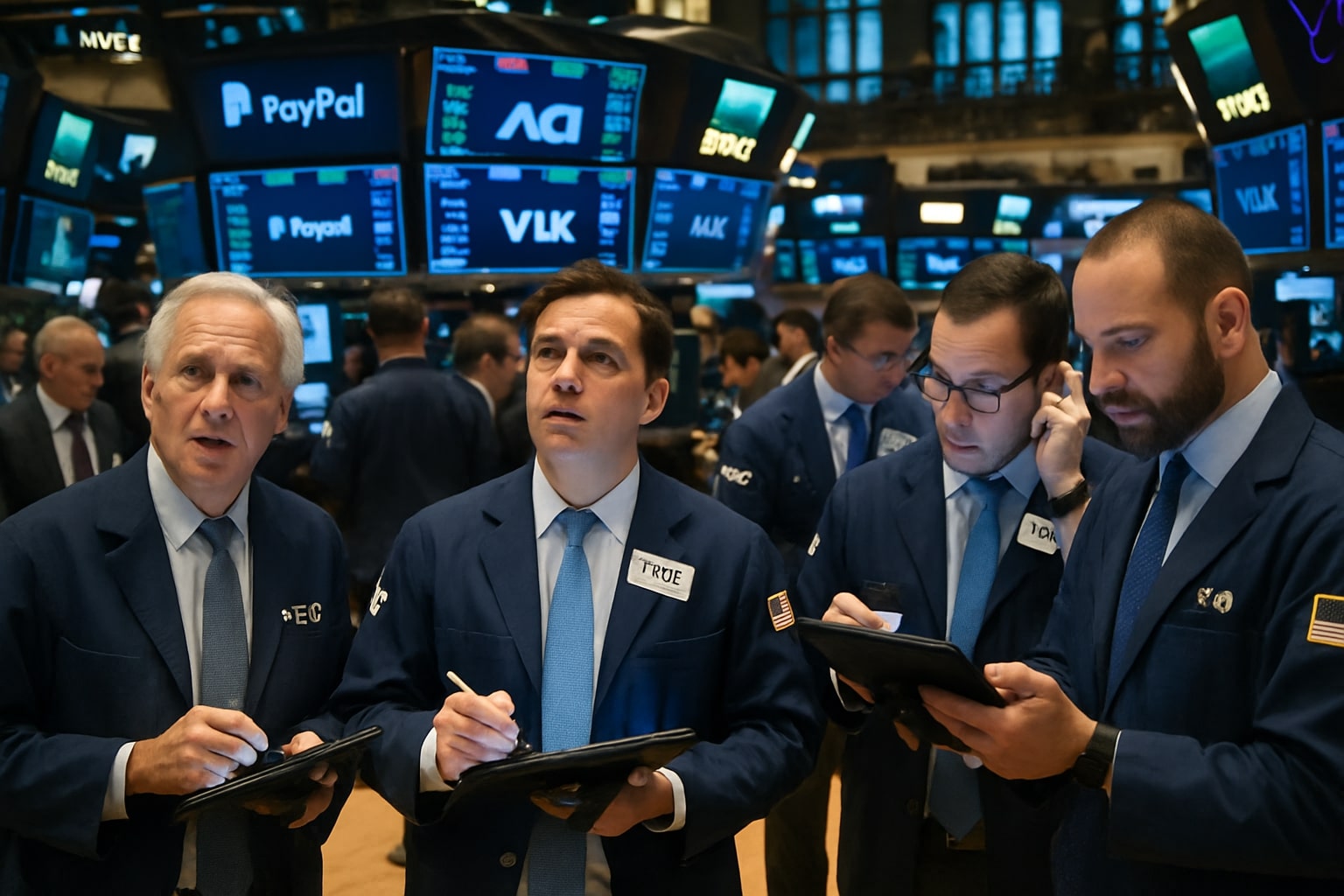
The final trading week before the Federal Reserve’s December policy decision ended with a resounding vote of confidence from Wall Street. The S&P 500 (^GSPC) advanced 0.19% to 6,870.40, sitting just 0.3% shy of its all-time high, while the Nasdaq Composite (^IXIC) gained 0.31% to 23,578.13, logging its ninth winning session in ten trading days. The Dow Jones Industrial Average (^DJI) climbed 104.05 points, or 0.22%, to close at 47,954.99, marking a second consecutive week of gains for blue chips. The collective upward momentum reflects a market that is not only pricing in a 25-basis-point rate cut next week with 87% probability but also positioning for a potential expansion of the Fed’s balance sheet through reserve purchases—moves that together signal a softening monetary stance heading into 2026.
What began as cautious optimism has evolved into a powerful rally supported by data and liquidity. The three major benchmarks have now notched year-to-date gains of 16.8% for the S&P 500, 22.1% for the Nasdaq, and 12.7% for the Dow, with investors betting that the Fed’s next move will cement a “Goldilocks” scenario—growth stabilizing, inflation easing, and rates turning lower. This is not speculation; it’s conviction built on hard evidence from economic prints and corporate earnings that consistently exceeded expectations through Q4.
Fed Policy and Economic Data Reinforce Confidence in Soft Landing
The week’s economic releases underscored a scenario of controlled disinflation and resilient consumer health. The Personal Consumption Expenditures (PCE) Price Index, the Fed’s preferred inflation measure, rose 0.3% month-over-month in September, matching expectations, while core PCE, which strips out food and energy, increased 0.2%, also in line with consensus. On a year-over-year basis, both headline and core PCE stood at 2.8%, confirming inflation’s continued moderation toward the Fed’s 2% goal.
The University of Michigan Consumer Sentiment Index climbed to 53.3, beating the 52 forecast and reflecting improving consumer optimism as inflation expectations eased. One-year inflation expectations dropped to 4.1% from 4.5%, while long-term expectations fell to 3.2% from 3.4%. Together, the data reaffirmed the Fed’s progress in taming inflation without tipping the economy into contraction. Meanwhile, the 10-year Treasury yield (^TNX) ticked up to 4.14%, while the 30-year (^TYX) edged higher to 4.78%, suggesting stability in long-duration yields even as markets prepare for a pivot to lower policy rates.
This macro backdrop has fueled what traders call “the perfect inflation print” — steady enough to justify easing but soft enough to avoid triggering recession fears. As one strategist noted, this is the type of environment where equities historically thrive: liquidity is expanding, borrowing costs are falling, and corporate balance sheets remain remarkably healthy.
Earnings Fireworks: Netflix’s Blockbuster Deal and Retail’s Strong Finish
Corporate headlines dominated the week, led by Netflix (NASDAQ:NFLX) announcing a $72 billion acquisition of Warner Bros. Discovery (NASDAQ:WBD), an unprecedented consolidation that reshapes Hollywood’s competitive hierarchy. The cash-and-stock deal values WBD at $27.75 per share, representing a premium of roughly 13% over its prior close. Netflix stock fell 2.9% to $100.24, as investors weighed the near-term costs of the transaction, while WBD soared 6.28% to $26.08, reflecting confidence in the synergy potential.
The acquisition gives Netflix control over iconic franchises including Game of Thrones, Harry Potter, and DC Comics, while bolstering its content pipeline at a time when traditional media firms face strategic stagnation. Regulatory hurdles remain, but the long-term implications are clear: Netflix just transformed from a disruptor into a vertically integrated entertainment powerhouse.
Retail earnings added further spark. Ulta Beauty (NASDAQ:ULTA) surged 13% after raising its full-year EPS outlook to $25.20–$25.50, up from $23.85–$24.30, as consumer spending held firm and margins expanded. Victoria’s Secret (NYSE:VSCO) climbed nearly 18% after lifting its FY2025 sales forecast to $6.45–$6.48 billion, exceeding earlier projections. The company reported 9% year-over-year revenue growth to $1.47 billion, outpacing expectations and signaling a credible turnaround in its brand repositioning.
Elsewhere, The Cooper Companies (NASDAQ:COO) advanced 5.7% on strong quarterly earnings and improved free cash flow guidance, while Rubrik (NYSE:RBRK) exploded 23% higher after the AI-security firm raised its 2026 revenue forecast amid surging enterprise demand for generative AI defense systems.
Tech Sector Reclaims Leadership Ahead of Fed Meeting
Technology once again spearheaded market strength. The SPDR S&P Information Technology ETF (NYSEARCA:XLK) extended its rally for a tenth consecutive session, marking its longest winning streak since 2020. Salesforce (NYSE:CRM) surged 5.3% after delivering better-than-expected earnings and expanding operating margins, while Adobe (NASDAQ:ADBE), Intel (NASDAQ:INTC), and Micron (NASDAQ:MU) each advanced more than 4%. The sector’s breadth widened beyond mega-cap AI names, signaling renewed investor confidence in diversified tech exposure.
However, Nvidia (NASDAQ:NVDA) lagged, slipping 0.53% to $182.41, weighed by ongoing U.S.-China tensions. The proposed Secure and Feasible Exports (SAFE) Act threatens to bar AI chip exports to China for at least 30 months, limiting one of Nvidia’s key revenue streams. Simultaneously, Chinese rival Moore Threads surged in its market debut, highlighting Beijing’s acceleration toward semiconductor self-sufficiency. With 90% of Nvidia’s $57 billion quarterly revenue derived from data center sales, the company’s heavy reliance on AI infrastructure leaves it highly exposed should demand decelerate.
Tesla’s Regional Struggles Prompt Strategic Price Reset in Europe
Tesla (NASDAQ:TSLA) continued to grapple with weakening European demand, prompting the launch of more affordable Standard Model 3 and Model Y trims priced at €36,990 ($43,130) and €45,990 ($53,620) respectively. The EV maker’s European sales plunged 29.6% year-to-date to 180,688 units, shrinking market share to 1.6% from 2.4% a year earlier. Meanwhile, Chinese competitor BYD (OTC:BYDDY) saw sales soar 207%, while SAIC Motor climbed 46%, signaling intensifying competitive pressure.
CEO Elon Musk’s political controversies and association with far-right European figures have compounded Tesla’s challenges in the region, damaging its brand perception. Musk attributes the sales weakness to high interest rates, but the data shows a broader issue: competition in the EV sector is no longer confined to price—it’s about perception and accessibility.
Crypto and Commodities: Diverging Paths Amid Fed Expectations
The decoupling between digital assets and equities deepened this week as Bitcoin (BTC-USD) dropped 1.28% to $89,876, struggling to maintain momentum above $92,000. The world’s largest cryptocurrency remains 30% below its October peak of $126,000, reflecting waning institutional inflows. BlackRock’s (NYSE:BLK) iShares Bitcoin Trust (IBIT) logged $2.7 billion in redemptions over five weeks, its longest streak of outflows since inception, underscoring renewed caution among professional investors.
In contrast, gold (COMEX:GC=F) held firm at $4,227.70 per ounce, up 0.8% on the week, benefiting from a weakening dollar and rising rate-cut expectations. The metal remains about $100 below its all-time high but retains upward momentum as monetary conditions loosen. Commodities priced in dollars, from gold to copper, saw a tailwind from the greenback’s mild retreat, confirming renewed interest in hard assets as diversification tools against policy risk.
Financials and Industrials Extend Record-Setting Momentum
The rotation into cyclicals continued, with Bank of America (NYSE:BAC) climbing to its highest level since 2006, and Goldman Sachs (NYSE:GS) setting a new all-time high amid robust trading and investment banking revenues. Walmart (NYSE:WMT) hit a record $116.27 intraday, buoyed by strong Black Friday performance and resilient consumer trends. Meanwhile, Caterpillar (NYSE:CAT), General Motors (NYSE:GM), and Applied Materials (NASDAQ:AMAT) all registered new 52-week highs, reinforcing the breadth of this market’s strength.
Energy was steadier, with crude oil (CL=F) closing at $60.14 per barrel, up 0.79%, stabilizing after several volatile sessions. The sector’s underperformance relative to equities suggests investors remain focused on rate-sensitive and growth-oriented segments rather than cyclicals, though renewed OPEC+ discipline could shift sentiment in early 2026.
Valuation Risks Loom as Optimism Peaks
Despite the bullish backdrop, valuations are becoming stretched. The S&P 500’s Shiller CAPE ratio reached 40, matching levels last seen during the 2000 dot-com bubble. While this typically signals overextension, the modern market structure—anchored by mega-cap profitability and abundant liquidity—makes direct comparisons misleading. Still, such elevated readings warrant vigilance.
Investor psychology mirrors this confidence: the AAII Sentiment Survey showed bearish sentiment plunging to 30.8%, the lowest since January, while bullish sentiment rose to 44.3%, the highest in months. Markets are clearly pricing in a perfect scenario—rate cuts, earnings growth, and no recession—but perfection is rarely sustainable.
Looking Ahead: Fed’s Tone to Dictate the Next Leg of the Rally
Next week’s FOMC meeting (Dec. 9–10) is set to be the decisive macro event. A 25-basis-point cut is all but guaranteed; what matters is Chair Jerome Powell’s language around future easing and balance sheet policy. If Powell signals confidence without overcommitting to an aggressive easing path, equities could push into record territory by mid-December. Conversely, an overly dovish tone could flatten the yield curve and trigger profit-taking.
Analysts at Bank of America (NYSE:BAC) warn that a “too-easy” Fed could disrupt the bond market’s long end, while others, including strategists at PineBridge Investments, see a balance-sheet expansion as the hidden catalyst for a 2026 bull leg.
The S&P 500 sits just 0.7% below record levels, capping a 73% three-year advance driven by AI enthusiasm, earnings strength, and liquidity growth. Historical data suggests that markets approaching record highs ahead of easing cycles typically deliver further gains over the subsequent 12 months.
Verdict: Momentum Intact, Bias Remains Bullish
U.S. equities ended the week pressing against record highs, driven by cooling inflation and surging optimism ahead of the Fed’s rate decision. Liquidity is improving, credit spreads remain tight, and earnings growth is accelerating across key sectors. The S&P 500 looks set to challenge the 6,950–7,100 zone, supported by strong consumer demand and renewed appetite for AI-related stocks. Tech remains dominant, but rotation into financials, retail, and industrials shows this rally’s depth. The dollar’s mild pullback continues to aid gold and risk assets. Despite stretched valuations, momentum remains intact as investors embrace a soft-landing narrative. The tone is confidently bullish—this market isn’t showing exhaustion, it’s gathering strength. Short-term view: BUY on broad equities, HOLD high-flyers, stay positioned for a decisive breakout into 2026.
That's TradingNEWS