Stock Market Today: S&P 500 (SPX),Nasdaq(COMP), Dow ($DJIA) Post Back-to-Back Gains — Delta Surges 4%, Nvidia Eyes $1T, Uber Jumps 5%
Russell 2000 Leads All Indices at +1.09% as Airlines and Energy Drive Tuesday's Rally; Brent Crude Hovers at $101, Fed Rate Decision Due Wednesday | That's TradingNEWS
Wall Street Extends Its Rebound: Indices Post Back-to-Back Gains as Oil Retreats from Triple-Digit Territory
Breadth Tells the Real Story
U.S. equity markets logged their second consecutive advance Tuesday, clawing back more territory after three brutal weeks of Iran war-driven losses. The S&P 500 ($SPX) added 0.51% to 6,733.22, the Dow Jones Industrial Average ($DJIA) climbed 215 points or 0.46% to 47,161.93, and the Nasdaq Composite ($COMP) rose 0.52% to 22,490. The day's standout performer was the Russell 2000 ($RUT) — up 1.09% to 2,530.60 — where small caps led the charge with breadth that would embarrass most bull-market sessions: 1,610 holdings advancing against just 300 declining.
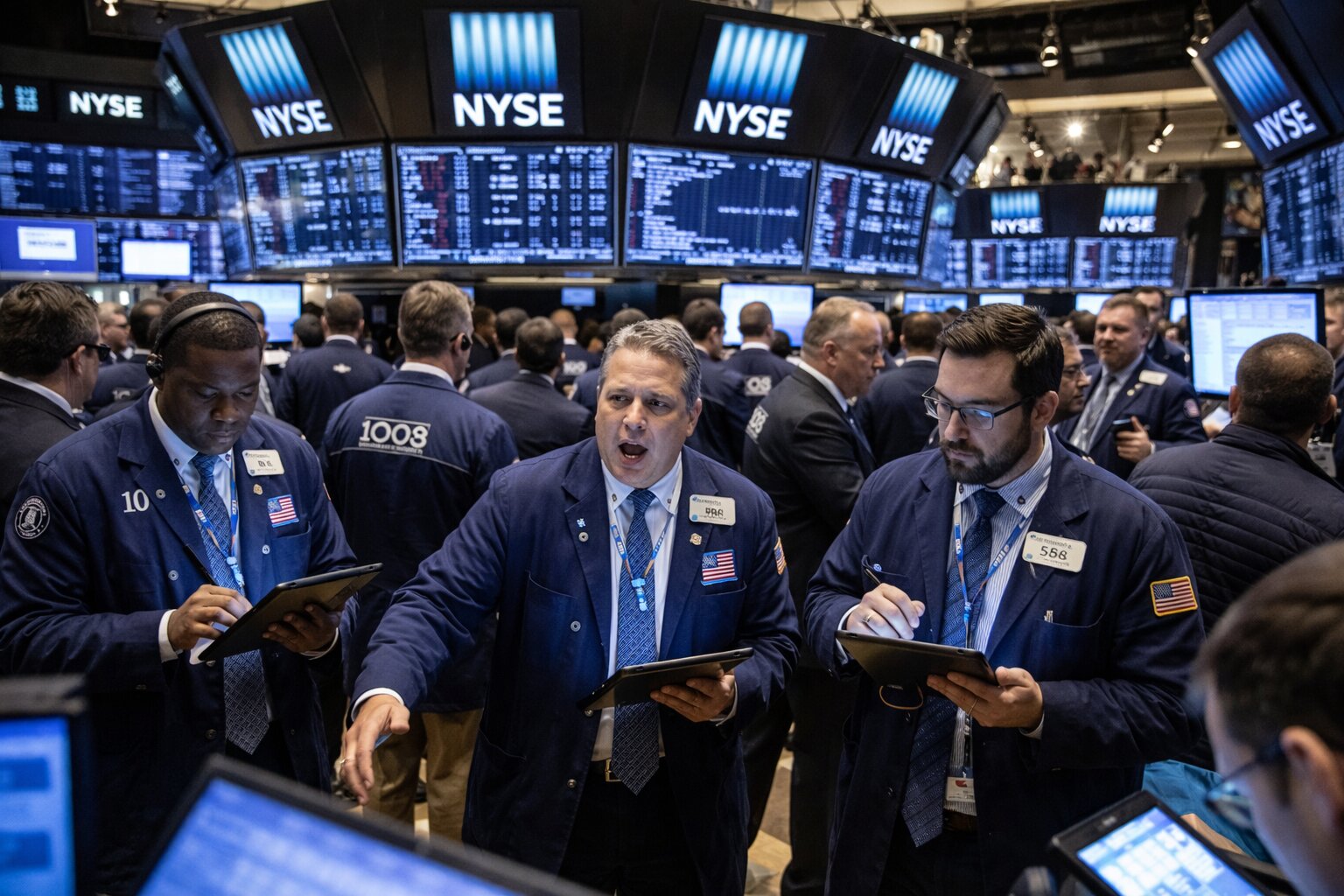
Over 450 of the 503 names in the S&P 500 traded higher in early going, with the index touching 6,748 at the open. The New York Stock Exchange opened with advancers leading decliners roughly four-to-one — 1,939 advancing to just 590 declining. For a market that's been getting beaten up since late February, this kind of breadth is not noise. It's structure. The S&P 500 was on track Tuesday to post something it hasn't achieved since Biden was still in the Oval Office: two back-to-back sessions of gains with stellar market-wide participation. Historically, St. Patrick's Day has been kind to equity investors — the S&P 500 has risen on the holiday 65% of the time since 1950, averaging a gain of 0.4%.
Oil at $101 Brent — The Inflation Risk That Won't Let the Fed Blink
The Middle East remains the fulcrum around which every asset class is tilting. Brent crude, the global benchmark, hovered around $101 per barrel Tuesday morning, having surged as high as $102.57 earlier in the Asian session. West Texas Intermediate (WTI) traded just below $95, up roughly 1.2% on the day. Fresh strikes on the Majnoon oil field in Iraq and a UAE gas field forced the latter to halt operations entirely. The key Fujairah Oil Tanker Terminal in the United Arab Emirates — which handles oil exports that bypass the Strait of Hormuz — was targeted again early Tuesday local time after barely resuming partial loading operations Monday following a drone attack. Fujairah is the escape valve for Gulf oil when Hormuz is closed. When Fujairah itself is under fire, the escape valve shuts.
Transit through the Strait of Hormuz — through which roughly 20% of global oil and gas supply normally flows — has all but collapsed. Marine tracking firms Windward and Kpler pegged the seven-day average of ship crossings at just two per day, against more than 100 in peacetime. Only three tankers and a handful of general cargo vessels crossed since the weekend. The one notable exception: China-bound vessels continue moving, a geopolitical signal as loud as any press release.
President Trump made calls for allied nations to help escort tankers through the Strait, but coalition-building is encountering friction. Trump acknowledged Monday that some nations are "less than enthusiastic," estimating one or two will outright refuse despite decades of U.S. security coverage. That candid admission sent oil futures spiking again overnight before a partial reversal through the morning. The longer-dated futures market is more telling than the spot price. WTI contracts for January 2027 delivery climbed from $68.55 a barrel just one week ago to above $75 — a $6.45 jump in the deferred curve that tells you the market isn't pricing a two-week resolution. It's pricing a prolonged conflict.
Diesel hit $5.04 per gallon nationally on Tuesday — a 38% surge from just a month ago and the highest level since Russia's 2022 invasion of Ukraine. South Carolina saw pump prices jump $1.65 a gallon month-over-month; Florida saw a $1.71 spike. California, Washington, and Hawaii are all printing above $6.00. Diesel feeds trucking, which feeds every shelf in every grocery store. This isn't an abstract energy market problem — it's a cost-of-living acceleration arriving on doorsteps in real time.
Delta (DAL) Breaks Out; Airlines Defy the Fuel Math
The airline sector's performance Tuesday defied every spreadsheet model. Delta Air Lines (DAL) surged more than 4% after raising its first-quarter revenue growth outlook to high-single-digit expansion, stepping up from previous guidance of 5%–7%. This is a carrier absorbing a near-doubling of jet fuel prices in a single quarter — by CEO Ed Bastian's own numbers, roughly a $400 million incremental fuel hit — and still lifting its top-line guidance. Bastian told CNBC that demand strength is running approximately 3 percentage points above the original Q1 forecast, enough to offset both fuel costs and 2 points of lost capacity from winter storms. EPS guidance of $0.50–$0.90 for the quarter remains intact. DAL was down 12% year-to-date entering Tuesday, which made the stock a coiled spring once the numbers hit.
American Airlines (AAL) rose 3% and United Airlines (UAL) added 2.5% on the Delta-driven read-across. If the largest U.S. carrier can raise guidance with $95 crude and doubled jet fuel in the cost stack, the entire sector's demand resilience looks better than feared. The travel consumer is still booking. This is a buy on DAL and UAL — the margin recovery story is alive even with elevated crude, and both have substantially underperformed year-to-date.
Nvidia (NVDA) GTC Fallout: $1 Trillion Revenue Target Through 2027
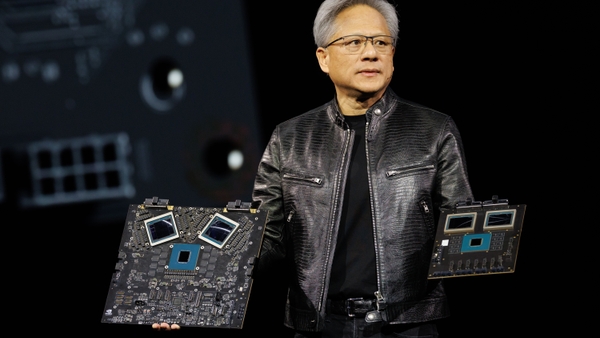
Nvidia (NVDA) CEO Jensen Huang dominated Monday's GTC 2026 conference in San Jose with an announcement that recalibrated the chip company's medium-term revenue trajectory. Huang projected that combined revenues from the Blackwell and next-generation Vera Rubin AI platforms will reach $1 trillion through 2027 — doubling a prior projection of $500 billion for Blackwell and Rubin through end of 2026. The Vera Rubin architecture is positioned as a "revolutionary" successor to Blackwell; taken together, Nvidia is effectively telling institutional buyers that the AI hardware cycle is not decelerating into a trough, it's accelerating into a new plateau.
Huang additionally unveiled the Vera Rubin Space-1 Module for orbital data centers — a computing platform engineered for size-, weight-, and power-constrained space environments using the IGX Thor and Jetson Orin chips. Partners include Axiom Space, Starcloud, and Planet. The company is working through a genuine engineering problem: cooling systems in space must operate via radiation, not convection. This comes shortly after Nvidia-backed Starcloud launched a satellite carrying an H100 GPU. The satellite sector surged 5.76% Tuesday; satcom names added 5.06%. Despite the enormous headline, NVDA stock ticked lower Tuesday — a classic buy-the-rumor, sell-the-news dynamic around a multi-day conference. That's a tradeable dip. Nvidia at a conference-day pullback, with $1 trillion in stated medium-term revenue visibility, is a hold-to-buy for any account with a 12-month horizon.
Uber (UBER) +5%: Robotaxi Is the Real Revenue Inflection
Uber Technologies (UBER) jumped 5% after the company and Nvidia announced an expansion of their self-driving vehicle partnership. This wasn't a vague MOU — it's a structural extension of Nvidia's autonomous driving stack into Uber's fleet network. Uber has spent years being asked whether its platform survives the robotaxi transition or gets disrupted by it. An Nvidia partnership that expands autonomy across Uber's infrastructure answers that question emphatically: Uber is positioning itself as the commercial layer on top of autonomous hardware, not a casualty of it. Uber is a buy.
Hyundai (KR:005380), Kia (KR:000270), Nissan (JP:7201), Isuzu (JP:7202), and Geely Automotive (HK:175) all moved higher as Nvidia broadened its autonomous driving partnerships across Asian OEMs. Nvidia's DRIVE platform is becoming the operating system of the automotive AI transition, and every OEM that plugs in gets a lift.
Read More
-
Broadcom Stock Price Forecast: $19.3B Record Quarter, AI Revenue Up 106%, CEO Targets $100B — Why $324 Is a Strong Buy
17.03.2026 · TradingNEWS ArchiveStocks
-
XRP Price Forecast: XRP-USD $1.52 and Rising, $1.60 Breakout That Targets $1.80
17.03.2026 · TradingNEWS ArchiveCrypto
-
Natural Gas Price Forecast: $3.03 Holds as Qatar's 20% LNG Supply Shock, Record 112.5 Bcf/d Production
17.03.2026 · TradingNEWS ArchiveCommodities
-
USD/JPY Price Forecast: Pair Stalls at 159.20 as 160 Intervention Zone and Fed Rate Hold
17.03.2026 · TradingNEWS ArchiveForex
Morgan Stanley Upgrades Lemonade (LMND); BofA Stands Behind SAP
Morgan Stanley upgraded Lemonade (LMND) to overweight from equal weight, raising its price target from $80 to $85 — implying 47% upside from Monday's close. The thesis rests on autonomous vehicle insurance as a structural disruptor. As AVs reset traditional auto insurance underwriting dynamics, incumbents built on actuarial tables for human drivers lose their competitive moat. Lemonade's Tesla partnership — offering owners a 50% discount per mile driven using Full Self-Driving, without sacrificing underwriting discipline — is the specific catalyst. This is a speculative buy with real structural backing: the AV insurance market is being built in real time, and Lemonade has a first-mover position in the space.
Bank of America reiterated its buy rating on SAP (SAP) with a $308 price target, suggesting 60.7% upside from Monday's close. BofA analyst Frederic Boulan acknowledged modest Q1 bookings pressure from geopolitical uncertainty but called SAP's profile "defensive," projecting 11.5% top-line acceleration and 15% EBIT growth. Critically, the bank called AI disruption fears for enterprise software "overstated." SAP has fallen nearly 29% over the past year. At a 60%+ discount-to-target on a Buy from BofA, this is a compelling contrarian re-entry.
Sector Rotation: Financials Lead, Satellites Surge, Energy ETFs Hit All-Time Highs
The sector leadership Tuesday was instructive. Financials led the S&P 500 higher with a 1.4% gain, followed by consumer discretionary (+1.04%) and real estate (+0.82%). In the Dow, Goldman Sachs (GS) gained 2.87%, American Express (AXP) added 2.50%, and IBM (IBM) climbed 2.45%. These are not defensive names — financials and discretionary leading in a geopolitical stress environment signals investors are actively rotating into growth and cyclicality rather than hiding.
Energy stocks and ETFs continued their relentless climb. APA Corporation (APA) and BP (BP) each jumped nearly 3%. ConocoPhillips (COP), Coterra Energy (CTRA), and Devon Energy (DVN) rose 1% each — all printing 52-week highs simultaneously. Exxon Mobil (XOM) added 1% and Occidental Petroleum (OXY) gained 1.4%. Energy ETFs XOP, FCG, IXC, VDE, and XLE all surged over 1% and hit 52-week highs. The IXC, VDE, and XLE went further, printing all-time highs. The XLE is a buy as long as Hormuz remains disrupted.
In the Russell 2000, DocGo Inc. surged 18.95%, Citi Trends jumped 16.59%, and Solaris Energy Infrastructure gained 13.1% — the three largest percentage gainers in the small-cap index. On the downside, Aldeyra Therapeutics cratered 70.22% and LENSAR fell 29.82% on company-specific catalysts. Johnson & Johnson (JNJ) was the weakest Dow component, off 0.85%. Corning (GLW) fell 3.83%, Cencora (COR) dropped 2.47%, and Dell Technologies (DELL) slid 2.15% — three names worth watching as potential opportunities if the broader market extends its recovery.
The Cboe Volatility Index (VIX) continued its retreat, falling 6.08% to 22.08. Still elevated — anything above 20 signals stress — but directionally the right move for equities to sustain upward momentum.
The Fed Kicks Off a Two-Day Meeting; Gold Hits $5,015; Dollar Softens
The Federal Reserve began its two-day policy meeting Tuesday and is universally expected to hold rates unchanged Wednesday. What traders are actually parsing is the tone of Fed Chair Jerome Powell's 2:30 p.m. ET press conference Wednesday — specifically whether he signals a wait-and-see posture for months or leaves open the possibility of cutting once the Iran fog clears. The majority of market participants currently don't expect a cut until October or December. Thornburg Investment Management portfolio manager Ali Hassan put it plainly: two to three cuts are possible later this year if the Iran conflict wraps in weeks; zero cuts if it drags for two to three months. The Fed is essentially hostage to the oil market's duration.
The 10-year Treasury yield slipped to 4.20% on Tuesday, down from 4.22% at Monday's close — a modest bond rally as equity risk appetite recovered partially. Gold futures ticked up to $5,015.30 per ounce, finally behaving like a genuine safe-haven asset. Silver was slightly higher at $80.80 per ounce. Bitcoin (BTC) sat near $74,155, essentially unchanged, awaiting clarity on whether Powell's tone Wednesday sparks a risk-on extension or a reassessment.
The U.S. Dollar Index softened to approximately 99.64 — off from the 10-month highs it briefly touched in recent weeks. The dollar's war-driven reprieve makes mechanical sense: WTI crude is priced in dollars, so oil demand creates currency demand. But Morgan Stanley's August 2025 analysis flagged that the dollar ended a "15-year bull cycle" during last year's tariff turbulence. The current reprieve may be exactly that — a reprieve, not a structural reversal.
Wyoming joined a growing cohort of states adding physical gold to state investment portfolios, purchasing approximately 2,312 ounces — 72 smartphone-sized bars for roughly $10 million — following passage of a law mandating precious metals as a portfolio hedge. The stockpile has since risen in value. State-level gold accumulation is a micro-data point, but the trend matters: sovereign and quasi-sovereign buyers are quietly building positions at $5,000+ gold, not selling.
Fund Manager Sentiment Falls to Six-Month Low; Don't Confuse Caution With Capitulation
Bank of America's latest global fund manager survey delivered a clear verdict: the "frothy bull" sentiment of recent months is over. Investor sentiment fell to its lowest level in six months, with war in the Middle East and private credit concerns cited as the primary drivers. More investors are turning bearish. This is actually useful context for the rally: Tuesday's gains are not coming from a crowded bull. They're coming from a market that has partially de-risked, where positioning is lighter and the marginal buyer has room to re-enter. Sentiment at a six-month low, with four-to-one breadth on the NYSE, is a more durable setup than euphoric breadth would be.
A Moody's report flagged possible recession risk if elevated oil prices persist "a few more weeks." Bartlett Wealth Management's Holly Mazzocca noted the labor market has "weakened pretty significantly" and that risks to the growth story are meaningfully higher today than just weeks ago. These are legitimate concerns. The recovery rally is real; the underlying risks haven't been resolved. This is a market to trade tactically, not to chase with conviction — overweight energy, airlines with pricing power like DAL and UAL, financials like GS and AXP, and select tech names with autonomous and AI catalysts like UBER and NVDA on dips. Underweight anything with heavy diesel exposure on the cost side and limited pricing power to offset it.
Qualcomm (QCOM), Expedia (EXPE), Lululemon (LULU), and DocuSign (DOCU): The Day's Other Movers
Qualcomm (QCOM) announced a $20 billion share buyback program alongside a dividend increase — a capital return signal that management views the stock as undervalued at current levels. A $20 billion buyback is not a trivial commitment. Hold and accumulate QCOM.
Expedia Group (EXPE) was the top S&P 500 gainer Tuesday, surging 6.26%. The read: travel demand is not breaking even with fuel prices surging. Alongside Delta's raised guidance and American and United moving higher, Expedia's pop confirms a consumer that is still booking trips, still absorbing higher fares, still paying the travel premium. Align Technology (ALGN) gained 4.98% — a dental-tech name that benefits from a resilient consumer discretionary environment.
Lululemon (LULU) reports earnings after the close Tuesday. The stock has been under pressure year-to-date; the setup into earnings is a cautious hold — wait for the print before adding.
DocuSign (DOCU) also reports today. The software sector is in a complex place: SAP off 29% year-over-year, Atlassian cutting 10% of its workforce citing AI investment needs, Block (XYZ) slashing 40% of headcount as it pivots to AI, Meta reportedly considering a 20% workforce reduction while spending up to $135 billion on AI infrastructure this year. The pattern is consistent — AI is not eliminating jobs by doing the same work faster, it's redirecting payroll spend into infrastructure capex. For DocuSign, the question is whether its e-signature workflow is defensible against AI-native alternatives or becomes the next Atlassian moment. That print matters.
Asia Markets Overnight: South Korea Leads, Nikkei Bounces
Asian equity markets opened higher Tuesday on Iran war developments, though enthusiasm was tempered by Trump's decision to delay his China trip — the scheduled end-of-March meeting with President Xi Jinping is being pushed back amid Middle East focus. For trade deal bulls, this is a setback.
South Korea's Kospi surged 2.94%, with the small-cap Kosdaq adding 1.53%. Japan's Nikkei 225 rose 0.75% and the Topix gained over 1%. Australia's S&P/ASX 200 added 0.27% as its central bank prepared for a second consecutive rate hike expected to bring its key policy rate to 4.1% — the highest since April 2025. Hong Kong's Hang Seng gained 0.94% and mainland China's CSI 300 added 0.28%. The divergence between Korea's outsized gain and China's modest move is worth watching — Nvidia's Asian OEM partnerships are concentrated in Korean names like Hyundai and Kia, giving the Kospi a direct semiconductor catalyst that Chinese equities don't share to the same degree.
The market's message Tuesday is cautiously constructive but structurally fragile. Energy is the one sector with an unambiguous fundamental tailwind and a clean buy thesis. Airlines with demand resilience and proven pricing power — particularly Delta — are the surprise trade of the conflict period. Nvidia's $1 trillion medium-term revenue projection keeps AI infrastructure firmly in the accumulation camp on pullbacks. The Fed is a Wednesday wildcard. And Hormuz remains the variable that overrides every other analysis: if tanker traffic doesn't recover, the Moody's recession risk scenario moves from tail to base case with remarkable speed.