

Amazon Stock Price Forecast – AMZN Stock Targeting a Rebound Toward $270
AMZN hovers near $200, well below its $258.60 high, as investors digest a $200B 2026 AI build-out, 24% AWS growth, a $244B cloud backlog and a medium-term price target around $270 | That's TradingNEWS
Amazon Stock (NASDAQ:AMZN) – 200B CapEx Shock Versus a 1T Revenue Machine
Amazon stock (NASDAQ:AMZN) is trading around $200–$201, giving the company a market capitalization near $2.16 trillion and a trailing P/E close to 28x, after falling roughly 19–23% from the November highs around $258.60. The selloff happened even though Q4 revenue reached $213.4B, up about 13.6–13.7% year over year, and operating income rose to roughly $25B. The market is reacting to a $200B CapEx plan for 2026 and a sharp hit to free cash flow, while the operating data show a business that is still tightening its grip on cloud, advertising and logistics rather than losing momentum.
Amazon Stock (NASDAQ:AMZN) – Revenue Mix, Margins And Free Cash Flow Reality Check
Full-year 2025 revenue came in near $716.9B, a 12% increase versus 2024. The composition is the key: about $420.7B already comes from services – third-party seller services, AWS, advertising and subscriptions – while classic product sales are roughly $296.3B. The model is moving deeper into high-margin, recurring lines that deserve a structural valuation premium.
In Q4, GAAP EPS of $1.95 missed consensus by just $0.01, while revenue of $213.4B beat expectations by roughly $2.2B. Operating income increased from about $21.2B a year earlier to roughly $25B, even after absorbing around $2.4B of non-recurring items, including $1.1B for tax dispute resolution and roughly $610M of impairments tied mainly to physical stores. Without these one-offs, normalized operating income would have been about $27.4B, implying an underlying operating margin near 12.8%, which is strong for a company still investing heavily.
Free cash flow is where the optics turn negative. Operating cash flow sits around $139.5B for the year, but with cash CapEx of roughly $128.3B, reported free cash flow collapsed to about $11.2B, down from roughly $38.2B at the end of 2024. Management now plans to push CapEx up to roughly $200B in 2026, almost 60% above 2025 and likely above that year’s operating cash inflow. The market is extrapolating this into a structural free cash flow problem, even though the underlying profitability and mix are moving in the opposite direction.
Amazon Stock (NASDAQ:AMZN) – AWS Re-Acceleration, Backlog And The AI Build-Out
The profit center remains AWS. In Q4, AWS revenue reached about $35.6–35.58B, growing around 23.6–24% year over year, the fastest pace in roughly thirteen quarters. AWS operating income was about $12.47B, up more than 17%, and the segment still runs with mid-30% margins despite the heavy infrastructure build.
The demand picture is clear. The AWS backlog is about $244B, giving multi-year visibility on future revenue. Core enterprise workloads, which paused in 2023 and early 2024 during optimization, are migrating again, and on top of that, generative-AI demand is ramping. Amazon Bedrock, the managed platform for generative-AI applications, has already reached a multi-billion-dollar annualized run-rate, with spend up more than 60% quarter on quarter. More than 100,000 companies use Bedrock, with over 20 managed models available.
AWS is also pushing hard on in-house silicon. The combined revenue run-rate of Trainium and Graviton has already passed $10B, growing at triple-digit rates. More than 90% of AWS’s top 1,000 customers now use Graviton, which offers up to 40% better price-performance than standard x86 processors. Trainium2 supply is effectively fully booked, Trainium3 is in production with most of its capacity committed through mid-2026, and Trainium4 is targeted to push compute and memory bandwidth further from 2027 onward.
As long as AWS leans heavily on external high-end GPUs, part of every AI dollar is shared with chip vendors. The internal chip roadmap is explicitly designed to reclaim that margin. The $200B CapEx number is essentially the cost of building data centers, power capacity, networking and a proprietary compute stack at the same time. The market is pricing the upfront cost; the long-term equity value depends on how much margin AWS recovers once utilization ramps.
Amazon Stock (NASDAQ:AMZN) – Retail, Logistics And Rufus Turn Scale Into Profit
Behind the AWS headlines, the retail machine has become far more efficient than in previous growth cycles.
In Q4, the North America segment delivered around $127.1B of revenue, up roughly 10%, and about $11.47B of operating income, up nearly 24%, showing a structurally improved profitability profile at scale. The international segment generated around $50.7–50.72B in revenue, up roughly 17–17.3%, with operating income close to $1.04B, a significant shift versus the chronic losses that used to characterize Amazon’s overseas footprint.
The network redesign is critical. The US fulfillment system has been reorganized into roughly eight regional clusters, enabling Amazon to deliver about 8B items on a same-day or next-day basis to Prime members, roughly a 40% increase versus 2024. In 2025, US Prime members received about 70% more items same-day than in 2024, and nearly 100M customers used Same-Day Delivery at least once. More local inventory, shorter routes and denser last-mile operations feed directly into conversion and basket size.
On top of this logistics layer sits Rufus, Amazon’s AI shopping assistant. In 2025, more than 300M customers used Rufus, and management estimates roughly $12B of incremental annualized sales are already tied to it. Once search and recommendations are driven by a first-party model trained on Amazon’s commerce data, each visit becomes more valuable, ad inventory monetizes better and the ecosystem gets stickier without relying on heavy discounting.
Amazon Stock (NASDAQ:AMZN) – Advertising As A Second Profit Engine After AWS
Advertising has cemented itself as the second major profit driver after AWS. Quarterly ad revenue has reached around $21.3B, growing 22–23% year over year, and total 2025 advertising added roughly $12B in incremental sales. These are high-margin dollars that directly offset the lower margins inherent in low-price retail and the hit from aggressive capital spending.
The Prime Video ad-supported tier is now a large distribution surface. The ad-supported audience has expanded to about 315M, up from 200M at the start of 2024. That viewership is integrated with Amazon’s commerce and data stack, which means advertisers can link campaigns to purchasing behavior and closed-loop results rather than broad awareness metrics. Through Amazon’s demand-side platform, clicks have grown by roughly 186% year over year as AI tools optimize creative, targeting and placement.
When the market compresses Amazon’s valuation on near-term free cash flow, it is effectively discounting an ad business that is compounding above 20% per year and carries a structurally higher margin profile than retail. That disconnect is one of the reasons the current multiple looks too low versus the growth and mix.
Read More
-
JIVE ETF Near $90: International Value Rally That Still Looks Investable
17.02.2026 · TradingNEWS ArchiveStocks
-
XRP ETFs XRPI And XRPR: Deep 60% Drawdown Or Rare $8.51 Entry After $1.3B Flows?
17.02.2026 · TradingNEWS ArchiveCrypto
-
Natural Gas Price Forecast: Can the $3 Henry Hub Floor Survive Spring?
17.02.2026 · TradingNEWS ArchiveCommodities
-
USD/JPY Price Forecast - USDJPY Tests 153 Support as BoJ April Hike Talk Lifts Yen
17.02.2026 · TradingNEWS ArchiveForex
Amazon Stock (NASDAQ:AMZN) – 200B CapEx, Free Cash Flow Compression And What The Market Is Mispricing
CapEx of about $128.3B in 2025 already crushed reported free cash flow down to roughly $11.2B, and guidance for about $200B in CapEx for 2026 implies another year where investment might exceed operating cash inflows. Superficially that looks like a free cash flow crisis. The context in the operating data tells a different story.
Over the last three years, EBITDA has increased by roughly 163–164%, adding about $90.5B. Operating cash flow has grown by roughly 198%, an increase close to $92.8B. Operating income has expanded by roughly 499%, adding around $66.6B. The company is clearly scaling profitability and cash generation. Management is choosing to recycle that into infrastructure and AI rather than into buybacks or dividends. That is the same capital allocation philosophy that built Amazon’s logistics and AWS franchises; the difference now is simply the absolute dollar size.
The real risk is not that $200B is “too much” in isolation. The real risk is that the return on that $200B proves mediocre. If AWS fails to convert backlog and AI demand into higher utilization and sustained margin expansion once the build phase slows, then today’s free cash flow crunch moves from cyclical to structural and the current valuation might even be generous. At this point, however, the growth in AWS, the backlog, the advertising flywheel and the logistics efficiency gains do not support a thesis that Amazon is blindly burning capital.
Amazon Stock (NASDAQ:AMZN) – Semi Strategy, Nvidia Dependency And Margin Optionality
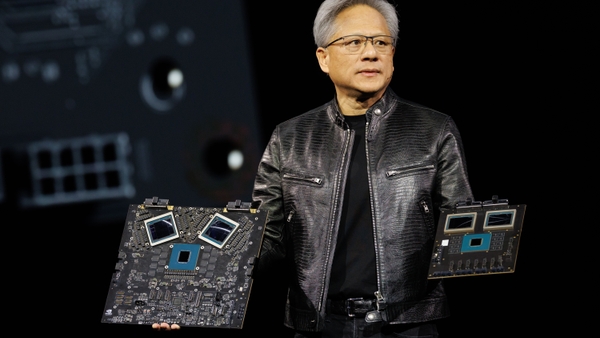
At current scale, AWS is one of the largest buyers of high-end accelerators from external chip vendors. That dependence shows up as an embedded “tax” in the margin structure: every generative-AI workload running on external GPUs shares value with the chip supplier. Amazon’s in-house silicon – Graviton for general compute and Trainium for training and inference – is the main lever to fix that over time.
Today, Trainium and Graviton together already generate over $10B in annualized revenue and are growing at triple-digit rates. Trainium capacity is essentially fully committed for current generations, and Graviton is now standard among the vast majority of large AWS customers. The technical debate versus the latest external GPUs is ongoing, but the economic objective is straightforward: push as many workloads as possible to an in-house stack that can deliver comparable performance at lower cost, integrated tightly with AWS services.
The inflection point for margins comes when internal chips are “good enough” on performance while clearly superior on economics. At that point AWS can steer incremental growth toward its own stack, compress its effective cost of compute and keep a larger share of AI economics. That is one of the core strategic reasons the CapEx number is so aggressive; Amazon is buying the right to re-internalize a big chunk of the value chain in AI infrastructure.
Amazon Stock (NASDAQ:AMZN) – Comparing Growth And Valuation To Big-Box Retail Peers
After the drawdown, the stock trades at roughly 28x trailing non-GAAP earnings and around 26x forward 2026 EPS. That is a five-year low on non-GAAP P/E after a peak near 78x in late 2025. By contrast, large brick-and-mortar peers referenced in the supplied data trade at forward multiples in the mid-40s to low-50s, despite slower growth and a narrower set of profit engines.
Over the past decade, Amazon’s revenue increased by about $580.9B, roughly 497% growth. One major big-box competitor added about $217.2B in revenue over the same period, around 44.7% growth, while another added roughly $156.5B, about 131.8%. Between 2026 and 2028, consensus estimates point to Amazon adding around $293.1B in revenue, a rise of about 40.9%, or an average annual growth rate of roughly 12.1%. The comparable projected growth rates for those big-box chains are around 5.4% and 7.7% per year.
On earnings, Amazon’s EPS is projected to rise by about 53.7% from 2026 to 2028, while those same retailers sit below 25% cumulative EPS growth over that window. Yet the slower, more mature models command the richer earnings multiples. The market is effectively paying a premium for stability and predictable cash flows and assigning a discount to Amazon’s execution risk in AI, even though the operating and growth metrics justify a higher multiple than the current one.
Amazon Stock (NASDAQ:AMZN) – Risk Profile, Positioning And Verdict On The Pullback
The key risks are clear. The $200B CapEx plan compresses free cash flow and increases the burden of proof on future returns. AWS could fail to sustain its current 23–24% growth pace or could lose share to hyperscaler competitors in certain AI and cloud segments. Retail margins could face renewed pressure from low-price competition and weaker consumer spending. Regulatory pressure remains a persistent background risk in the US and Europe.
However, against those risks, the numbers show an asset with roughly $716.9B of annual revenue, double-digit top-line growth, mid-teens to high-teens operating income growth, an AWS backlog of about $244B, a $21.3B quarterly ad business growing above 20%, and a logistics and AI stack that competitors will struggle to match without sacrificing their own margins. On top of that, the valuation has reset to a level where slower, pure-play retailers now trade at richer forward multiples despite weaker growth and less optionality.
Given the current price around $200–$201, the internal profit engines in AWS, advertising and logistics, and the scale of the AI infrastructure build anchored by a $244B cloud backlog, the recent selloff in Amazon stock (NASDAQ:AMZN) is more consistent with market overreaction than with fundamental deterioration. From a pure data and execution standpoint, the setup is skewed in favor of a bullish, long-term Buy stance, with the understanding that reported free cash flow will remain noisy while the $200B CapEx cycle runs through.