



FDVV ETF: $57 Price, 3% Yield And AI-Powered Dividend Growth As Markets Hit Record Highs
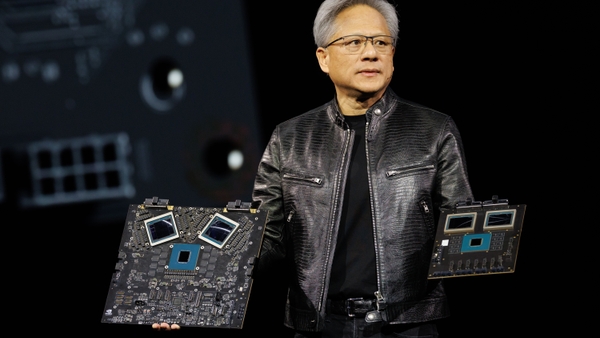
Fidelity High Dividend ETF (NYSEARCA:FDVV) hovers near its 52-week high with a ~3% yield, strong double-digit NAV gains, Nvidia at ~6% of the fund, and a sector mix that outpaced SCHD and VIG while the S&P 500 trades on a rich 22x forward multiple.
Read More
-
GPIQ ETF Price Forecast: Can a 10% Yield at $52 Survive the Next Nasdaq Selloff?
09.02.2026 · TradingNEWS ArchiveStocks
-
XRP ETF Price Forecast: XRPI at $8.32, XRPR at $11.86 as $44.95M Inflows Defy BTC and ETH Outflows
09.02.2026 · TradingNEWS ArchiveCrypto
-
Natural Gas Futures Price Forecast: Will The $3.00 Floor Hold After The $7 Winter Spike?
09.02.2026 · TradingNEWS ArchiveCommodities
-
Stock Market Today: Dow Back Under 50K While S&P 500 and Nasdaq Push Higher as Gold Reclaims $5,000
09.02.2026 · TradingNEWS ArchiveMarkets
-
USD/JPY Price Forecast: Can Bulls Clear 157.5 Without Triggering a 160 Intervention Line?
09.02.2026 · TradingNEWS ArchiveForex
Comparing FDVV To VIG And SCHD: Yield, Growth, And Overlap
Against Vanguard Dividend Appreciation ETF (NYSEARCA:VIG), FDVV positions itself as a higher-yield, higher-growth dividend hybrid. VIG holds 338 names, far broader than FDVV’s 119, with tech ~30%, financials ~21%, healthcare ~15%, and a strong bias toward companies with a long history of dividend increases. VIG’s yield around 1.6% is roughly half FDVV’s, and its five-year dividend CAGR (~9.1%) is modestly below FDVV’s ~9.8%. One-year total return as of early January 2026 is 17.7% for FDVV vs 15.1% for VIG, and over ~10 years, annualized returns are essentially neck-and-neck (~13.2% vs 13.1%), but FDVV delivers more income and more recent NAV acceleration thanks to its tech tilt centered on Nvidia and its 40% high-yield sector rule.
Versus Schwab U.S. Dividend Equity ETF (NYSEARCA:SCHD), FDVV is more growth-biased and tech-tilted, while SCHD is more pure yield and quality dividend. SCHD’s yield around 3.8% beats FDVV’s, and it follows a rules-based Dow Jones U.S. Dividend 100 Index focused on ROE, dividend growth, and starting yield, with an expense ratio of 0.06%. But SCHD’s sector mix has been a drag recently: ~19% in energy and ~18.5% in consumer staples, both areas that lagged in 2025 amid tariff shocks, inflation pressure on consumers, and weaker commodity pricing. SCHD’s NAV has struggled over the last year, delivering low single-digit growth versus FDVV’s double-digit NAV expansion, even as SCHD continued to raise its distribution and maintain an all-qualified dividend stream.
The overlap between FDVV and SCHD is only about 15%, which is crucial. That low overlap means combining the two can diversify sector and factor exposure: SCHD supplies high, relatively stable income and more classic value, while FDVV overlays tech-driven upside and higher dividend growth. This is the “1-2 punch” concept described in the Seeking Alpha analysis: SCHD as the paycheck, FDVV as the paycheck’s growth engine. For a portfolio that wants income now plus exposure to ongoing AI- and tech-driven equity gains, that pairing makes structural sense, especially in a world where rates are likely to drift lower and money-market yields above 4% are not permanent.
Dividend Quality, Tax Profile And Rate-Cut Environment
From a tax perspective, FDVV’s distributions are predominantly qualified dividend income. In 2024, about 75.25% of its payouts were QDI, making it friendly for taxable accounts compared with interest from money market funds that are fully taxed at marginal rates. If you’re in a 22% bracket, a 2.9% qualified yield has a tax-equivalent rate near 3.7%, narrowing the gap versus current cash yields. As rate cuts take short-term yields from the 4%+ area toward the low 2s, FDVV’s after-tax yield plus upside potential becomes more compelling relative to parking capital in short-duration fixed income.
Dividend sustainability is reinforced by the index’s design: it targets companies expected to “continue to pay and grow their dividends” and structurally keeps 40% of capital in higher-yielding sectors like utilities, REITs, and energy, which, despite being rate-sensitive, typically have established payout policies and relatively stable cash flows. The five-year dividend CAGR near 9.8% and TTM growth over 11% indicate that FDVV has not simply chased yield; it has managed to grow income faster than many peers while maintaining capital appreciation.
In a rate-cut scenario, the value vs growth rotation becomes the key macro swing factor. The bullish case for FDVV is that AI, cloud, and semiconductor demand keep tech earnings strong, so the NVDA/MSFT/AAPL/JPM cluster continues to drive NAV higher, while falling yields re-rate REITs, utilities, and high-dividend cyclicals upward, lifting the income sleeve. The bear case is that AI enthusiasm cools, investors rotate from high-multiple growth into classic value, and tech multiples compress, dragging FDVV’s top holdings and shrinking the performance gap vs SCHD and VYM. In that environment, FDVV would still pay a roughly 3% yield with solid dividend growth, but its relative return edge would depend more on how well the high-yield sector bucket performs versus the broader market.
Risk Profile: Where FDVV Can Hurt You
The main structural risks in FDVV are:
-
Single-stock concentration: With NVIDIA around 6.2% of assets, plus heavy weightings in Apple and Microsoft, FDVV’s short- and medium-term performance is tightly linked to a handful of mega-caps. Any derating of AI-exposed names or negative surprise in semis can hit FDVV harder than more diversified dividend funds.
-
Sector tilts: Overweights in financials (~20%+), consumer defensive (~12%), utilities, REITs, and energy are deliberate. They boost yield but also introduce sensitivity to credit cycles, rate volatility, regulatory changes, and energy shocks. A hard landing with widening credit spreads and equity risk-off would pressure both financials and high-beta tech at the same time.
-
Valuation risk: The fund is participating in an equity market where the S&P 500 trades at ~22x forward earnings with heavy expectations baked into tech and AI leaders. FDVV’s tech allocation benefits from that, but it also raises the risk of multiple compression if earnings growth disappoints in 2026.
-
Rebalance lag: Annual, non-fixed-date rebalancing means FDVV is slower to adapt to regime shifts. If leadership rotates sharply from AI megacaps to cyclicals or small caps, the ETF can lag until the next rebalance reshapes sector and factor exposures.
Despite those risks, historical data show FDVV’s volatility and drawdowns modestly below SPY, and its 10-year total return and 5-year dividend growth competitive with or better than many income peers. For investors who understand that they are buying a high-dividend, high-growth hybrid rather than a pure defensive income product, those trade-offs are acceptable.
Buy, Sell, Or Hold For NYSEARCA:FDVV?
On the current data and price level around $57.24, with the ETF trading near its 52-week high of $57.44, delivering a ~2.9%–3.0% yield, a five-year dividend CAGR close to 10%, and double-digit NAV growth over one, three, and five years, my stance on NYSEARCA:FDVV is Buy.
The reasons are straightforward:
-
You get meaningful exposure to AI-driven growth via NVDA/MSFT/AAPL plus diversified high-yield sectors.
-
Valuation risk exists, but FDVV’s beta (~0.82) and drawdown history (~–20% max over 5y) are more controlled than a pure tech or S&P 500 allocation.
-
The yield is competitive versus cash on a tax-adjusted basis, and the dividend growth trajectory is among the strongest in the dividend ETF universe.
-
Overlap with SCHD and VIG is low enough to make FDVV a credible complement rather than a redundant clone.
The bear scenario—sharp derating in AI names and a violent rotation out of megacap growth—would compress FDVV’s performance advantage, but in that case virtually all equity risk assets are going to reprice lower. In the base case of slower growth, gradual rate cuts, and persistent demand for computing power and data centers, FDVV is positioned to keep delivering mid-single-digit income plus mid- to high-single-digit price appreciation, which is a strong total-return profile for a high-dividend ETF at this point in the cycle.