NYSEARCA:GPIQ – Leveraged Nasdaq-100 Income Engine With 9–10% Yield And Tech-Beta Upside
Overview And Current GPIQ ETF Price Snapshot
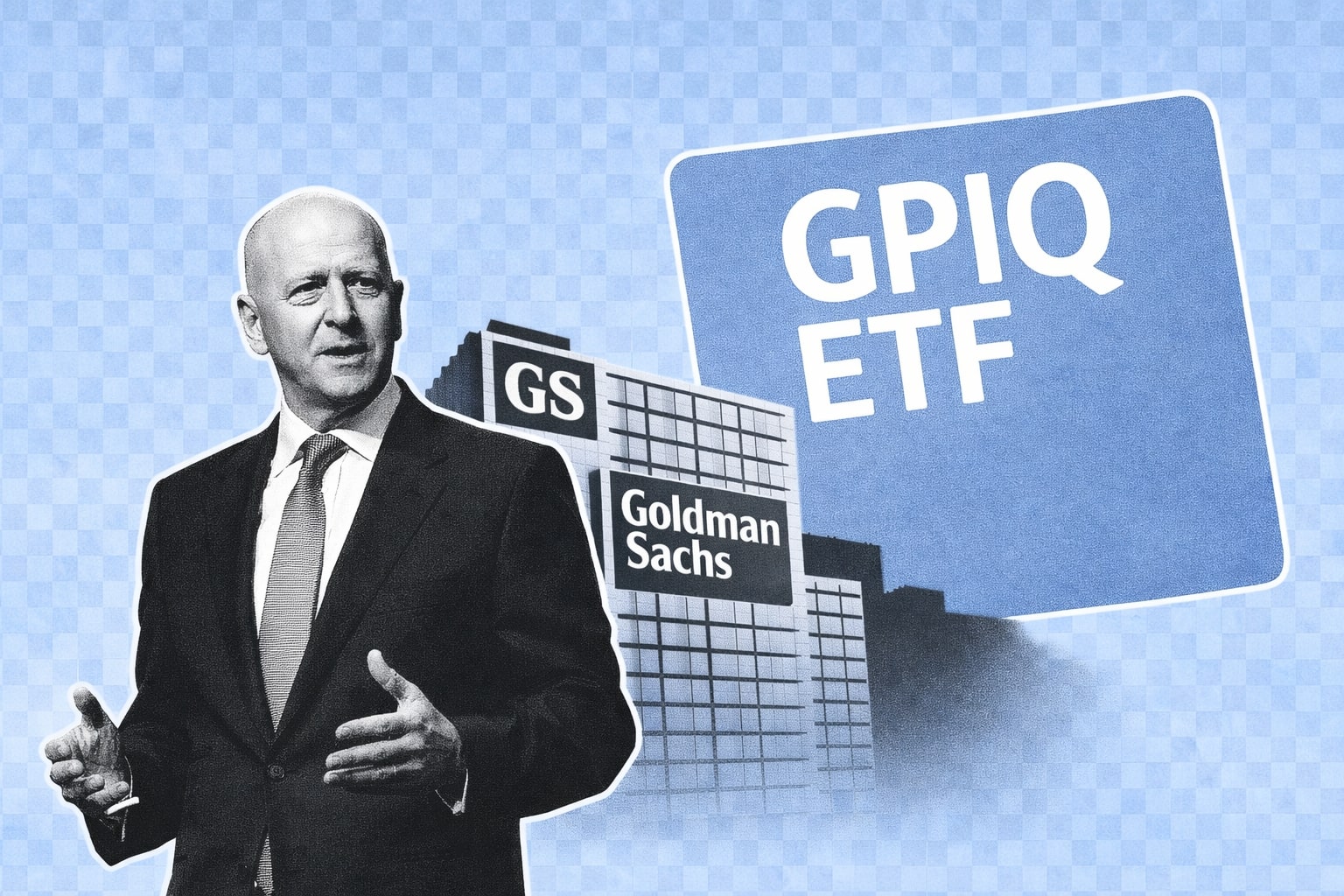
NYSEARCA:GPIQ trades around $52.89 with a daily range of $52.69–$53.07 and a 52-week range of $38.13–$54.63. That puts the fund very close to its all-time high, after climbing out of the high-30s and low-40s range. Average daily volume is roughly 967K shares, which is strong liquidity for an income ETF with $2.68B in AUM. At this price, the trailing cash distribution is $5.22 per share, implying a forward yield of roughly 9.8–9.9% on the current $52–53 handle. GPIQ caps its total expense ratio at 0.29%, with excess fees waived, which is lean versus other option-income products and materially cheaper than JEPQ’s 0.35% fee. Structurally, GPIQ is an actively managed Nasdaq-100 buy-write strategy designed to harvest volatility while still participating in 75–85% of index upside in a bull market.
How GPIQ ETF Generates Its 9–10% Yield
GPIQ ETF runs a two-leg engine: long exposure to the Nasdaq-100 plus a systematic covered-call overlay on index derivatives. The portfolio owns a basket that closely mirrors the Nasdaq-100 – 108 holdings, with the top 10 positions at 49.66% of assets – and then writes index-linked call options covering between 25% and 75% of the notional. That coverage band is actively adjusted: when managers want more upside capture, they sit closer to the 25–40% coverage zone; when volatility is rich or macro risk rises, they push closer to 60–75% coverage to lock in option premium. Since late 2023, this dynamic overwrite has delivered around 35% price return and roughly 68.9% total return, meaning about 33–35 percentage points of the gain have come via distributions. Distributions in 2025 were 96.4% Return of Capital and 3.6% ordinary income, which means most of the 9–10% yield came from call premium and realized option P&L rather than dividends from the underlying tech stocks. That ROC is not tax-free in economic terms – it reduces cost basis – but for a taxable investor it defers tax until sale and shifts the burden into capital-gain territory instead of current income.
Tax Profile: Why NYSEARCA:GPIQ Screens Better Than JEPQ
The tax mechanics are a key differentiator between NYSEARCA:GPIQ and JEPQ. GPIQ mainly uses index options that fall under Section 1256 “60/40” treatment. Practically, that means 60% of option gains are treated as long-term capital gains, 40% as short-term, regardless of holding period. Combined with the heavy ROC component, the effective tax rate on distributions is meaningfully lower for a high-income investor than JEPQ’s structure, where income from ELNs is generally taxed as ordinary income. JEPQ’s yield sits around 9.55% with a $6.12 annualized payout at recent prices, but most of that is ordinary income; GPIQ’s ~9.8–9.9% yield with a $5.22 payout is structurally more tax-efficient. As a result, two investors receiving the same nominal yield from JEPQ and GPIQ ETF will usually keep more after tax with GPIQ, especially in high tax brackets or taxable brokerage accounts. That tax edge is one of the core reasons the more detailed GPIQ vs JEPQ work comes out with GPIQ as the preferred vehicle for Nasdaq-100 income exposure.
Strategy Design: GPIQ ETF As A High-Beta Income Proxy On The Nasdaq-100
GPIQ ETF deliberately behaves like a slightly muted but levered income proxy on the Nasdaq-100. Its beta of 0.85 to the index is higher than JEPQ’s 0.68, by design. GPIQ sells calls on 25–75% of the portfolio, not 100%, which preserves more upside when NDX rips higher; JEPQ, via ELNs, effectively covers nearly the entire portfolio and caps much more of the rally. Since GPIQ’s inception in late 2023, it has produced roughly 35% price return and ~69% total return, beating JEPQ’s roughly 46% total return over a similar period and also outperforming JEPQ’s 63.29% since GPIQ came online in October 2023. Over 2-year windows, GPIQ’s total return outperformance versus JEPQ sits around 5.2 percentage points, and over the last year roughly 4.6 points in favor of GPIQ. That gap shrinks or temporarily flips when volatility spikes and markets pull back sharply – JEPQ’s deeper overwrite and lower beta help on the downside – but in the environment your data assumes for 2026 (Fed easing, AI-led tech expansion, liquidity tailwind for growth stocks) GPIQ ETF is structurally positioned to convert more of the Nasdaq-100 upside into total return while still delivering a roughly 10% cash yield.
Comparing GPIQ ETF To JEPQ: Options Structure, Risk And Upside Capture
JEPQ’s engine is built around equity-linked notes (ELNs) tied to the Nasdaq-100, with ELNs generally 15–20% of fund assets. It sells monthly calls 2.5–7.5% out-of-the-money against the index, covering nearly the whole portfolio through the notes, and collects premium that is then distributed as income. That structure has two consequences. First, JEPQ’s upside is cut more aggressively when the Nasdaq rallies fast – the index blows through the OTM strikes and the fund gives away more of the last leg of the move. Second, income is fully ordinary and directly tied to the ELN payoff, making it efficient in IRAs but less attractive in taxable accounts. GPIQ ETF, by contrast, writes index calls directly, at coverage levels that float between 25% and 75% of notional, and does not use bank credit-linked ELNs. The result is a “cleaner” NDX proxy with higher upside participation in a bull market and more direct volatility monetization. Quantitative metrics back this up: over the last 6 months, JEPQ outperformed GPIQ by about 1.46% when volatility spikes favored its deeper OTM coverage; over 1 year and 2 years, GPIQ retook the lead with ~4.6–5.2% higher total return, consistent with its higher beta profile in an uptrend. On fees, GPIQ at 0.29% is 6 bps cheaper than JEPQ’s 0.35%. On yield, GPIQ’s ~9.8–9.9% and JEPQ’s ~9.5–10.4% are similar, so the real decision is: more upside and better tax profile (GPIQ) vs slightly better drawdown protection and ELN-driven ordinary income (JEPQ).
Risk/Reward Profile For NYSEARCA:GPIQ In A Tech-Led 2026 Market
The core macro call embedded in NYSEARCA:GPIQ is straightforward: you are long the Nasdaq-100 into a period where the base case is continued strength in large-cap tech, supported by AI-driven earnings growth and a Fed that shifts toward easier policy. Consensus in the data you provided expects mid-double-digit earnings growth for megacap tech, outpacing most of the S&P 500. If the Nasdaq-100 delivers another strong year and retests or extends its highs, the numbers cited for 2026 are realistic: GPIQ total return of 20–25%, with roughly 10% from distributions and 10–15% from price appreciation, assuming a continuation of the 75–85% upside participation. The risk side is clear and should not be hand-waved. With beta 0.85, GPIQ will feel a drawdown: a 20% Nasdaq-100 selloff implies roughly 17% downside for GPIQ versus around 13.6% for JEPQ (using the beta numbers from your table). In a genuine bear market or a shock similar to early 2020, option premium only cushions part of the fall; NAV damage will dominate the income benefit. The fund also carries product complexity risk – investors who think “9.8% yield and tech exposure” without understanding option overwrite mechanics may be surprised when upside is capped in violent melt-ups or when the ETF posts double-digit drawdowns despite the high yield. Finally, there is policy risk: if the Fed is forced to slow or reverse easing because inflation resurges, or if a tech bubble narrative breaks and multiples compress, the Nasdaq-100 could stall or retrace hard, directly pressuring GPIQ’s total return.
Portfolio Role: Where GPIQ ETF Fits Versus Plain NDX Exposure
Compared to a plain Nasdaq-100 tracker, GPIQ ETF deliberately trades some upside convexity for current cash flow and slightly lower volatility. A pure NDX product will fully capture index rallies but pay a minimal yield; GPIQ targets ~9–10% annualized cash distribution plus ~75–85% of the index’s upside. In sideways or moderately up markets – the “grind higher” scenario between big tech earnings beats and Fed meetings – the covered-call structure is optimal: implied volatility remains elevated enough that option premiums are rich, while realized price moves are not explosive enough to make the overwritten portion painful. In that regime, the fund can outperform a pure index tracker on a total-return basis while providing monthly income. In sharp vertical rallies (e.g., AI mania bursts pushing NDX 20%+ in a quarter), GPIQ will underperform the index as calls cap gains on the covered slice. In sharp drawdowns, GPIQ’s premiums soften but do not erase the downside. That profile makes NYSEARCA:GPIQ attractive for investors who want a cash-flowing tech sleeve instead of a pure growth bet – especially those happy to clip near-double-digit yield while still participating in most of the AI- and cloud-driven upside.
Verdict On NYSEARCA:GPIQ: Rating, Stance And Use-Case
On the data you supplied – price around $52.89, yield near 9.8–9.9%, 0.29% expense cap, $2.68B AUM, outperformance versus JEPQ over 1–2 years, better tax treatment via ROC and 60/40 options – the risk/reward skew for NYSEARCA:GPIQ is constructive as long as you are deliberately long US large-cap tech and comfortable with option-income mechanics. In a 2026 base case of continued Nasdaq-100 strength, moderate volatility, and Fed easing, the realistic expectation is high single-digit to mid-teens price appreciation plus ~10% yield, i.e., low-20s total return if the macro path cooperates. Relative to JEPQ, you are explicitly choosing more upside sensitivity and better tax profile in exchange for somewhat larger drawdown risk in a crash. Based solely on the numbers and structure you provided, my stance on GPIQ ETF (NYSEARCA:GPIQ) is Buy, with a bullish bias on total return, provided the position size respects the fact that this is effectively a high-income, options-overwritten tech beta instrument, not a capital-preservation product.
That's TradingNEWS