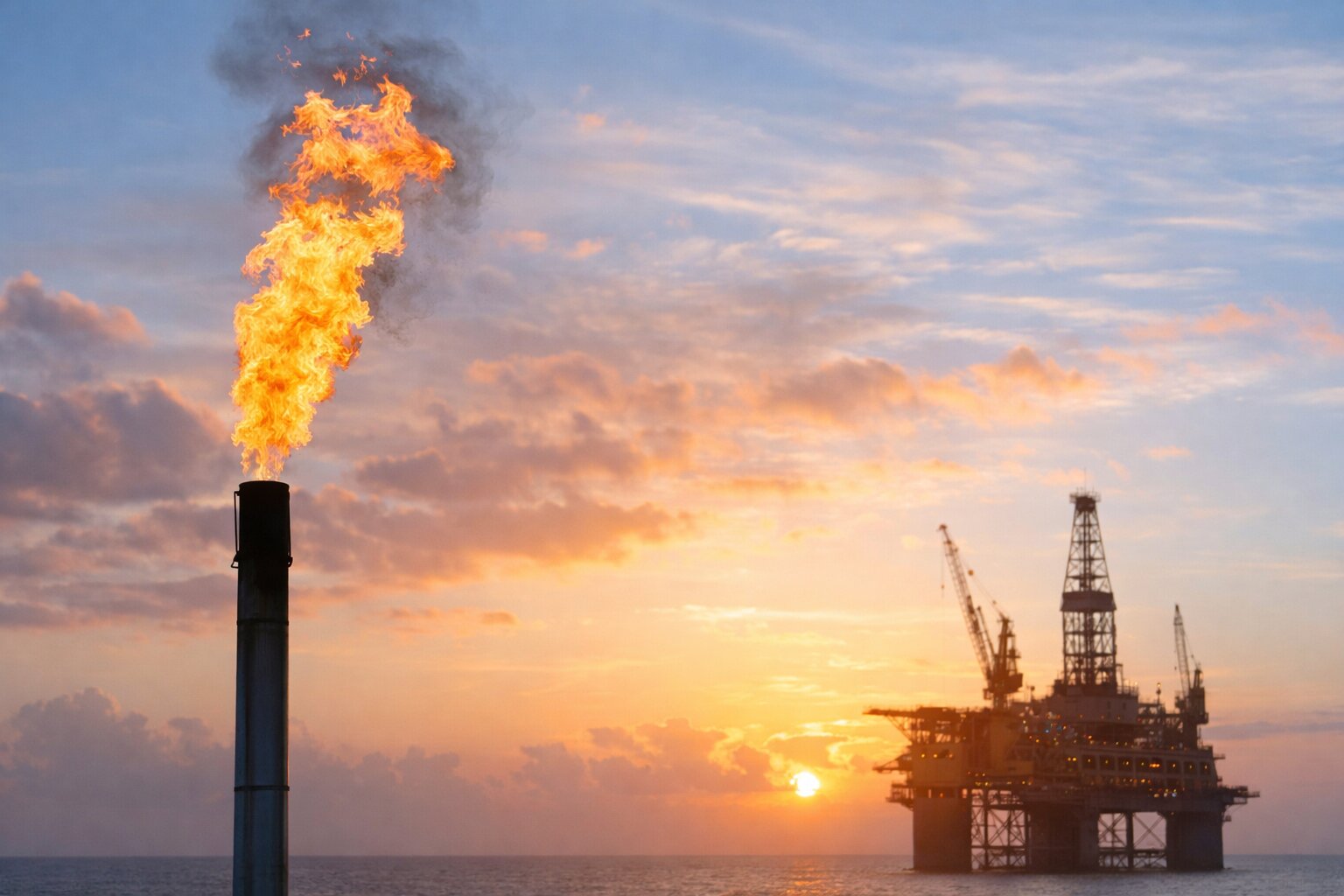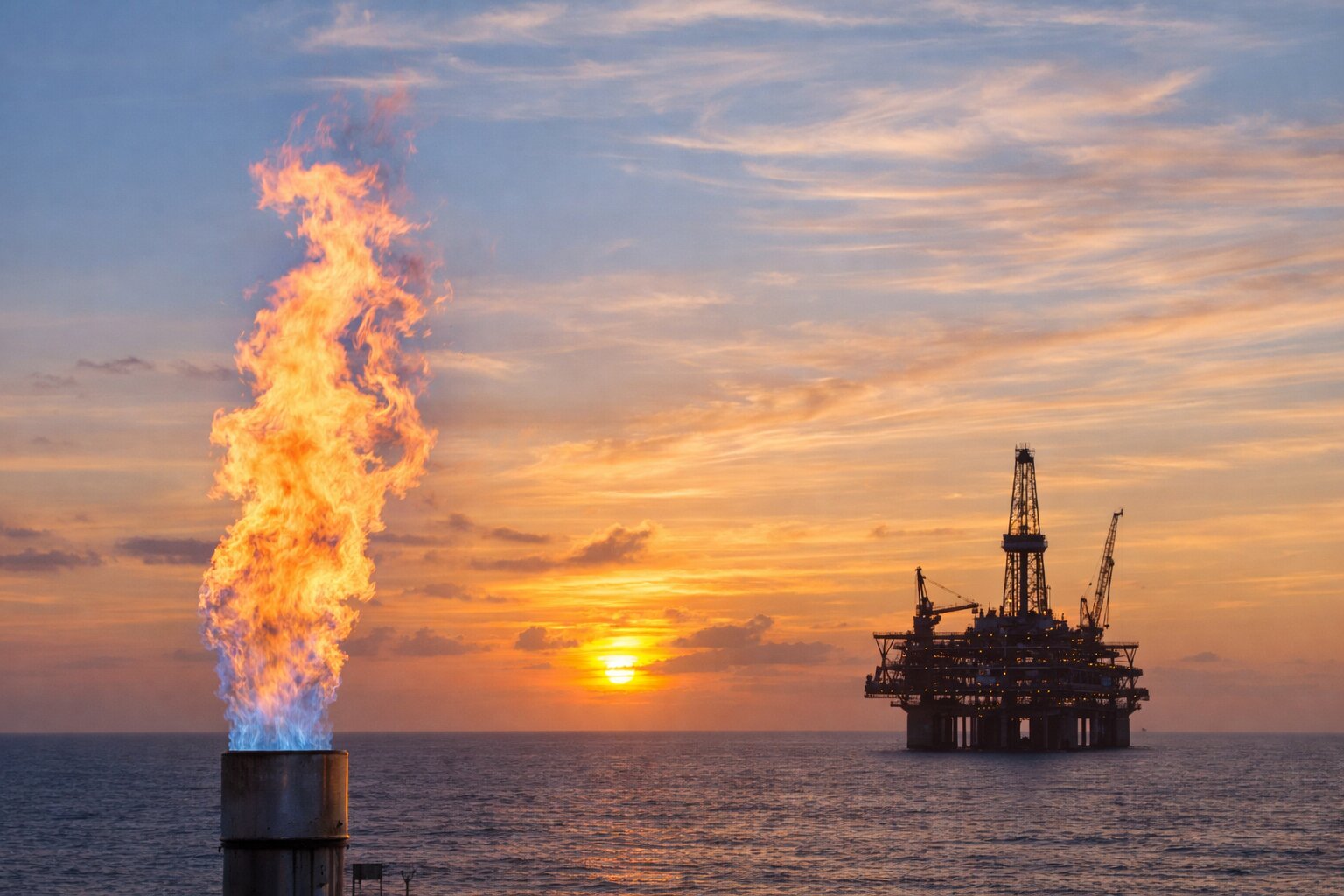




Oil Price Forecast: Brent Crude Blasts Past $85 as Hormuz Shutdown and Qatar LNG Halt Push Crude Toward $100
WTI surges 8.24% to $77.10, European gas doubles in two days, supertanker rates hit all-time highs, and Trump warns the war could last far longer than five weeks — $100 oil is now a matter of when, not if | That's TradingNEWS
Oil Price Forecast: Brent Crude Tops $85 as Strait of Hormuz Shutdown Turns the Iran War Into a Full-Blown Energy Crisis
$73 to $85 in Three Trading Sessions — This Is Not a Drill
Brent crude (BZ=F) ripped through $85 a barrel on Tuesday, its highest level since July 2024, after closing Monday at $78.15. The international benchmark gained 8.36% to hit $84.24 by early morning before pushing higher still, marking a staggering $12-per-barrel move from Friday's close near $73. West Texas Intermediate (CL=F) surged 8.24% to $77.10, blowing past the $75 threshold that had served as a ceiling for most of 2025. Murban crude climbed 5.32% to $82.73. U.S. natural gas jumped 5.47% to $3.122. Gasoline futures rose 4.86% to $2.486. Every energy benchmark on the board is flashing red-hot.
Monday alone delivered a 10% spike — the kind of single-session move that typically accompanies the outbreak of war, not day three of one. And that is precisely what makes this situation so dangerous for anyone trying to trade around it: the escalation is accelerating, not stabilizing. President Trump confirmed late Monday that "Operation Epic Fury" could extend well beyond the initially projected four-to-five-week timeline, stating flatly that the U.S. military has "capability to go far longer than that." That statement alone obliterated any hope the market had been pricing in for a quick resolution.
The Brent-Dubai spread has blown out to a multi-year high, reflecting the physical market's assessment that Middle Eastern barrels are becoming genuinely scarce. Iraq shut down production at giant oil fields on Tuesday. A drone strike halted operations at Saudi Arabia's largest refinery. Chevron (CVX) declared force majeure after Israel shut the Leviathan gas field. These are not hypothetical supply risks — they are real barrels disappearing from the market in real time.
The Strait of Hormuz: Effectively Closed, Whether Iran Admits It or Not
The single most consequential development since the war began is the de facto closure of the Strait of Hormuz. Approximately 20% of the world's oil and gas trade transits through this narrow channel between Iran and Oman. Roughly one-fifth of global crude supply and a massive share of LNG shipments funnel through waters that are now, for all practical purposes, impassable.
Ebrahim Jabbari, a senior IRGC adviser, declared on state television that the strait is closed and that Iran would incinerate any vessel attempting to cross. U.S. Central Command disputes the characterization, insisting the waterway remains open. The distinction is irrelevant. More than 100 tankers have already been stopped or diverted. No shipping company, no trading house, and no insurer is willing to test Tehran's threat. The Strait of Hormuz is closed not because of a naval blockade, but because the insurance market has shut it down. War risk premiums have made transit economically impossible.
The cost of hiring a supertanker to move crude from the Middle East to China hit an all-time record on Monday: over $400,000 per day, nearly double the rate from the previous week. Shipping companies are raising rates globally — not just for Gulf routes — in anticipation of sustained fuel price increases. Sanne Manders, the president of logistics platform Flexport, described the strait as "effectively closed" due to the combination of carrier reluctance and insurance withdrawal.
Pakistan has already begun rerouting oil supply chains. India is reportedly evaluating a return to heavier reliance on Russian crude as Iranian and Gulf flows become unreliable. Asian refiners are considering slashing crude processing rates entirely rather than paying the premium to source alternative barrels. The physical oil market is fracturing in real time.
Qatar LNG Shutdown: Europe's Nightmare Scenario Materializes
The energy shock extends far beyond crude oil. Iranian drone strikes knocked out Qatar's Ras Laffan LNG complex — the largest liquefied natural gas facility on the planet. QatarEnergy subsequently halted not just LNG production but also downstream output of aluminum, methanol, urea, and polymers. India's industrial gas supply has been slashed as a direct consequence.
European natural-gas futures have exploded. UK gas prices surged more than 46% on Tuesday alone, reaching 165 pence per therm — the highest reading in three years, last seen a year after Russia's invasion of Ukraine. Dutch TTF contracts topped EUR 62 per megawatt-hour. Goldman Sachs warned that Asian and European LNG prices could jump 130% if the disruption persists.
UK gas prices have now doubled since Saturday's initial airstrikes. The comparison to 2022 is becoming unavoidable. During the Russia-Ukraine energy crisis, European gas prices peaked above 217 pence per therm in August 2022 and Brent crude briefly touched $120. The current trajectory — if sustained — could approach those levels within weeks rather than months, because the Hormuz chokepoint affects a far larger share of global energy flows than the Russia sanctions ever did.
Read More
-
DGRO ETF Price Forecast; Dividend Stocks Replace Bonds - Strong Buy
03.03.2026 · TradingNEWS ArchiveStocks
-
XRP ETF Price Forecast: XRPI, XRPR, and Bitwise XRP All Down 50%+ From Highs
03.03.2026 · TradingNEWS ArchiveCrypto
-
Natural Gas Futures Price Forecast: Qatar LNG Shutdown and Hormuz Closure Drive 85% Surge
03.03.2026 · TradingNEWS ArchiveCommodities
-
GBP/USD Price Forecast: Pound Plunges to Three-Month Lows at 1.3300 as Oil Shock Kills BoE Rate-Cut Odds
03.03.2026 · TradingNEWS ArchiveForex
Global Equity Markets in Freefall: The War Premium Hits Everything
The energy surge is destroying risk appetite across every major equity market. The Dow Jones fell nearly 900 points at the U.S. open on Tuesday. The S&P 500 dropped 2.08% to 6,738. The Nasdaq shed 2.19%. The Russell 2000 cratered 3.34%. Europe's Stoxx 600 lost 3.34%, with the FTSE 100 down 2.6%, Germany's DAX falling 3.6%, and France's CAC-40 sliding 2.9%.
Asia was decimated. Japan's Nikkei closed 3.3% lower, with export-reliant giants like Toyota, Panasonic, and Sony among the hardest hit. South Korea's KOSPI — which was shut for a public holiday on Monday and had to absorb two days of war developments in a single session — collapsed 7.24%, its worst day in 19 months. Samsung fell 10%, SK Hynix dropped 11.5%. Hong Kong's Hang Seng and the Shanghai Composite both declined.
The only sectors in the green globally are energy and defense. Exxon Mobil (XOM), Marathon Petroleum (MPC), Phillips 66 (PSX), and Occidental Petroleum (OXY) all gained for a second consecutive day. Cheniere Energy (LNG) surged 9% on the LNG supply crunch. Defense names Lockheed Martin (LMT), Raytheon (RTX), and Northrop Grumman (NOC) continued their rally. Everything else is getting sold.
The Inflation Bomb: Central Banks Trapped Between Oil and Growth
The macroeconomic consequences of $85 Brent are already materializing. U.S. gasoline prices topped $3.00 a gallon. Diesel surged 17% in a single session, outpacing crude itself — a reflection of how rapidly transportation and logistics costs are repricing. The rough rule of thumb: every $10-per-barrel increase in crude adds approximately 25 cents per gallon to U.S. pump prices. Brent has risen $12 since Friday. That math is punishing.
The ISM Manufacturing Prices Paid index exploded to 70.5 on Tuesday, smashing the consensus estimate of 59.5 and the prior reading of 59.0. Factory input costs are accelerating at a pace that directly contradicts the Federal Reserve's disinflation narrative. The five-year breakeven inflation rate climbed to 2.535% from 2.458%. The 10-year Treasury yield surged to 4.095%, up 15 basis points from Friday's 3.95% close.
CME FedWatch now shows a 53.5% probability of a Fed hold in June, up from 42.7% on Friday. The probability of two or more rate cuts in 2026 has crashed from 79% to 57% in three trading days. Some analysts are already floating the possibility of rate hikes — not cuts — if crude remains elevated for the four-to-five-week (or longer) timeline Trump has projected.
The Reserve Bank of Australia's Governor Michele Bullock offered one of the first central banker reactions to the conflict on Tuesday, warning that the supply shock could simultaneously add to inflation pressures while weakening economic activity. That is the textbook definition of stagflation — and it is exactly the scenario that central banks are least equipped to handle, because raising rates to fight inflation-driven by supply constraints only accelerates the growth damage without doing anything to bring oil prices down.
The Bank of Japan Freezes: Oil Shock Delays the March Rate Decision
The oil spike has created immediate policy consequences beyond the Fed and ECB. The Bank of Japan, which had been building toward a potential rate increase at its March 19 meeting, is now reconsidering. Multiple sources told Reuters that the BoJ needs more time to assess the effects of the conflict on the Japanese economy before moving.
The Japanese yen has fallen nearly 1% against the dollar since the war began, pushing USD/JPY firmly above 155. Japan's near-total dependence on imported oil means that every dollar increase in crude directly compresses the country's terms of trade and weighs on the currency. BoJ Deputy Governor Ryozo Himino stated Monday that the bank could raise rates toward a neutral level even if headline inflation dips below 2%, but pointedly declined to specify timing.
Japan's core inflation has remained above the 2% target for over 20 consecutive months, and the spring "shunto" wage negotiations are pointing toward salary increases exceeding 4% — the highest in three decades. The domestic case for tightening is overwhelming. But the external shock from oil may be enough to delay the decision, just as it did in 2025 when a similar Middle Eastern escalation caused the BoJ to pause.
OPEC+ Approves a Modest Output Hike — But It Is a Drop in the Bucket
OPEC+ approved a 137,000 barrel-per-day output increase starting in April 2026 to meet anticipated summer demand. Under normal circumstances, that would be a bearish signal for crude. These are not normal circumstances.
The Hormuz shutdown has removed far more than 137,000 bpd from the market. Qatar's LNG halt alone represents a massive energy deficit for Europe and Asia. Iraqi production shutdowns at giant fields add further supply loss. Saudi refinery disruptions reduce processed output. The OPEC+ increase is a rounding error against the scale of supply destruction currently underway.
The decision to proceed with even a modest increase while a member state is under active military assault by the United States carries political significance, but its market impact is negligible. Goldman Sachs has priced an $18-per-barrel risk premium into its models. Wood Mackenzie sees $100 oil as plausible. Multiple analysts project $120 if traffic through the Strait is not normalized within three weeks.
$100 Oil: Not a Question of If, But of When
The path to triple-digit crude is straightforward: if the Strait of Hormuz remains functionally closed for two to three more weeks, Brent will challenge $100. If Qatar's LNG production stays offline concurrently, European gas prices will approach 2022 crisis levels. If Iraqi production disruptions persist and Saudi refinery damage is not repaired quickly, the physical supply deficit becomes severe enough to trigger inventory drawdowns across the OECD.
The White House is already preparing contingency plans. Treasury Secretary Scott Bessent and Energy Secretary Chris Wright are scheduled to meet with Trump on Tuesday to discuss the energy price spike. Secretary of State Marco Rubio acknowledged that higher energy costs were anticipated as a consequence of the military operation, noting that Washington would "roll out phases to try to mitigate against that." The U.S. is not currently planning to tap the Strategic Petroleum Reserve, which limits the immediate tools available to cool prices.
The comparison to 2022 is instructive but imperfect. Prices are well below the $120 peak reached during the Ukraine crisis. Global demand is softer. Interest rates across the U.S., Europe, and Australia are several percentage points higher than early 2022, meaning the economy is already operating under tighter financial conditions. But consumer confidence is also more fragile after years of elevated inflation and borrowing costs. The tolerance for another energy shock is lower than it was four years ago.
For U.S. households, every $10-per-barrel increase in oil translates to roughly 25 cents per gallon at the pump. In Australia, the estimate is approximately 10 cents per liter. In Europe, where gas prices are the bigger concern, household energy bills face upward pressure — though UK consumers are partially shielded until July by an existing price cap.
Oil Price Verdict: Bullish — Buy CL=F and BZ=F With a $95-$100 Near-Term Target
Crude oil is a strong buy at current levels with a near-term target of $95-$100 for Brent and $88-$93 for WTI. The conviction behind this call is extremely high.
The fundamental setup is unlike anything since the 2022 Ukraine crisis — and arguably more dangerous because the Hormuz chokepoint affects a larger share of global energy flows than the Russia sanctions ever did. Physical supply is being destroyed: Qatar LNG offline, Iraqi fields shutting, Saudi refineries hit, tanker traffic halted, insurance markets refusing coverage. These are not speculative risks. They are happening right now.
The geopolitical floor under prices is rising, not falling. Trump's admission that the war could extend well beyond five weeks removes the one near-term catalyst that could have brought prices lower. OPEC+'s 137,000 bpd increase is irrelevant against the scale of disruption. The White House is not tapping the SPR. China is pressuring Iran to reopen Hormuz, but diplomatic pressure takes weeks to produce results — and every day the strait remains closed, the supply deficit deepens.
For exposure: WTI futures (CL=F), Brent futures (BZ=F), and energy equities like Exxon Mobil (XOM), Chevron (CVX), Occidental Petroleum (OXY), Marathon Petroleum (MPC), and Cheniere Energy (LNG) are the primary vehicles. U.S. producers benefit disproportionately because they enjoy higher realized prices without the supply-chain disruptions hitting Middle Eastern and European counterparts.
The downside risk is a rapid ceasefire or Hormuz reopening, which would erase the war premium within days and send Brent back toward $73-$75. That scenario appears unlikely given Trump's stated timeline and Iran's escalatory posture, but it is the tail risk that deserves a stop-loss. Set stops at $72 WTI and $76 Brent.
Until the Strait of Hormuz reopens, until Qatar restarts LNG production, and until the military operation shows signs of winding down, crude oil has nowhere to go but higher. The $100 level is not a question of if — it is a question of how many weeks it takes to get there. Position accordingly.