Wall Street Stalls at Records While Weekly Gains Stay Firm
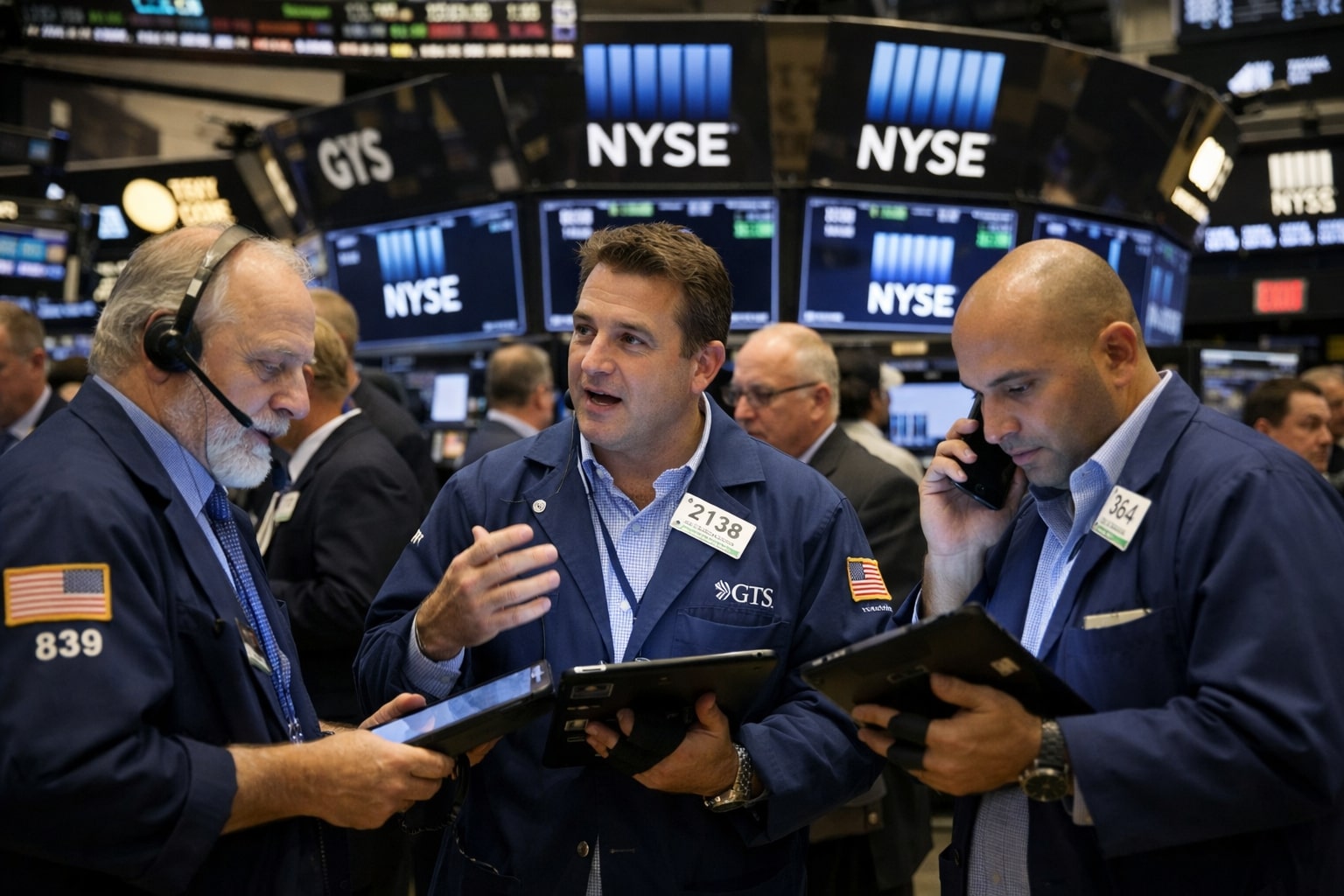
U.S. equities finished the post-Christmas session almost unchanged, but the supposedly quiet tape hides a stretched, technical market. The S&P 500 (^GSPC) slipped 0.03% to 6,929.94 after hitting an intraday high of 6,945.77, extending a strong run that leaves the index up about 18% in 2025 and roughly 1.4% higher for the week. The Nasdaq Composite (^IXIC) eased 0.09% to 23,593.10, still ahead by about 22% year-to-date, while the Dow Jones Industrial Average (^DJI) dipped 20.19 points (-0.04%) to 48,710.97, putting it up around 15% in 2025 and roughly 1.2% for the week. All three benchmarks have now advanced in four of the past five weeks, with the S&P 500 and Dow on track for eight straight positive months, spelling out how aggressive the rally has been despite tariff shocks and AI volatility earlier in the year.
Bad Market Breadth Confirms Narrow Leadership Behind Flat Index Closes
Headline indices look flat, but internals are weak. On the S&P 500, only 137 of 502 stocks – about 27% – closed higher, classic “bad breadth” where a small group of winners masks broad selling underneath. The message is that megacap and AI-linked names continue to carry the benchmark while much of the market is stagnating or rolling over. Futures already hinted at fatigue during the session, with Dow futures near 49,002 (-27), S&P 500 futures around 6,977 (-2.25) and Nasdaq-100 futures at 25,855.50 (-7.75). Overseas, the Stoxx 600 hovered at 588.70 (-0.03%), and China’s SSE Index sat near 3,963.68 (+4.06), showing that global risk appetite is still there but increasingly dependent on a narrow leadership group.
Santa Claus Rally Window Opens With Indices Already Up Over 1%
The market has stepped into the Santa Claus rally period – the final five sessions of the year plus the first two of the new year – with a strong cushion. Historically, the S&P 500 has averaged about a 1.3% gain in this window since 1950. This year, the backdrop is unusually robust: after the short Christmas Eve session, both the S&P 500 and Dow closed at record highs, and all three major indices have already gained more than 1% during the current holiday week. The combination of tax cuts passed in July, three Fed rate cuts in 2025, and persistent enthusiasm around AI and fiscal stimulus underpins these levels. The flip side is that with the S&P 500 less than 1% below the 7,000 line, a big portion of the seasonal upside may already be in the price, making further gains more selective and sector-driven rather than index-wide.
Extremely Low Volatility Signals Complacency at High Altitudes
Volatility remains crushed. The main fear gauge is holding below 14, despite edging up slightly, confirming that options markets still price a benign near-term environment. Intraday swings were minimal: the S&P 500 spent most of the day oscillating in a tight range around unchanged, while the Dow traded down about 0.1%–0.2% for much of the session before settling marginally lower. This “watching paint dry” behavior is typical of year-end holiday trading, but it rarely lasts. With indices at records, breadth deteriorating, and positioning heavy after a relentless run off the April 8 tariff-driven lows, the setup is clear: when new catalysts arrive – Fed messaging, fresh tariff moves, or geopolitical escalation – volatility has plenty of room to expand from these depressed levels.
Gold Above $4,550 and Silver Beyond $75 Put Metals at Center Stage
The real momentum trade is now in precious metals, not equities. Gold futures have surged into the $4,550–$4,580 range per ounce, with intraday peaks around $4,579–$4,580 and late-day prints near $4,552–$4,562, marking roughly the 54th record close of 2025 and a year-to-date gain around 70%, the strongest since 1979. Silver futures have ripped through $75, trading in the mid-$70s to high-$70s and printing intraday highs close to $79, leaving silver up roughly 150%–160% this year. This is not a marginal move; it is a structural repricing of monetary hedges. Central banks continue to add gold, ETF inflows stay strong, and three Fed cuts have pushed real yields lower, making non-yielding assets far more attractive. At the same time, a weak but not collapsing dollar and heavy deficits reinforce the narrative that metals are a long-term hedge against policy and debt excess.
Geopolitics, Trade and Debt Fuel the Safe-Haven Bid in Metals
Safe-haven flows into gold and silver are being reinforced by geopolitics and fiscal worries. The U.S. blockade of Venezuelan oil tankers and a U.S.-backed strike against ISIS in northwestern Nigeria have added new risk layers for energy markets and EM assets. Earlier in the year, sweeping tariffs announced by President Trump in April temporarily knocked the Nasdaq into a bear market and triggered the April 8 equity low, reminding investors how quickly policy shocks can hit valuations. On top of this, concerns about swelling sovereign debt loads and the durability of central bank independence underpin the so-called “debasement” trade, where investors reduce exposure to long-duration bonds and paper currencies in favor of hard assets. Against that backdrop, a year in which gold is up ~70% and silver north of 150% is precisely what you would expect from a market repositioning for long-term policy risk.
Mining Stocks Freeport, Southern Copper, Newmont and Coeur Ride the Metals Wave
Equity investors are expressing the metals trade through miners. Freeport-McMoRan (FCX) climbed roughly 2%–3% on the day and is now up about 40% in 2025, with roughly 25% of that gain in the last month as metals turned parabolic. Southern Copper (SCCO) has rallied about 70% this year, making it one of the standout performers in the sector. Gold-focused names are also benefitting: Newmont (NEM) has gained around 184% in 2025, placing it among the top five performers in the S&P 500, while Coeur Mining (CDE) added close to 2% on the session. The pattern is straightforward: as gold and silver make one record high after another, miners with operational leverage are treated as geared plays on the same theme. The risk is equally straightforward – when metals finally mean-revert, miners will be the first to feel the air pocket – but for now the trend and macro context still justify overweight exposure to the strongest balance sheets and lowest-cost producers.
Dollar, Treasuries and Bitcoin Paint a More Nuanced Risk Picture
The shift into metals is not happening in a vacuum. The 10-year U.S. Treasury yield sits around 4.13%–4.14%, little changed from mid-week, indicating that bonds have largely digested the Fed’s 2025 cuts and are pausing before re-pricing 2026. The U.S. Dollar Index trades near 98.0–98.05, slightly firmer on the day but far from stress territory. In crypto, Bitcoin (BTC-USD) hovers around $87,000–$87,500, below an overnight spike toward $89,500, and is on the verge of a third consecutive monthly decline, something that has happened only about 15 times historically. Some metals bulls are openly arguing that “the time has come” for crypto investors to rotate into gold, given gold’s roughly 70% gain in 2025 versus flat to negative performance in most of the crypto complex. Others point to the likelihood of a January inflow into BTC as institutional allocators rebalance portfolios at year-start. For now, metals are winning the performance race decisively.
Oil Drops Toward $56–$58 but Still Books Its Best Week Since October
Crude oil is trading lower on the day but higher on the week, reflecting the tug-of-war between supply disruptions and macro worries. West Texas Intermediate (CL=F) for February delivery settled in the $56.70–$56.90 zone, down roughly 2.5%–2.8% on Friday, while still securing the strongest weekly gain since late October. Brent (BZ=F) sits above $62 per barrel, rising more than 3% this week as the market tracks the U.S. move to block sanctioned Venezuelan shipments and questions Nigerian output after the latest strike on militants. This is not an outright demand collapse story; it is a market that is beginning to re-price geopolitical risk back into crude after months of complacency. Energy equities are not leading the tape yet, but if WTI stabilizes in the high-50s to low-60s with geopolitical risk simmering, the setup for a 2026 rotation into quality energy producers becomes stronger.
AI Infrastructure and Data Plays Dominate the 2025 Performance League Table
The 2025 leaderboard inside the S&P 500 is dominated by names tied to AI infrastructure and data. Western Digital (WDC) has surged about 300.4% year-to-date, while Micron Technology (MU) and Seagate Technology (STX) each delivered gains above 230%, turning memory and storage into one of the market’s most powerful trades. Robinhood Markets (HOOD) has rocketed nearly 222%, boosted by trading volumes and retail speculation, and Newmont (NEM) – powered by gold’s rally – sits close behind with a ~184% gain. Other big winners include Palantir (PLTR), Lam Research (LRCX), Comfort Systems USA (FIX) and AppLovin (APP). The pattern is clear: investors have paid premium multiples for companies that either build AI plumbing (chips, memory, networking, data centers) or monetize data and digital engagement at scale, while punishing legacy operators without clear monetization paths.
Nvidia–Groq Deal Shows How NVDA Uses Its Balance Sheet to Protect AI Dominance
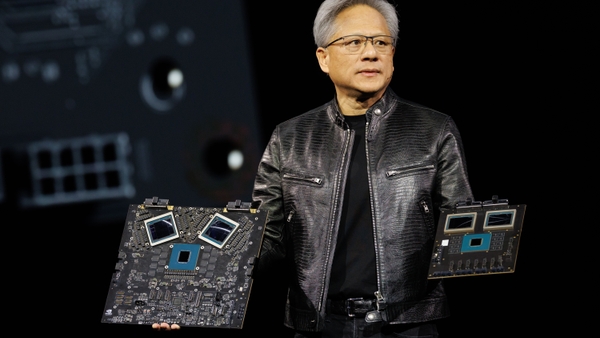
At the center of the AI trade is Nvidia (NVDA), which added just over 1% on the session and is now up roughly 40% in 2025, preserving its status as the world’s most valuable public company. The latest catalyst is a non-exclusive licensing deal with AI chip startup Groq, alongside reports that Nvidia is acquiring Groq-related assets worth about $20 billion, its largest transaction to date. Groq develops language processing units (LPUs) that rely on on-chip SRAM rather than external HBM memory, promising faster inference on specific workloads. Nvidia has hired Groq’s founder Jonathan Ross, its president Sunny Madra and other senior engineers to help scale the licensed technology. Strategically, NVDA is doing two things: neutralizing a potential competitor by absorbing crucial talent and IP, and tightening its grip on the AI compute stack. Even analysts skeptical about the breadth of Groq’s technology accept that the deal underlines Nvidia’s willingness to deploy its cash hoard to protect and extend its dominance.
Micron, SanDisk and High-Bandwidth Memory Suppliers Gain Pricing Power
The AI build-out is also transforming the economics of memory. Micron Technology (MU) and SanDisk-linked storage names rallied after reports that Samsung and SK Hynix will raise prices on fifth-generation HBM3E chips by nearly 20% for 2026 deliveries. That kind of price action confirms that demand for high-bandwidth memory remains far ahead of capacity, giving suppliers rare pricing power in what used to be a brutally cyclical business. With MU and STX already up more than 230% this year, the market clearly views them as core beneficiaries of multi-year AI capex, not just short-term DRAM trades. The risk, as always in semis, is timing the eventual downcycle. But for 2025 going into 2026, the numbers and contract dynamics still argue that the AI memory trade has structural legs.
Growth Focus: Palantir, Tesla, Intuitive Surgical Stay on Watch Lists
Momentum watchers are keeping a close eye on Palantir (PLTR), Tesla (TSLA) and Intuitive Surgical (ISRG) as they consolidate near potential buy zones heading into year-end. After the heavy AI correction earlier in December, many of these names have formed fresh bases just under their prior highs. Some strategists are already framing TSLA as a candidate for a $3 trillion valuation in 2026 under optimistic scenarios that assume stronger margins, higher software attach rates, and more progress in autonomy. Those projections are aggressive and rely on a friendly macro backdrop plus stable policy, but they show how much speculative capital remains concentrated in the top growth franchises. For now, these names are still treated as core constituents of any “AI + innovation” basket despite elevated volatility.
Target Pops on Activist Stake While Ross Stores Proves Brick-and-Mortar Can Win
In traditional retail, the tape is split. Target (TGT) jumped more than 3% to around $99.55, after the Financial Times reported that activist hedge fund Toms Capital Investment Management has built a “significant” stake. Target shares remain down more than 26% year-to-date, reflecting a sales slump, layoffs, and investor fatigue, but activist involvement changes the risk-reward. With CEO Brian Cornell stepping down in February and COO Michael Fiddelke set to take over, Target’s roadmap – merchandising leadership, better in-store experience, heavier technology investment – now has activist scrutiny pushing for faster, more disciplined execution. If management moves quickly on costs, inventory and digital integration, the 2025 drawdown could turn into an entry point.
By contrast, Ross Stores (ROST) has delivered quietly strong performance, rising over 20% in 2025 and recently hitting record highs. While peers like Dollar General (DG) and Walgreens (WBA) are closing locations, Ross went the other way and opened 90 new stores in 2025 across its Ross Dress for Less and dd’s Discounts banners. In a tariff-noisy environment with pressure on lower-income consumers, Ross’s off-price model has held up better than many expected, turning ROST into a relative winner in the retail complex.
Coupang Rebounds After Containing Cyberattack Damage
In e-commerce, Coupang (CPNG) rallied roughly 6%–9%, clawing back losses from earlier in the month linked to a major data breach. The company disclosed that a former employee downloaded data related to around 3,000 accounts out of an estimated 33 million customers, did not pass that data to third parties, and subsequently deleted the information. That update narrows the scope of the incident and removes some worst-case scenarios around systemic security failures or massive regulatory penalties. Still, Coupang faces a class-action lawsuit from shareholders alleging that it failed to inform the market quickly enough about the breach. With the stock only about 13% higher year-to-date after Friday’s bounce, the market is pricing both operational upside from its “Amazon of Asia” positioning and headline risk from governance and data-security questions.
Oracle Suffers Its Worst Quarter Since 2001 on AI Capacity Doubts
Not every tech incumbent is benefitting from the AI boom. Oracle (ORCL) has plunged roughly 30% this quarter, putting the stock on track for its worst three-month performance since the 2001 dot-com bust. Three months ago the company named Clay Magouyrk and Mike Sicilia as co-CEOs, but leadership changes have not been enough to offset growing skepticism about Oracle’s ability to scale its cloud infrastructure and deliver on more than $300 billion in AI-related commitments with OpenAI over time. With the stock trading around $197–$199 and dipping in after-hours, investors are effectively questioning whether Oracle will earn attractive returns on its AI capex or be forced into a margin-squeezing arms race with stronger hyperscalers. For now, ORCL is a laggard in a sector where leadership is rewarded and mediocrity punished.
Tim Cook’s $3 Million Nike Purchase Sends a Clear Insider Signal
At Nike (NKE), the story is less about AI and more about confidence in a turnaround. The stock gained around 1.5% to $60.93, building on a recent rally after the company disclosed that Apple (AAPL) CEO Tim Cook – a Nike board member since 2005 – nearly doubled his stake by buying roughly $3 million worth of shares. Nike had been under pressure following earnings that flagged weakness in China and at Converse, and CEO Elliott Hill framed the turnaround as being in the “middle innings”. Cook’s purchase is being treated as a direct endorsement of Hill’s “Win Now” plan, which focuses on product innovation, brand heat, and better inventory discipline. From a market perspective, NKE remains a rebuilding story, but a high-profile insider committing fresh capital at these levels is a meaningful datapoint for long-term investors.
Big Three Automakers Retreat from Aggressive EV Bets as Policy Support Evaporates
Autos are dealing with a completely different macro shock: the collapse in policy support for EVs. In Europe, the EU scrapped its 2025 EV mandate, easing pressure on German automakers. In the U.S., the Trump administration has rolled back prior fuel economy standards, and the federal EV tax credit expired at the end of Q3, removing a key demand support mechanism. As a result, Ford (F), General Motors (GM) and Stellantis (STLA) are stepping back from aggressive EV targets, slowing capex and leaning harder on hybrids and profitable combustion platforms. Short term, that protects margins and cash flow and may support the stocks if investors re-rate them on free cash rather than EV hype. Longer term, it raises the risk that these companies cede ground if EV adoption re-accelerates later in the decade. For now, the sector is treated with caution: selective trades on valuation and yield, rather than broad, leveraged EV bets.
Macro Underpinnings: Wages, COLA, Housing and the Consumer Balance Sheet
Several slow-moving macro trends will shape 2026 earnings even if they don’t drive day-to-day price action. Social Security benefits will increase 2.8% in 2026, roughly $56 more per month on average, driven by third-quarter 2025 inflation. However, an expected 11.6% rise in Medicare Part B premiums will absorb much of that increase, limiting real income gains for seniors. In the labor market, employers plan average raises of around 3.3% next year, slightly below 2025 levels, pointing to a job market that has cooled from the post-pandemic boom but remains far from recessionary. Housing forecasts are split: the National Association of Realtors sees about 4% home price appreciation in 2026, while Fannie Mae and Zillow project gains closer to 1.2%–1.3%, implying that in some regions, inflation could outrun nominal home price growth. Net-net, the U.S. consumer looks stable but not booming, supporting steady, mid-single-digit revenue growth for many cyclical sectors rather than the kind of surge that would justify another massive leg higher in valuations.
Fed vs. Market: 2026 Rate Cut Expectations Drive Valuation Risk
One of the most important macro debates is the gap between the Federal Reserve’s own rate path and what markets have priced. The Fed’s dot plot currently implies just one cut in 2026, while futures markets still discount at least two cuts, even after a year in which growth has held up and inflation remains above the old 2% comfort zone. Strategists like Torsten Slok at Apollo argue that inflation is still too high and growth momentum too strong for the central bank to deliver the kind of easing curve the market wants. If that view proves right and the Fed cuts less than priced, the cost of capital stays elevated, compressing multiples for speculative growth and weak balance sheets while favoring profitable, cash-rich companies and hard-asset plays. That scenario fits well with the current leadership in AI infrastructure, high-quality industrials, miners, and select retailers, and it argues against broad, indiscriminate buying of small caps or unprofitable tech.
Debt, Debasement and the Case for Gold plus Quality Equities
Swelling public debt and concerns about long-term fiat purchasing power strengthen the case for combining precious metals and high-quality equities in defensive portfolios. After three rate cuts and a year of record highs in both the S&P 500 and gold, investors are no longer forced to choose between “risk” and “safety” in the old binary way. Instead, they are splitting defenses across Treasuries, gold and silver, and blue-chip cash generators in sectors like industrials, large-cap tech, and energy infrastructure. The fact that the S&P 500 and gold have both closed at record highs on the same day roughly 10 times this year, matching 2024, shows how deeply this hybrid defensive positioning has taken hold. For 2026, that mix is likely to persist unless either inflation collapses or central banks re-tighten, scenarios that are not currently reflected in policy communications.
Strategic Stance: Index-Level Hold, Thematic Buys in AI, Miners and Select Retail
Taken together, the data point to a market that is expensive but not yet exhausted. With the S&P 500 near 6,930, the Nasdaq above 23,500 and the Dow around 48,700, valuations already embed a soft landing, ongoing AI monetization, and manageable geopolitical risk. Breadth deterioration, record-high metals and ultra-low volatility are warning signals, but they do not yet amount to a clear reversal. At the index level – S&P 500, Nasdaq, Dow – the stance is effectively a HOLD: upside from here exists but is no longer asymmetric. In AI infrastructure and memory – NVDA, MU, WDC, STX, and select data plays like PLTR – the bias is BULLISH with a BUY tilt on pullbacks, backed by visible capex and pricing power. In precious metals and top-tier miners such as FCX, NEM, SCCO and CDE, the trade remains structurally BULLISH, but given the parabolic 2025 move, the right framing is core positions as HOLD/BUY, aggressive chasing as high risk. In retail, TGT offers a speculative turnaround BUY on activist involvement, while ROST looks like a durable BUY as a proven off-price winner. For lagging legacy tech like ORCL, where AI promises have run ahead of execution, the profile now looks closer to HOLD-to-UNDERWEIGHT or SELL until the company proves it can deploy capital at AI-level returns. In short, this late-December market rewards precision and selectivity, not blind index exposure: the gains are increasingly driven by AI infrastructure, hard assets and a handful of high-conviction consumer and tech names, while the broad benchmarks at record highs are best treated with disciplined, data-driven caution.
That's TradingNEWS