


Pfizer Stock Price Forecast - PFE Stock; Deep-Value Pharma At $25 With A 6.7% Dividend Yield
With PFE hovering near $25.6 versus a $20.92–$27.69 range and more than 50% below its $60 high, investors weigh a nearly 7% cash yield and $7.7B in cost cuts against 2026–2028 patent cliffs, as obesity, oncology and vaccine readouts set up a potential re-rating after upcoming Q1 results | That's TradingNEWS
Pfizer NYSE:PFE – Deep-Value Drug Giant With A 6.7% Yield And Real Re-Rating Upside
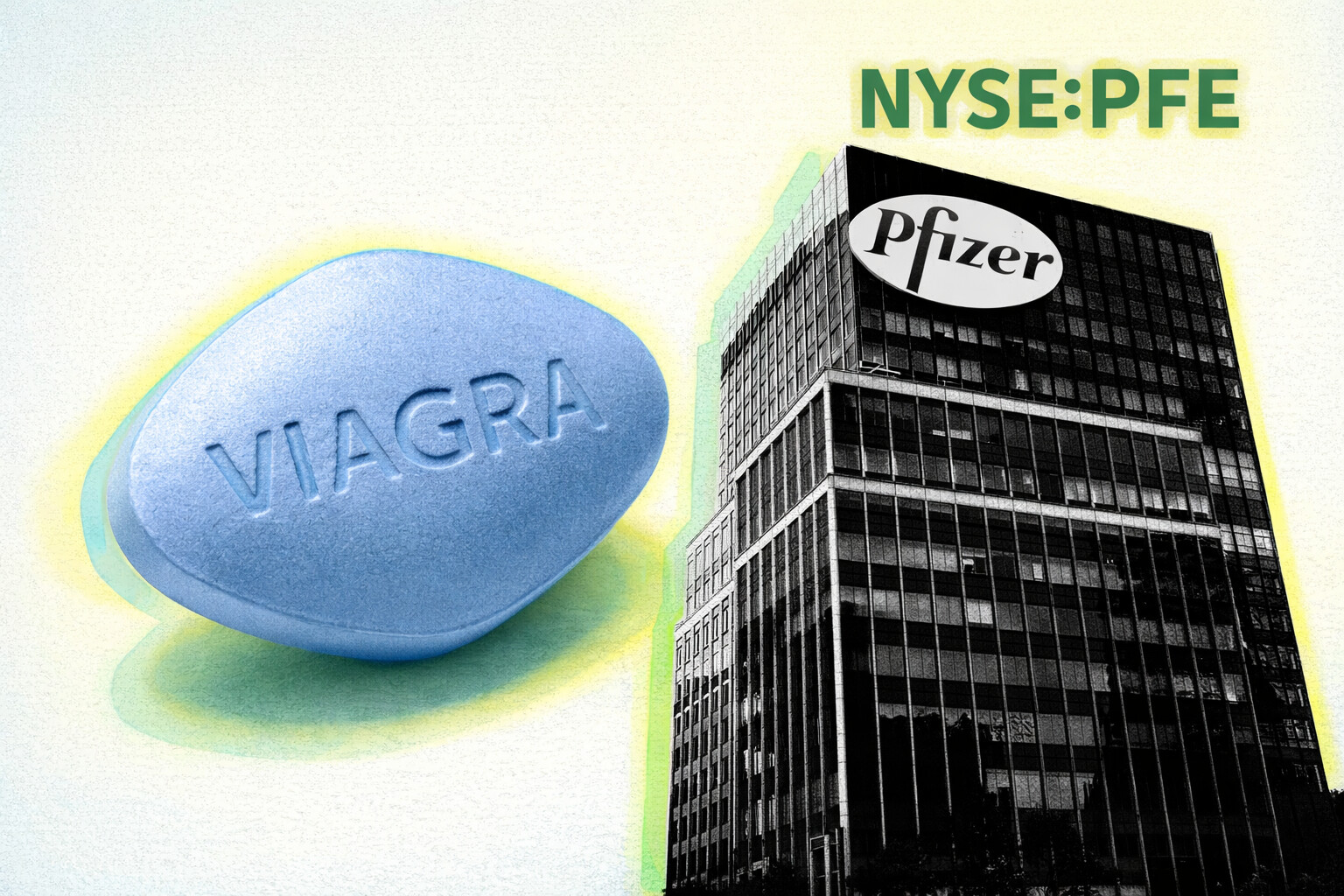
NYSE:PFE trades around $25.60 with a 52-week range of $20.92–$27.69, versus $60–61 at the 2021 peak. That’s a drawdown of roughly 56% while quarterly revenue still stands near $16.65 billion, net income at $3.54 billion, and net margin above 21%. The market is pricing Pfizer as a structurally impaired ex-growth name despite resilient profitability, a forward dividend yield above 6.7%, and a broad late-stage pipeline that can change the earnings trajectory once LOE pressure peaks.
NYSE:PFE Price Reset, Current Valuation And Market Expectations
At $25.6 per share, NYSE:PFE trades at roughly 7.9x forward Non-GAAP P/E and about 14.9x trailing earnings, with a free-cash-flow yield around 7%+. The price-to-book ratio near 1.57x sits close to the bottom of its historical range for a global pharma leader with ~$145–149 billion market cap and $208.7 billion in total assets. Street forecasts already bake in an ~13–14% revenue decline toward 2030 and almost 28% EPS erosion as LOEs hit, so the current multiple implies that Pfizer will neither defend margins nor monetize its pipeline effectively. Any deviation from that pessimistic path forces a multiple re-rating from single digits toward the low-to-mid teens where large-cap peers trade.
Post-COVID Base Business, Revenue Mix And Profitability
The COVID era is no longer the core driver for NYSE:PFE. Management has effectively floor-guided around $5 billion in COVID revenues for FY 2026 within a total sales band of about $59.5–$62.5 billion, turning COVID from a boom–bust story into a manageable single-digit percentage of revenue. The last reported quarter showed $16.65 billion in revenue, down ~5.9% YoY, operating expenses of $6.80 billion (down ~2.7% YoY), net income of $3.54 billion (down about 20.7%), and EPS of $0.87 (down ~17.9%). EBITDA sits around $7.53 billion, and net profit margin remains a solid 21.3%. Revenue has clearly reset lower versus peak COVID years, but this is still a high-margin franchise generating billions in quarterly cash flow off a diversified portfolio including Eliquis, Prevnar, Paxlovid, Vyndaqel, Comirnaty and Ibrance.
Loss-Of-Exclusivity Schedule, Patent Cliff And Revenue Headwinds
The structural drag is the loss-of-exclusivity cycle, not COVID. Pfizer expects LOE to remove roughly $1.5 billion from revenue in 2026, about $3+ billion in 2027, and $6+ billion in 2028, primarily as heavyweights such as Eliquis and Ibrance move into full generic competition. Cumulatively, management has signaled potential LOE impact of around $17–18 billion in sales through 2030. Sell-side models already reflect this with an ~$8.4 billion top-line wipe-out and mid-teens revenue decline into the decade, but they go further by assuming profitability deteriorates almost twice as fast, driving the ~28% EPS decline now embedded in consensus. The market is effectively betting that Pfizer cannot offset these headwinds with pipeline launches, lifecycle management or cost discipline.
$7.7 Billion Cost-Savings Program And Margin Shield For NYSE:PFE
Against that backdrop, Pfizer is executing a $7.7 billion net cost-savings program through 2027. About $5.6 billion in operating expenses has already been removed across 2024–2025, leaving roughly $2.1 billion still to be realized. Even after restructuring, gross margin is near 74.8%, net margin 15–21% depending on quarter, and return on assets sits above 7%, with return on capital around 9–10%. With quarterly operating cash flow of around $4.6 billion and free cash flow of $1.7 billion despite heavy investment, the remaining savings are a direct lever to stabilize EPS while LOEs peak. If most of the final $2+ billion falls through to the bottom line, the current consensus path for EPS – almost 30% down into 2030 – becomes too pessimistic and leaves room for upside surprise.
Dividend Yield, Cash Returns And Payout Sustainability For NYSE:PFE
At the current $25–26 trading range, NYSE:PFE offers a dividend yield around 6.6–6.8%, with a ten-year dividend CAGR close to 5%. Latest quarterly net income of $3.54 billion and operating cash flow of $4.60 billion comfortably cover the payout and fund ongoing R&D and capex. The $7.7 billion cost-savings program is specifically designed to preserve both the dividend and the pipeline while navigating LOEs. Unless multiple late-stage programs fail simultaneously or pricing pressure accelerates dramatically, the dividend remains realistically sustainable. For long-term income investors, the market is effectively paying close to 7% in cash every year while they wait for oncology, obesity and vaccines to scale. Persistent insider accumulation at these levels, visible on the stock profile and insider page, would further underscore management’s confidence in the sustainability of that yield.
Balance Sheet, Debt Profile And Liquidity Capacity
Pfizer’s balance sheet reflects an aggressive M&A strategy but remains robust. Total assets are around $208.7 billion, total liabilities about $115.6 billion, and equity roughly $93.1 billion. Total debt sits just under $62 billion, pushing the debt-to-equity ratio to ~0.7, above historical averages but still compatible with an A credit rating. Cash and short-term investments of roughly $15.0 billion, up more than 50% YoY, provide immediate liquidity. The real constraint is not solvency, it is capital allocation: management must balance a near-7% dividend, a heavy late-stage pipeline, and a sensible deleveraging path, especially given that rating agencies have already flagged potential pressure around 2027 if execution disappoints. The combination of high yield, moderate leverage and strong cash generation is acceptable at $25–26, but it requires disciplined execution to avoid a forced dividend rethink later in the decade.
Oncology Engine – BRAFTOVI, PADCEV And Seagen-Driven Antibody–Drug Conjugates
Oncology is the most visible growth engine for NYSE:PFE. BRAFTOVI just delivered robust Phase 3 BREAKWATER data in metastatic colorectal cancer with BRAF V600E mutation, posting an objective response rate of 64.4% versus 39.2% for standard chemotherapy. That performance justifies moving Braftovi into the first-line setting, sharply expanding the number of eligible patients and boosting commercial potential well above earlier mid-tier expectations. In melanoma, Braftovi is projected to reach around 42% market share by 2028, with possible $400+ million in annual sales from that indication alone; adding first-line colorectal cancer tilts it firmly into blockbuster territory. Meanwhile, the PADCEV + Keytruda combination has already become a blockbuster in bladder cancer, and new data in muscle-invasive bladder cancer show a substantial survival benefit, opening the door for a chemo-free standard regimen in a large, high-need population. These drugs sit inside a broader Seagen-driven ADC portfolio, which Pfizer expects to push oncology revenue to roughly $10 billion by 2030, with assets like Sigvotatug Vedotin targeting second-line non-small-cell lung cancer in a lung cancer market projected above $95 billion by 2034.
Obesity And Metabolic Franchise – Metsera Assets And Oral Obesity Strategy
The second major growth pillar for NYSE:PFE is obesity and metabolic disease. After internal GLP-1 setbacks, Pfizer pivoted via the Metsera acquisition, securing MET-097i, an ultra-long-acting GLP-1 injectable designed for monthly dosing, and MET-233i, which combines GLP-1 with amylin. Management plans around 10 Phase 3 trials in 2026 across this platform, targeting a multi-tens-of-billions obesity market currently dominated by weekly injectables. If MET-097i can deliver competitive weight loss with a monthly schedule, it offers a clear convenience and adherence edge versus weekly Wegovy/Zepbound-style regimens and can support premium positioning. In parallel, Pfizer has licensed an oral obesity candidate from YaoPharma in a deal worth up to $1.9 billion, aiming to exploit small-molecule cost efficiencies and combine that compound with internal assets to launch a meaningful oral therapy around 2028. The market is currently valuing NYSE:PFE as if this entire obesity franchise is optional and long-dated; a string of positive Phase 3 readouts would require the street to rebuild medium-term revenue and EPS curves from a higher base.
Lifecycle Management – Tafamidis (Vyndaqel/Vyndamax) And Specialty Franchises
Beyond headline growth areas, Pfizer is using aggressive lifecycle management to soften the LOE blow. A key move is the decision to withdraw Vyndaqel in the U.S. ahead of its 2028 patent cliff and migrate patients to Vyndamax, which is protected by a crystalline polymorph patent until 2035. That effectively extends the tafamidis franchise, turning what could have been a near-term drop into a durable specialty cashflow stream for almost another decade. In vaccines, Pfizer expects key Phase 3 VALOR data this year on its Lyme disease vaccine, which faces no direct competitor. A successful readout in a growing, under-served area could create a unique, high-margin vaccine platform. Across the business, management is targeting 20+ pivotal study starts in 2026, creating a diversified set of shots on goal rather than relying on a single “mega-blockbuster” to fix the LOE gap.
Read More
-
MicroStrategy Stock Price Forecast: MSTR Jumps Back Above $130 on 713K BTC and $2.25B Cash
13.02.2026 · TradingNEWS ArchiveStocks
-
XRP Price Forecast: Can XRP-USD Defend $1.35 Support After a 30% Slide?
13.02.2026 · TradingNEWS ArchiveCrypto
-
Oil Price Forecast: Oil Slide as Surplus Fears Replace War Premium
13.02.2026 · TradingNEWS ArchiveCommodities
-
Stock Market Today: AI Fears Hit Nasdaq as S&P 500 and Dow Struggle While AMAT and Rivian Rip Higher
13.02.2026 · TradingNEWS ArchiveMarkets
-
GBP/USD Price Forecast - Pound Holds 1.36 as Softer US CPI Revives June Fed Cut Expectations
13.02.2026 · TradingNEWS ArchiveForex
Earnings Track Record, Estimate Revisions And Street Positioning
Consensus expectations for NYSE:PFE remain heavily skewed to the downside despite a strong beat history. Since the last report, analysts have cut forward EPS estimates by more than 20%, even though Pfizer has beaten EPS consensus in every quarter over the past two years, with average surprises around 25–30%. The street is modeling a combination of mid-teens revenue decline and high-20s EPS decline into 2030, assigning limited value to both the $7.7 billion savings program and the pipeline catalysts in oncology, obesity and vaccines. At the same time, Pfizer has already executed ~$5.6 billion of those cost savings, continues to post multi-billion net income each quarter, and has de-risked COVID-related sales by setting a conservative $5 billion floor for FY 2026. With the next Q1 release expected in early February 2026, another clear “double beat” on revenue and EPS would likely catalyze upward revisions, particularly if management provides more granular updates on obesity timelines and oncology launches.
Relative Valuation, Multiple Expansion Potential And Yield Cushion
Purely on numbers, NYSE:PFE is priced as a structurally impaired asset. A forward Non-GAAP P/E near 7.9x, FCF yield above 7%, and dividend yield around 6.7% are more typical of stalled, declining businesses than of a pharma group with an A credit rating, $145+ billion market cap, and a deep late-stage pipeline. Large-cap pharmaceutical peers with slower growth but cleaner narratives routinely trade on low- to mid-teens forward multiples. If Pfizer simply re-rated to 15x forward earnings on today’s conservative EPS consensus—without assuming major upward revisions—the implied upside from $25–26 is in the 60%+ range, plus cumulative cash yield in the high-single digits over a multi-year holding period. Quant and fundamental rating frameworks cluster around Buy to Strong Buy, while the share price still reflects a scenario where LOEs overwhelm cost cuts and pipeline execution. That disconnect is precisely what creates an asymmetric setup for patient investors.
Key Risks – LOE Execution, Pipeline Delivery And Leverage
The bullish case for NYSE:PFE is not risk-free. The LOE timeline from 2026–2028 could prove more painful than expected if generic competition undercuts pricing more aggressively or if additional products slip into earlier-than-modeled LOE. Late-stage pipeline programs in obesity, oncology and vaccines can fail, delaying or shrinking the revenue replacement needed to offset the $17–18 billion LOE headwind. Integration risk around large transactions like Seagen can surface through higher R&D and SG&A, eroding part of the $7.7 billion savings target. The ~$62 billion debt load constrains flexibility; if free cash flow undershoots or rates stay higher for longer, management may need to prioritize deleveraging over dividend growth, which could cap the re-rating. A negative pivot on the dividend – even if rational – would likely trigger another leg down in the share price in the short term.
NYSE:PFE Investment View – Buy, Sell Or Hold Around $25–26
From today’s $25–26 level, NYSE:PFE offers a rare combination: a near-7% dividend yield, a single-digit forward multiple, a $7.7 billion margin-defense program, and multiple late-stage growth vectors in oncology, obesity, tafamidis lifecycle extension and vaccines. The LOE headwinds through 2028 are real and already quantified at roughly $17–18 billion in lost sales, but they are phased and heavily priced in, while the cost savings and pipeline monetization are under-valued. If Pfizer continues to beat depressed EPS expectations, executes the remaining $2.1 billion in cost cuts, and delivers even a subset of its oncology and obesity catalysts, the current valuation looks too low. On balance, the data support a clear Buy on NYSE:PFE at current prices, with the stock positioned as a deep-value, high-yield name that can transition from post-COVID laggard to re-rated cash machine as the market re-prices its pipeline and cost base.